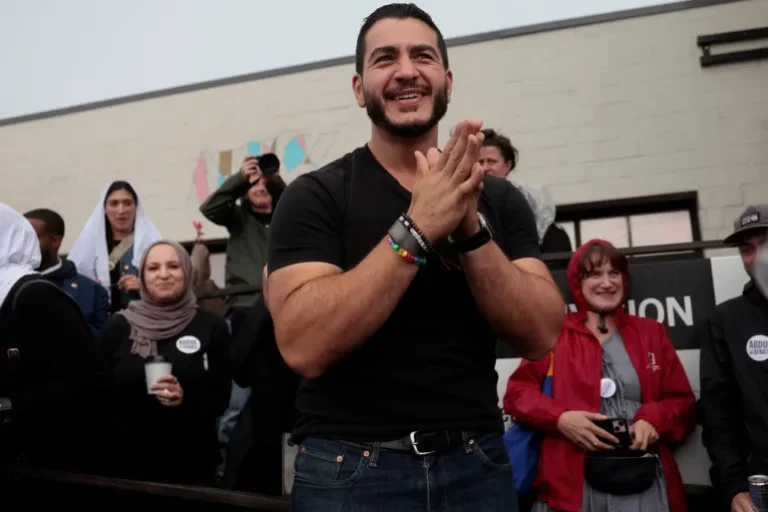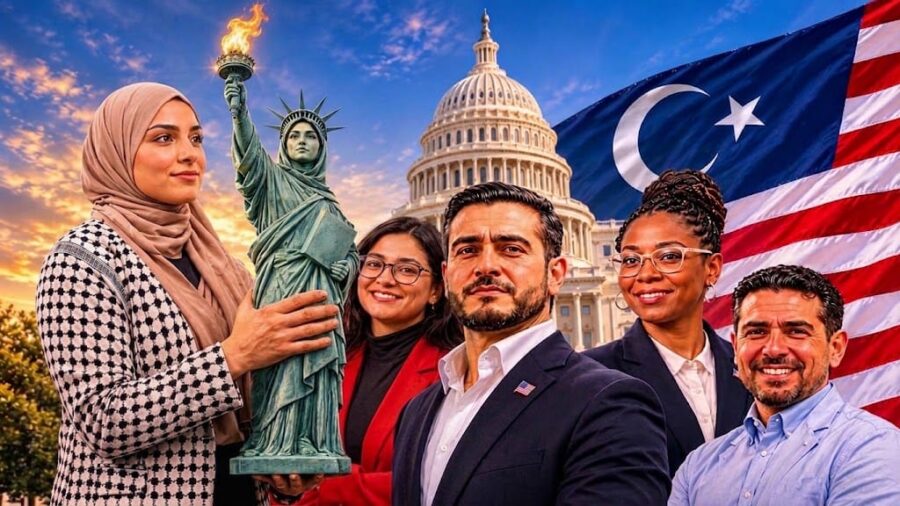
One of the notable results of the midterm elections held in the US is the election of Abdul El-Sayed to the Senate from the state of Michigan. The 42-year-old Democratic Party representative defeated his Republican rival Mike Rogers to become the first Muslim elected to the Senate in US history.
In general, the demographic weight of Muslim communities has been growing recently in the US and in a number of European countries, their participation in political processes is expanding, and these changes are gradually being reflected in state institutions as well.
For example, UK statistics clearly show this trend. In 2011, 4.9 percent of the population of England and Wales identified themselves as Muslim, while in 2021 this figure rose to 6.5 percent. The Muslim population grew from 2.7 million to 3.9 million. Even more striking is the age structure: according to the 2021 census, the median age of Muslims in England and Wales was 27. This is considerably lower than the median age of the country’s overall population. So this is not only about the growth of the existing population, but about a community whose share in shaping the future generation of voters is also growing.
This demographic change is already visible in political representation as well. After the 2024 parliamentary elections, the number of Muslim MPs in the British House of Commons reached a record level – around 25. In London, the election of Sadiq Khan, a politician of Muslim origin, as mayor is one of the earlier examples of this process.
Similar dynamics are observed in the US. According to 2026 data from the Pew Research Center, the number of Muslims in the country has reached about 5.5 million. In 2007, this figure was 2.4 million. At the same time, the number of elected Muslim officials in the US is also growing. In a 2026 report by the organisation CAIR, 255 elected Muslim officials serving at various levels in 26 states were recorded. Abdul El-Sayed’s election to the Senate is the highest-level federal political result of this process so far.
Novelty in positions

Muslim communities are no longer merely a social group that supports certain candidates in elections; they are becoming a political actor that puts forward its own political representatives, influences election results and takes part in shaping the public agenda. This, in turn, means the gradual rise of “political Islam” in the West.
Admittedly, Abdul El-Sayed presents himself first and foremost as a representative of Michigan voters. His political platform is based on issues such as healthcare accessibility, social security, economic inequality and limiting corporate influence. At the same time, a number of politicians known for their Muslim identity in the West also support LGBT rights, a secular governance model and a liberal political agenda.
But this does not diminish the significance of the general trend. On the contrary, it shows that the political integration of Muslim communities in the West does not follow a single ideological line. Some of them operate within the liberal political system, while others want their religious and cultural identities to be more broadly represented in public and political life. The main factor uniting all these different positions is that Muslim identity is more visible and more influential in political life than in previous periods.
The reality is that a community with growing demographic weight, a young population structure and broader representation in political institutions will also have a growing influence on future elections and political decisions.
Abdul El-Sayed’s election to the Senate is, in this respect, not merely an individual political success. It is a historic event that shows the political representation of Muslims in the US has entered a new stage. And when assessed together with the demographic and political changes observed in the UK, it appears as part of a broader trend.
Turan Rzayev
Globalinfo.az political writer
Read also