A campaign against Azerbaijan continues in the Turkish media and on social networks. While necessary steps should be taken to prevent it, the campaign is intensifying and expanding day by day. Critical and insulting material targeting Azerbaijan is increasing. While the main target of the campaign against Azerbaijan had previously been our relations with Israel, the issue of school uniforms has now also become a subject of manipulation. Material containing open insults and threats against Azerbaijan is being circulated in the Turkish media and on social media.
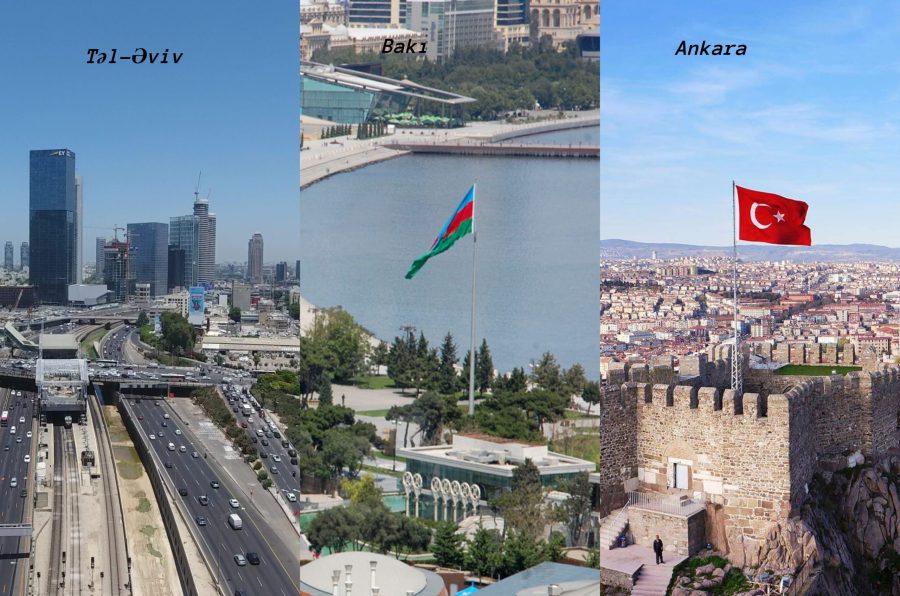
The main argument of those conducting the campaign against Azerbaijan is Baku’s rapprochement with Israel. Campaigners portray political and diplomatic ties between Baku and Tel Aviv as though they had only just been established. Yet Israel was among the first countries to formally recognise Azerbaijan’s independence on 25 December 1991. Diplomatic relations were established on 7 April 1992. Although Ankara publicly declares Israel an enemy, it continues to trade with the country through various channels and means.
At the same time, Turkish-Armenian rapprochement is progressing at full speed. It has already gone beyond the bounds of simple diplomatic normalisation and entered a stage of systematic “brotherhood”. Meetings of special representatives, the restoration of the Kars-Gyumri railway and power line, direct flights, the easing of trade restrictions and high-level telephone talks are concrete evidence of this. Could this be the reason for the campaign against Azerbaijan? It appears that the policy of rapprochement with Armenia was not chosen without reason, using the Israel factor as a pretext. This is not the first attempt. Ankara has tried several times, but it has not succeeded. The principled position of the Azerbaijani state forced Turkey to postpone this policy.

Khojaly butcher Serzh Sargsyan and former Turkish President Abdullah Gül
The “football diplomacy” of the then presidents, Abdullah Gül and Serzh Sargsyan, in September 2008 has not been forgotten. Friendly matches between the national football teams of the two countries were held in Yerevan and Bursa. Gül travelled to Yerevan. Sargsyan came to Bursa. Purely to please Armenians, police had been instructed not to allow Azerbaijani flags into the stadium for the match in Bursa. At the time, the incident angered nationalists and pro-Azerbaijani circles in Turkey, while it shocked us…
The issue of opening the border then emerged. Starting in early 2009, a certain agreement had been reached on opening the Turkish-Armenian border and restoring economic, political and diplomatic relations. Azerbaijani President Ilham Aliyev prevented this process by taking a firm and principled stance. Moreover, he exposed the authors of this “work”.
This process, which went down in history as the “Zurich Protocols”, almost permanently damaged relations between the two brotherly countries. Opening the border, with the close involvement of the West, was an attempt to stab Azerbaijan in the back. Ankara wanted to give Armenia economic and political breathing room at a time when our territories were under occupation. Although it knew the major problems this would create for Azerbaijan, the AKP government took the initiative.
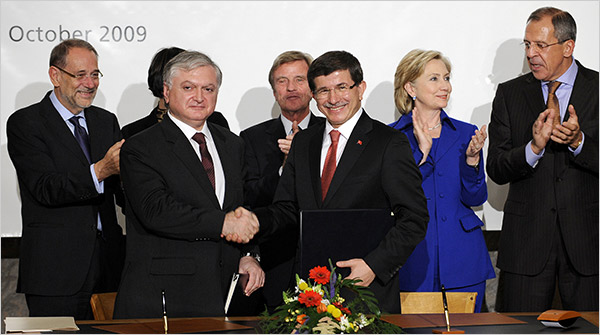
The signing ceremony of the “Zurich Protocols”
Turkey’s attempted coups in Azerbaijan in the 1990s have also not been forgotten. In October 1994, brothers Rovshan and Mahir Javadov joined forces with Surat Huseynov and instructed armed groups under their control to overthrow the legitimate authorities and the popularly elected president, Heydar Aliyev. Heydar Aliyev thwarted the attempt at the time. He called on the people to gather outside the Presidential Administration, and tens of thousands of citizens assembled there to defend the state and the president. Several months later, in March 1995, another coup attempt was made. Rovshan Javadov turned OMON against the state. The centre directing this military mutiny was in Turkey. Turkey’s embassy in Azerbaijan had become the headquarters of the mutineers. They sent an adventurer named Ferman Demirkol there to act as a mentor to the Javadov brothers. In the end, he left Azerbaijan in disgrace, one of the Javadov brothers died under mysterious circumstances, and the other fled abroad.
The line against Azerbaijan in Turkey was activated after the presidential election in that country and gradually took on the character of a campaign.
The campaign against SOCAR in Turkey, Azerbaijan-Israel relations and, finally, the raising of the hijab issue are the main elements of a campaign to discredit Azerbaijan, which enjoys broad public sympathy in Turkey, and its leader Ilham Aliyev. As a result, more than 20 percent of Turkey’s population viewed Azerbaijan as an enemy in recent polls. This is an extremely dangerous process. Forces seeking to turn brotherhood into enmity bear great responsibility before history.
Attacks against Azerbaijan have now also begun over the hijab factor. Iran is not the only force behind this vile campaign. The state knows full well who is doing what. Everyone will be answered individually. Addressing this issue at the 8th Congress of the New Azerbaijan Party, President Ilham Aliyev said: “Everyone should stay in their place, not interfere in our affairs, not poke their nose into our way of life and not show us the way. Everyone should go and worry about their own people and state.”
This was the most precise and stern response. More will follow…
Aydin Aslan
Globalinfo.az
Həmçinin oxuyun