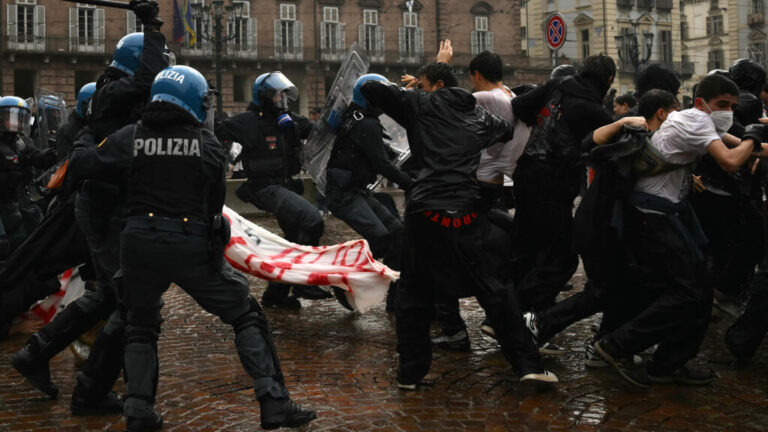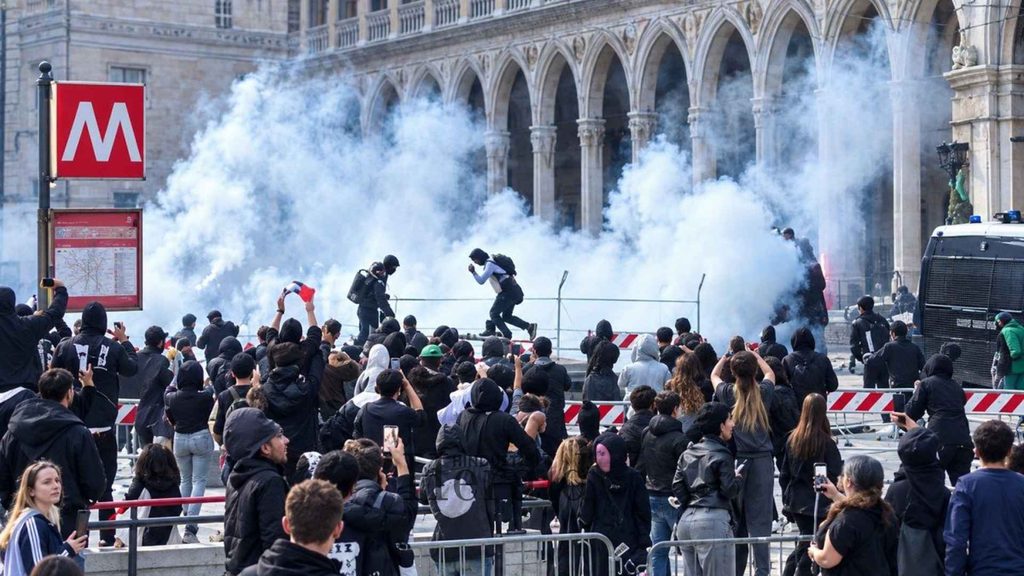
Protests and unrest in a number of European countries have heightened concerns about tourist safety. In France, Italy, Belgium, Albania, Spain and Portugal, people are protesting against various social and economic problems. In some cities, demonstrations have led to clashes, fires and destruction. The situation could also affect the travel decisions of those planning holidays in Europe.
So what are the main reasons for the spread of protests in Europe? What factors lie behind the political and social tensions on the continent?
Political analyst Muhammad Asadullazade told Globalinfo.az that the protest actions in France, particularly the “Yellow Vests” movement that gained wide momentum in 2018–2019, were an indication of serious dissatisfaction with the government’s socio-economic policy:
“Those protests not only had a significant impact on France’s political life but also created a certain ground for the strengthening of right-wing and far-right political forces in Europe.
The protests currently taking place in France can be assessed as a new stage of political activation in Europe and growing dissatisfaction in society. Social inequality, rising living costs, decisions taken by governments and differences of opinion over migration policy are prompting protests by various social groups. The spread of these processes to other European countries could create conditions for the formation of new political movements.
The weakening of public trust in the liberal-democratic political system in Europe, growing dissatisfaction with traditional parties and the emergence of right-wing political forces to the fore are among the notable trends. At the same time, it would be wrong to unite all participants in the protests around the same political position. These actions may involve various social groups, people with different political views and forces dissatisfied with migration policy.

Muhammad Asadullazade
On the other hand, the European Union’s more active stance in international political processes, and in particular France’s role on Europe’s political and security agenda, also affects relations with the United States. Although there are claims that certain foreign political centres may be behind the protests in Europe, it would be wrong to draw firm conclusions without concrete evidence confirming these assertions.
The protests observed in countries such as Albania, Serbia and Italy also show that social and political dissatisfaction in Europe is manifesting itself in various forms. These processes may spread to other countries in the future. Such a scenario could push European governments to adopt tougher decisions on migration, social security, public safety and economic policy.”
The expert said that protest actions could also have a negative impact on transport operations, the tourism sector and people’s daily lives:
“Particularly in a country as important for tourism as France, mass actions do not leave tourists’ travel plans and the service sector unaffected.
The protests in France are not limited to internal social dissatisfaction alone; they are also part of broader discussions about Europe’s future political direction. What results these processes will bring will depend on the scale of the protests, the reaction of governments and how political forces use the situation that has arisen.”
Turan Rzayev
Globalinfo.az
Read also