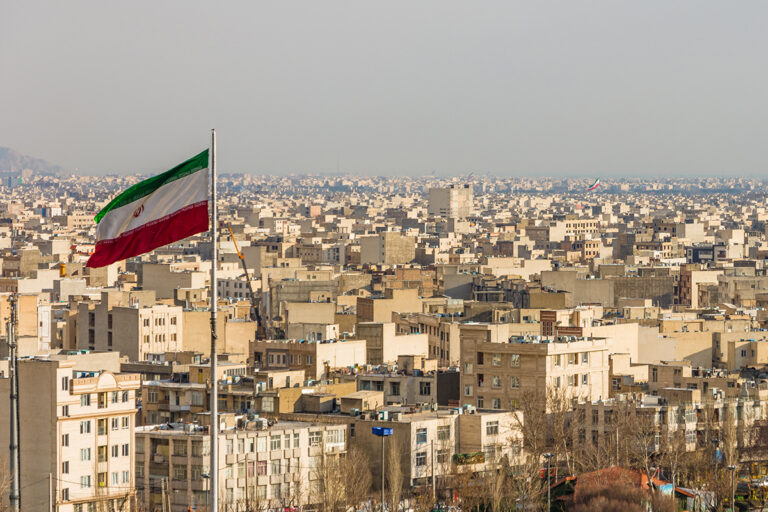
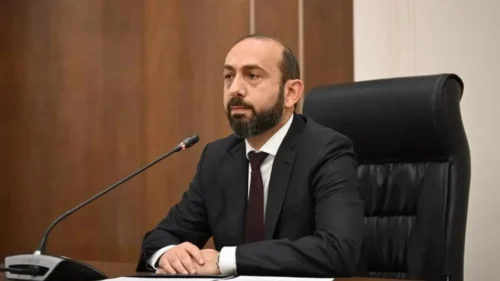
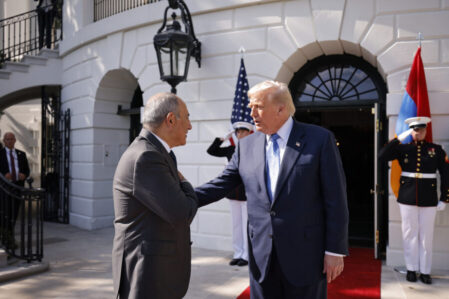
A harsh warning over the Zangezur corridor has come from Iran to Armenian Prime Minister Nikol Pashinyan. Iran’s former foreign minister Ali Akbar Velayati spoke out against the implementation of the TRIPP project, saying that this route runs counter to Tehran‘s strategic interests and is Iran’s red line in the region.
He even used strong language suggesting that Iran could defend this position by force. Velayati said he had conveyed his position firmly to Armenia’s ambassador in Tehran, writing: “If Trump and his allies want to cross this red line of Iran, we will break their legs.”
How serious a political message is Velayati’s statement? What steps could Tehran take to prevent the opening of the Zangezur corridor? How could this harsh position of Iran affect Azerbaijan-Armenia relations and the new geopolitical situation taking shape in the South Caucasus?
Speaking to Globalinfo.az, political analyst Matin Mammadli said that Velayati’s statement is not new and that Iran has long presented the opening of the Zangezur corridor as its red line.
“Over the past six years, Iran has repeatedly declared that the opening of the Zangezur corridor is its red line. In this regard, Velayati’s remarks can be assessed as a continuation of Tehran‘s traditional position. It appears that some circles in Iran still have difficulty accepting the new geopolitical realities that have taken shape in the region. Those forces are trying to change the existing realities and to influence the processes. I believe that their position is not capable of changing the geopolitical reality that has emerged. The continuation of such an approach will only have a negative impact on official Tehran’s relations and cooperation with the countries of the region.

The opening of regional transport routes and the restoration of communications pose no threat to any country in the region. On the contrary, the expansion of transport links is in Iran’s interests as well. For this reason, I consider the views voiced by some diplomats in Tehran to be unfounded. It seems that some circles still regard the South Caucasus as their own backyard and believe that the region should remain within their sphere of influence.

Matin Mammadli
The states of the South Caucasus are independent. Azerbaijan is the leading country of the region. No one can treat the states of the region, and especially our country, as a subject within another state’s sphere of influence. Tehran must first of all respect the internal affairs of the countries of the region and must not interfere in their independent decisions.
The TRIPP project is being implemented on the basis of an agreement reached with Armenia, and official Yerevan is also participating in this process. Opposing this issue and speaking in the language of threats is essentially an attempt to interfere in Armenia’s internal affairs. Such an approach will also harm Iran’s own interests. Velayati’s latest statements show that some circles in Tehran still prefer the language of threats in diplomatic relations.”
Turan Rzayev
Globalinfo.az
Read also