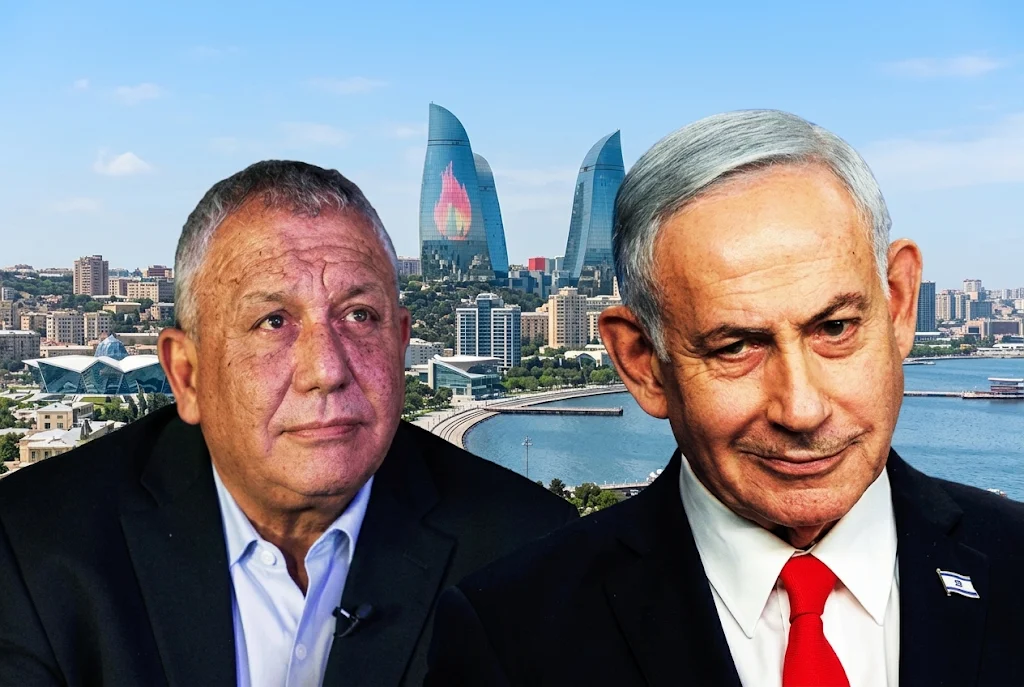
The leader of Israel’s opposition Yashar party, Gadi Eisenkot, has secured the support of 67 of the Knesset’s 120 lawmakers to be nominated for the post of prime minister. During consultations with President Isaac Herzog, Eisenkot was endorsed. Incumbent Prime Minister Benjamin Netanyahu’s candidacy was backed by 46 lawmakers, while another 7 expressed support for neither side.
According to Israeli historian and political analyst Avraham Shmulevich, speaking to Globalinfo.az, at the preliminary stage the political parties are discussing to whom it is better to give the mandate, but the president makes the decision himself:
“This does not mean they agree to vote for the government Gadi Eisenkot would form. There are serious contradictions between the positions of the parties recommending Eisenkot to the president. The ultra-Orthodox parties hold views entirely opposed to an Eisenkot government. There are political forces called ‘Arab parties’, but the problem is not that they are Arab. Arabs are always represented in the Knesset, and there are even Arab ambassadors in the government. For example, George Deek served as ambassador in Azerbaijan and was one of the best ambassadors. He was later appointed to a higher post at the Foreign Ministry. Arabs are also represented in other parties that are not exclusively theirs.
“The Ra’am party, which is essentially a branch of the Muslim Brotherhood, and the bloc of three Arab parties made up of religious, ultra-nationalist and communist elements – the problem with these parties is not that they are Arab, but that they are extremely extremist in character. They reject in principle the Jewish character of the state of Israel and advocate the idea of dividing Israel. They have not condemned Hamas as a Jew. The root of the problem lies precisely here. For a person like former Chief of Staff General Eisenkot, it would be difficult to be represented in the same government with these parties, and he has promised not to take such a step.”

Avraham Shmulevich

According to the expert, new elections will most likely be held:
“This will become clear on Sunday. The president must choose a person within a week, but even if the choice falls on Eisenkot, it is not certain that he will be able to form a government. Benjamin Netanyahu, in any case, will leave his post. He will step down the moment a new government is formed and will become opposition leader.”
Shmulevich noted that there will be no serious changes in foreign policy:
“After the war began, the country was led by a war cabinet that included opposition leaders as well. At that time, General Gadi Eisenkot was virtually one of the country’s leaders. His son and two nephews were killed in the fighting in the Gaza Strip. Thus, the line of destroying Hamas in one way or another will continue. In some nuances there may be softening or toughening, but the general direction will not change. In the same way, the line of destroying the Iranian regime will continue, because this regime poses an existential threat to Israel. On this issue almost everyone in Israel is of one mind. As for relations with Azerbaijan, the Israeli politician regards them as an extremely important, strategic alliance, and this will remain unchanged.”
Gulnar Salimova
Globalinfo.az
Istanbul