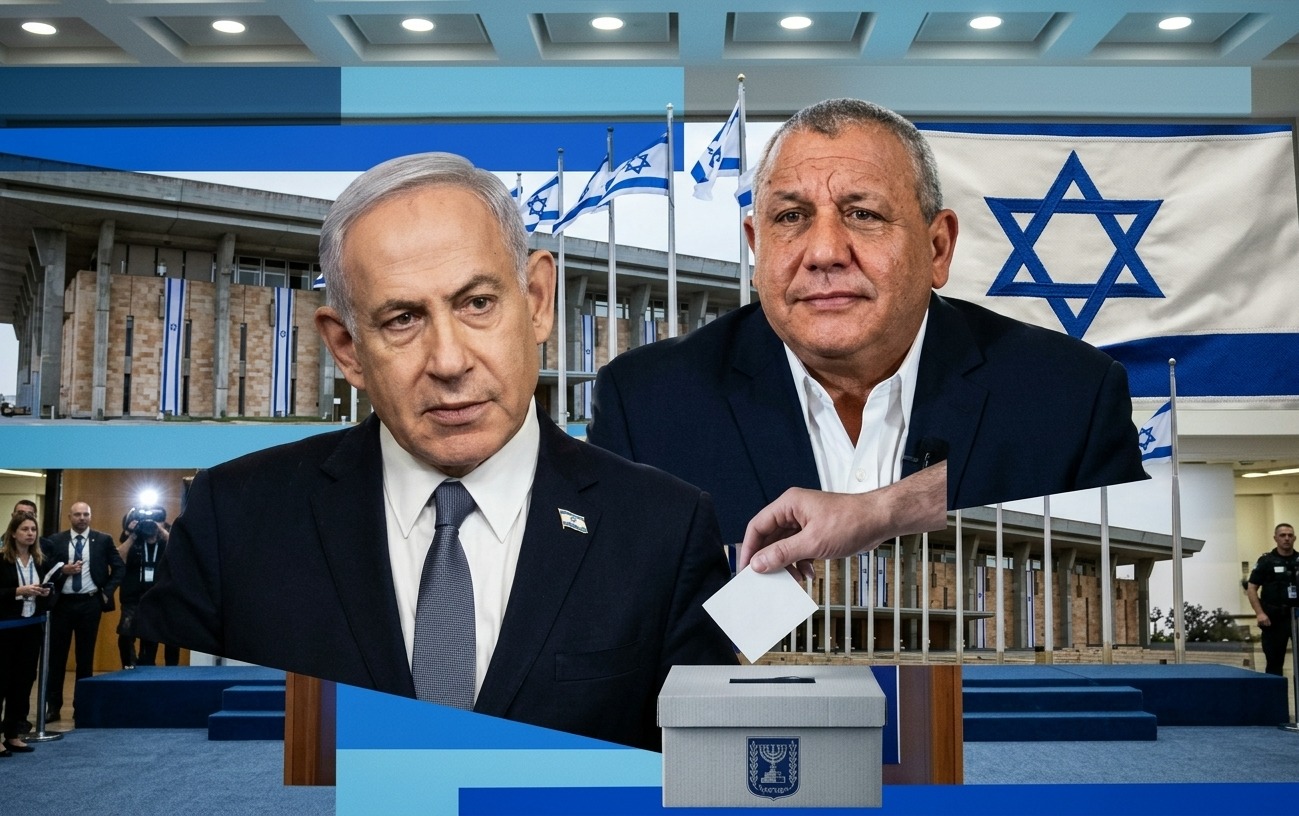
“First results of Israel’s elections: there is a loser, but no winner”.
Globalinfo.az reports that political commentator Shahin Jafarli said this.
According to him, the current coalition, namely the parties in Netanyahu‘s government, is losing its majority:
“However, the Zionist opposition is also unable to win the 61 seats needed to form a cabinet (the Knesset has 120 members).
Arab parties have significantly increased their vote share and are winning a total of between 16 and 18 seats. While Arab voters showed very high turnout, the ultra-Orthodox electorate allied with Netanyahu did not display enthusiasm.

Under the emerging scenario, the Zionist opposition could form a government with Arab support — the arithmetic allows it. There has been such an experience in the recent past: the Bennett-Lapid minority government, formed with the outside support of Mansour Abbas. However, this type of configuration is usually not stable, workable or long-lasting: the alignment of arithmetic calculations does not mean political calculations will also align.”
In Shahin Jafarli’s view, there is another theoretical possibility:
“It is for this opposition to reach an agreement with Netanyahu and form a ‘national unity government’ (Netanyahu-Eisenkot). However, implementing this model in practice is a very difficult task.
What will happen if it is not possible to form a new government? The country will hold early elections after some time, and Netanyahu will remain in power during the interim period. However, at least until new elections, the opposition could secure the Knesset speakership and the leadership of standing committees, seize the initiative and put serious pressure on Netanyahu. The division and polarisation in Israeli politics and society make long-term political stability in the country impossible.”
Safura Bannayeva
Globalinfo.az
Read also