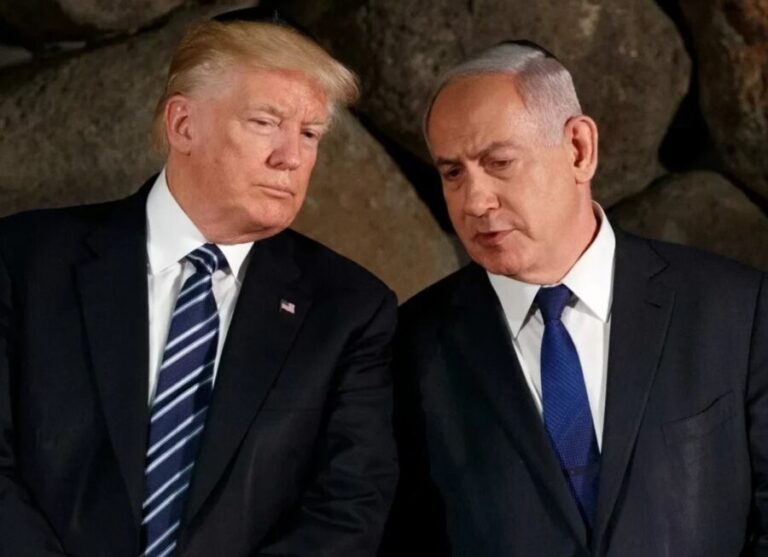
A striking picture has emerged in world politics. Political allies of US President Donald Trump and Israeli Prime Minister Benjamin Netanyahu are facing successive election defeats. In Brazil, Flavio Bolsonaro, son of Jair Bolsonaro and linked to the political camp backed by Trump, lost the presidential election to incumbent President Lula da Silva. In Serbia, Aleksandar Vucic’s ruling political force has conceded victory to the opposition coalition supported by students.
The defeat of Trump and Netanyahu‘s international allies carries special significance ahead of upcoming elections. Against the backdrop of the struggle over the future of Netanyahu’s government in Israel and over which political force will control Congress in the United States, the political atmosphere created by these results is also drawing attention.
Are these results isolated political events, or do they signal broader shifts in how voters in different countries view their governments and their foreign policies? Could the developments in Brazil and Serbia influence voters’ decisions in Israel and the United States?
Political scientist Yusif Bagirzade, speaking to Globalinfo.az, said the result of the Brazilian election is significant in terms of the rivalry between right-wing and left-wing political forces in Latin America:
“It is known that Flavio is the son of former President Jair Bolsonaro, who is ideologically close to US President Donald Trump. However, the result cannot be explained solely by the weakening of Trump’s international allies. The economic situation, social policy, political polarization, and attitudes toward Bolsonaro’s political legacy also played an important role in Brazilian voters’ decision.
What happened in Serbia reveals a different trend. We know that the student movement in Serbia gained strength after the 2024 tragedy in Novi Sad, when the collapse of a railway station canopy killed 16 people. Since then, discontent has grown over corruption allegations, the accountability of state institutions, and the government’s methods of governance. As a result, the side defending the students’ position won the recent election. This outcome shows that social movements formed outside traditional political parties can also turn voter discontent into political results. Here, the key factor is Serbia’s domestic political situation rather than its relations with the United States and Israel.

Yusif Bagirzade
Against this backdrop, it is understandable that attention is turning to the upcoming elections in Israel and the United States. But there is no basis for saying that the defeats in Brazil and Serbia will directly determine the decisions of American voters. While these results may affect the overall picture of the international political environment, voters in the United States will be more directly influenced by the economy, migration, healthcare, and their views on the president’s performance.
Overall, the events observed look less like a single international political wave and more like growing domestic discontent and a search for political alternatives in individual countries. The elections in Brazil and Serbia may be seen as a political signal for Trump and Netanyahu, but they do not necessarily indicate that the same results will be repeated in Israel and the United States. The decisive factor will be how voters in each country judge their own governments, rather than international alliances.”
Turan Rzayev
Globalinfo.az
Read also