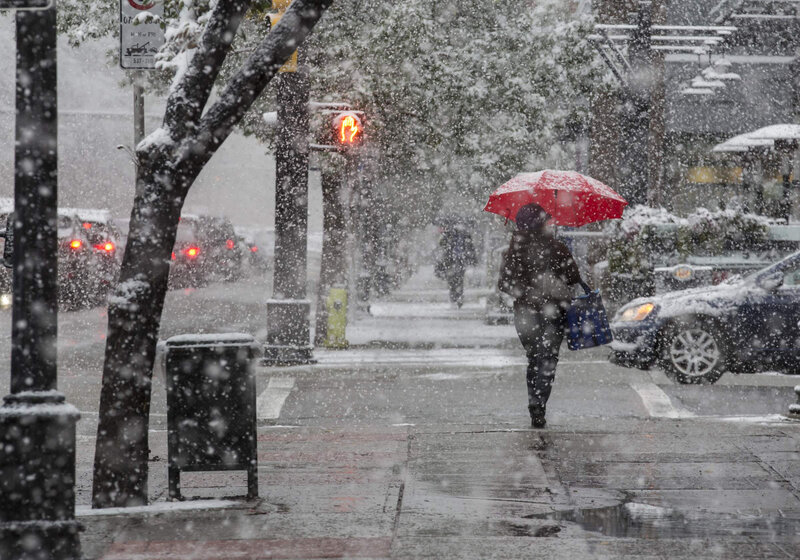
A combination of a strong El Niño and long-term global warming could make the coming winter especially unpredictable.
Globalinfo.az reports that Lent.az wrote about this, citing a seasonal forecast by the U.S. National Oceanic and Atmospheric Administration (NOAA).
The current “super El Niño” could significantly affect winter weather in the United States, causing above-average temperatures in northern regions and increased precipitation in southern states and along the coast. At the same time, it is expected that drought could worsen in some areas, while heavy rains could cause floods and landslides.
The forecast covers the period from December 2026 to February 2027. Experts estimate that the combination of a strong El Niño and long-term global warming could make the coming winter especially unpredictable.

Above-average temperatures are expected in the northwestern United States, northern California, the Midwest, the Mississippi Valley, and much of the eastern United States. A warmer-than-average winter is also forecast for Alaska, Puerto Rico, and the U.S. Virgin Islands.
In certain areas of the southeast, particularly from Louisiana to Florida, the probability of near-seasonal-normal temperatures is higher.
Ken Graham, director of NOAA’s National Weather Service, said that increased rain and snowfall could help drought-stricken regions, but excessive precipitation on dry soil could trigger destructive flash floods and landslides.
Despite the expected significant strengthening of the El Niño trend, experts warn that the seasonal forecast does not predict specific temperatures or precipitation amounts for any given day. It indicates the probability that three-month averages will be above, below, or close to the climate norm.
Furthermore, every El Niño event manifests differently. Therefore, even a very strong event does not guarantee the same weather effects in all regions.
Read also