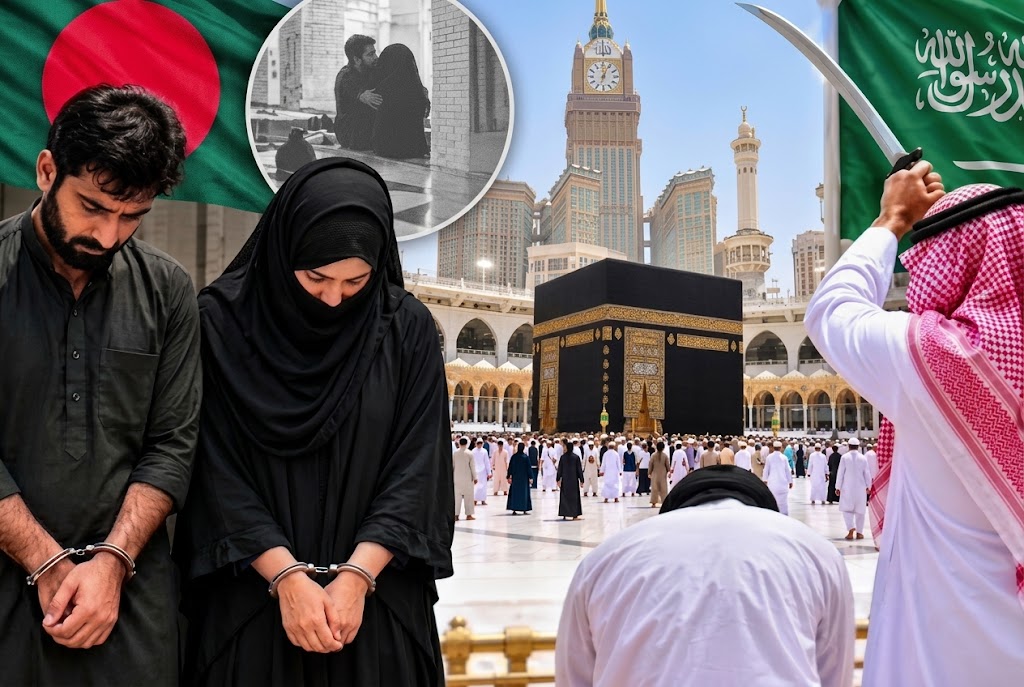
The execution of two people in the Saudi Arabian city of Mecca has sparked international debate. In an official statement, the country’s Interior Ministry accused two Bangladeshi nationals of violating the sanctity and moral values of the holy site. Footage released in connection with the incident showed the pair being beheaded with a sword. The execution was linked to an alleged “indecent act” committed in a mosque, but the nature of the act was not disclosed, raising questions about the incident.
What actually happened? Does Islam allow such a punishment?
Speaking to Globalinfo.az, theologian Akram Hasanov said adultery is considered forbidden in Islam:
“From a religious perspective, there is no doubt, based on the sources, that it carries a severe punishment. However, whether an act is sinful and whether a person may be punished for that act are not the same issue. These two matters must be distinguished. Knowing a religious ruling is one thing; having the authority to enforce that ruling is entirely another. Verse 2 of Surah An-Nur in the Holy Quran sets out a ruling on adultery. In Islamic jurisprudence, this issue has been examined on the basis of Quranic verses, the Prophet’s hadiths and the interpretations of fiqh scholars. On the issue of punishing married persons for adultery, most classical fiqh scholars, based on authentic hadiths, accepted the ruling of stoning. But stating these rulings does not mean that every person who believes someone has sinned has the right to punish that person. Although adultery carries a severe ruling in Islam, I do not support such a death penalty.”

Akram Hasanov

The theologian said that issues of accusation, evidence and legal responsibility are treated very seriously in Islam:
“Verse 4 of Surah An-Nur sets out a ruling concerning those who accuse others of adultery but cannot produce four witnesses. This shows how serious accusations affecting people’s honour are. Verse 12 of Surah Al-Hujurat also advises against unfounded suspicions. In other words, accusing people on the basis of rumours, assumptions and personal conviction is not right from a religious perspective either. Our Prophet said: ‘Whoever conceals the fault of a Muslim, Allah will conceal his fault on the Day of Resurrection.’ This hadith is significant not in the sense of confirming a person’s sin, but in terms of refraining from spreading the faults of others, protecting human dignity and giving priority to the opportunity for reform.
Classical scholars such as Imam al-Qurtubi and Ibn Kathir also considered the legal conditions of this issue and the explanations in the Sunnah when interpreting verses concerning adultery. In Islamic law, the issue of punishment is not left to personal anger, revenge or someone’s belief that they are religiously justified. Legal authority, evidence and judicial procedure are of great importance here.”
Hasanov noted that the moral responsibility for sins committed by people should be left to God:
“It is possible to say that such acts are forbidden and call on people to recognise their moral responsibility in this regard. However, it is not the correct approach to justify cruelty towards those who sin, arbitrary punishment and taking human life with religious slogans. God knows a person’s deeds, intentions and repentance. We should not see ourselves as being in a position to pass final judgment on the moral fate of others. Every state has its own legislation and legal system. This issue is also considered an internal legal matter of states. It is not academically correct to automatically present a punishment provided for in a state’s legislation as the position of all Islam. One of religion’s main purposes is to guide people to live not through fear, but through consciousness, conscience and a sense of responsibility.”
Laman Imran
Globalinfo.az
Read also