

Israeli Prime Minister Benjamin Netanyahu has stated that he seeks to avoid a military confrontation with Turkiye. Overall, claims are being voiced that Israel and Turkiye could experience a military clash at some point in the future.
How realistic are these prospects? If a war breaks out between Turkiye and Israel, under what scenario could it unfold?
Speaking to Globalinfo.az, political analyst Bakir Hasanbayli said that a potential military confrontation between Turkiye and Israel is among the scenarios that could alter the Middle East’s security architecture and trigger a major political test within NATO.
“The possibility that the West could leave Turkiye on its own during such a war should not be overlooked. Europe still does not accept Turkiye as an equal partner, and NATO primarily uses Ankara in service of its own interests. However, considering Turkiye’s military and strategic importance to NATO, the alliance’s treaty obligations, and the regional interests of the United States, it is difficult to argue that Ankara would definitely be left alone in a potential war.
At the same time, it would also be wrong to think that NATO would automatically endorse any military operation that Turkiye might launch against Israel.
Turkiye’s NATO membership makes it a vital strategic hub spanning the Black Sea basin, the Eastern Mediterranean, the Middle East, and the South Caucasus. Ankara is a key regional actor influencing both the security balance in the Black Sea and the management of crises in the Middle East. Any threat to Turkiye’s security could also present challenges for NATO’s southeastern flank, its positions in the Black Sea, and its interests in the Middle East.”

Nevertheless, the expert believes that Turkiye’s strategic significance does not mean the alliance will endorse all of its political and military decisions:
“Article 5 forms the cornerstone of NATO‘s collective defense principle. Under this article, an armed attack against one member within the treaty’s geographic scope is considered an attack against all members, and other allies must assist the state under attack. However, Article 5 does not imply that all NATO members automatically join the same military operation. Each state determines the form of assistance it deems necessary. Article 6 of the North Atlantic Treaty explicitly includes Turkish territory within the geographic scope of Article 5.
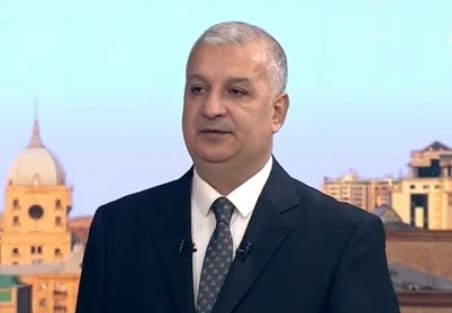
Bakir Hasanbayli
The legal and political ramifications of a potential confrontation between Turkiye and Israel will hinge on how the conflict begins. If Israel launches an armed attack on Turkish territory and the incident satisfies the conditions of the NATO treaty, Ankara would gain a strong legal basis to invoke the collective defense mechanism. In such an event, what form NATO’s assistance to Turkiye would take would be a crucial test of the alliance’s credibility.
If Turkiye itself initiates a large-scale military operation against Israel, the situation becomes even more complicated. NATO membership does not grant Ankara the right to automatic military backing for any offensive operation. The alliance defending Turkiye is not the same as supporting every military operation Turkiye conducts against Israel.
A direct war between Turkiye and Israel could put the United States before a difficult political dilemma. For Washington, Turkiye is a vital NATO ally, while Israel is one of its principal security partners in the Middle East. On one hand, an armed attack on Turkish territory could bring NATO’s collective defense mechanism into play. On the other hand, close ties with Israel shape US regional policy and security interests.”
Turan Rzayev
Globalinfo.az


