The political situation in Iraqi Kurdistan has escalated. Long-running disagreements between the region’s two main political forces — the Kurdistan Democratic Party (KDP) and the Patriotic Union of Kurdistan (PUK) — have now entered a phase of open political confrontation.
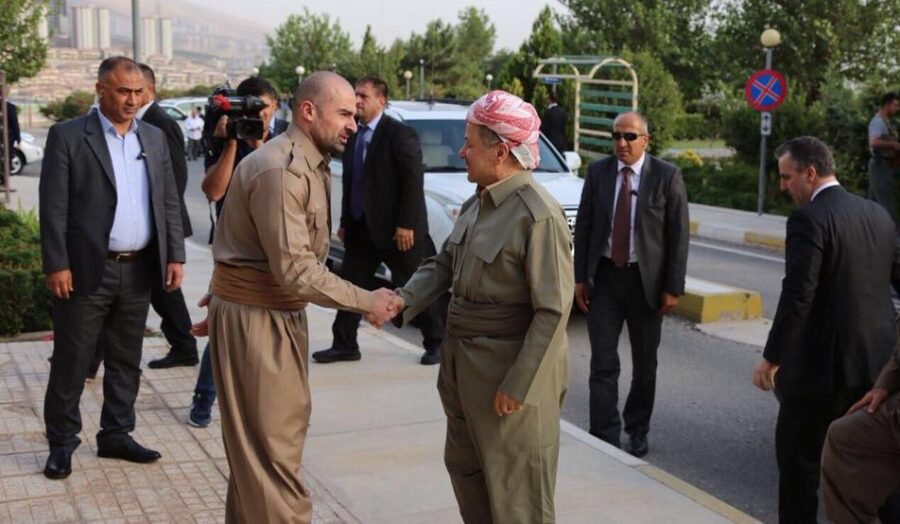
PUK leader Bafel Talabani has announced that his party is withdrawing from the Kurdistan Regional Government and does not recognise the outcome of the parliamentary session held in Erbil or the decisions arising from it. He went further, saying that if the KDP appoints its own president, prime minister and ministers in Erbil, the PUK will take the same steps in Sulaymaniyah. The statement puts back on the agenda the model of dual administration in Iraqi Kurdistan, which was thought to have been eliminated in 2006.
Clearly, the developments are not solely related to the election of the parliamentary speaker. They reflect political, economic and administrative contradictions that have accumulated over a long period. To understand the essence of the issue, it is first necessary to examine Iraqi Kurdistan’s political structure and the balance of power there.
The system in Iraqi Kurdistan
Two political families and the political structures they lead have held sway in Iraqi Kurdistan for many years. On one side is the KDP, led by Masoud Barzani; on the other is the PUK, founded by the late Jalal Talabani and now led by his son, Bafel Talabani. The KDP’s main political strongholds are Erbil and Duhok, while the PUK’s main stronghold is Sulaymaniyah. Most notably, these two political forces have influence not only over party structures, but also over security, the economy, local administration and the media.
Although Iraqi Kurdistan is formally a single autonomous political entity, its internal distribution of power has for many years been shaped around two main political centres. During the 1990s, a struggle between the KDP and PUK that escalated into armed confrontation effectively divided the region into two separate administrative zones. These administrations were unified under a political agreement reached in 2006. However, administrative unification did not eliminate all differences in the political and security spheres. In other words, two separate political systems continued to operate under the umbrella of a single government.
In parliamentary elections held in October 2024, the KDP won 39 seats and the PUK 23. No political force secured enough votes to form a government alone. Nevertheless, after the elections, the sides failed to reach an agreement on forming a government, dividing senior positions and determining the parliamentary leadership. As a result, the region was governed by the old caretaker government for more than two years.
The parliament’s resumption of work on November 4 and the election of KDP candidate Vala Farid as speaker further intensified already strained relations. The PUK described the session as a move held without a political agreement and boycotted it. The crisis entered a new phase on November 5, when Bafel Talabani announced the decision to withdraw from the government.
One aspect of the issue is the division of power. Citing its larger number of seats in the elections, the KDP wants its leading role in governing the region to be recognised. The PUK, meanwhile, believes that as the second-largest political force, its representation in the government should not be merely formal. The presidency, premiership, security structures, finance and control over economic resources are the main subjects of dispute between the sides.
Foreign relations
The KDP has traditionally maintained closer political and economic ties with Turkey. There is significant cooperation between Ankara and Erbil, particularly in energy exports, trade and border security. The PUK, meanwhile, has historically stood out for its closer relations with Iran. Sulaymaniyah’s geographical location, its economic ties with Iran and the PUK’s regional political relations have played an important role in shaping this closeness. Nevertheless, both political forces also have ties with the United States, and Washington has worked with both main political actors in Iraqi Kurdistan for many years.
The worsening relations between Iran and the United States, Iraq’s position in regional confrontations and the foreign ties of Kurdish political forces make Iraqi Kurdistan a political space of particular importance. For Washington, the region is important in terms of its presence in Iraq, security and limiting Iran’s regional influence. For Tehran, preventing the emergence in Iraqi Kurdistan of political and military platforms that could be used against it is an important security issue.
In my view, the Iran-US factor cannot be overlooked in the current situation. It is even possible that regional tensions are further complicating the internal political struggle between the KDP and PUK.
If the sides fail to reach a compromise soon, serious confrontations could occur within Kurdistan.
Turan Rzayev
Political writer at Globalinfo.az