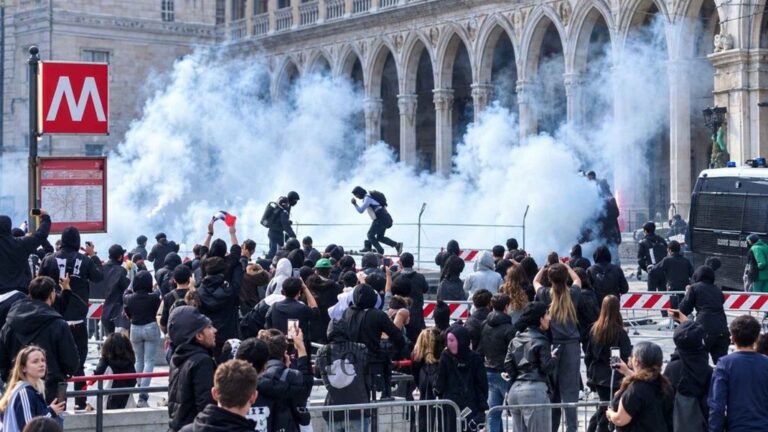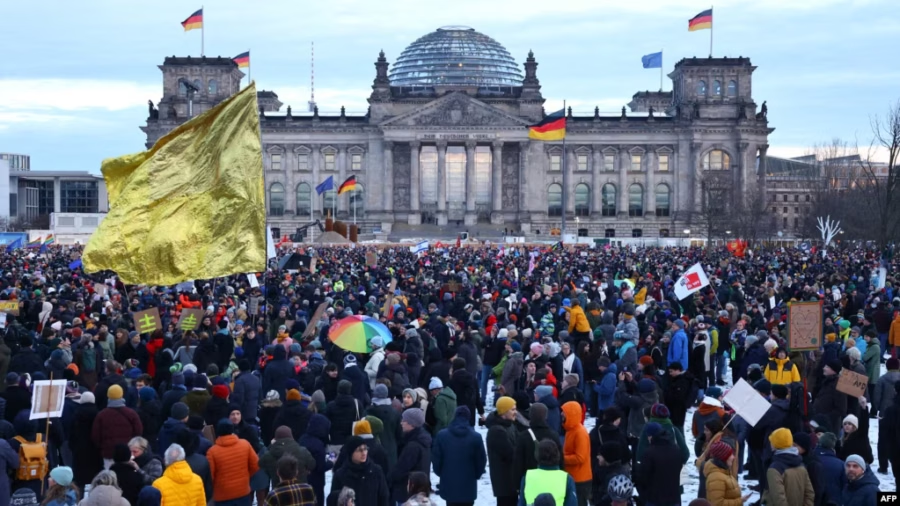
Germany’s newly formed “Gen Z regelt! Studis” (“Gen Z Decides! Students”) movement plans to join pan-European protests on November 20 and stage a mass strike at the country’s higher education institutions.
Reports say the main goal of the action is to bring the teaching process at universities to the fullest possible halt.
Among the protesters’ main demands are a significant increase in state funding for education, a legal ban on short-term employment contracts for academic staff, the introduction of a wealth tax and a complete halt to military research at universities.
The movement also demands the resignation of German Chancellor Friedrich Merz, leader of the Christian Democratic Union (CDU).
Speaking to Globalinfo.az, political commentator Kenan Novruzov said that, in general, protests have continued in many European countries over the past few months:
“The main driving force behind these protests is precisely students and young people. The ‘Gen Z actions’ are not merely a protest against changes in the education system, against students’ social problems and their anxieties about the future. It is an expression of protest against the political system, the governance model and the conduct of the existing political elite that have taken shape across Europe and are increasingly detached from society.
In fact, the key point here is that the younger generation no longer places the same trust in traditional political institutions and existing political forces as before. Young people are not only demanding solutions to social and economic problems. They want to take part in decision-making, to have a say on issues that affect their future, and to hold the political elite accountable. And problems such as education, unemployment, living costs, social inequality and distrust in the future only deepen this dissatisfaction further.

Kenan Novruzov
The point is that for many years Europe presented itself to the world as a model for the protection of democracy, human rights and political freedoms. But today, young people taking to the streets in those very societies and openly expressing their protest against the existing political system raises serious questions. It appears that Europe’s political elite has failed to appreciate in time the changing expectations of society and the demands of the new generation.
All this gives grounds to say that protests may continue for some time both in Germany and in other European countries. If governments, instead of eliminating the causes of this dissatisfaction, prefer to fight only the consequences of the protests, the process could turn into a more serious political crisis. Even government changes in some countries, resignations of senior officials and serious reshuffles among political forces are not ruled out. In this respect, it would not be right to assess what is happening now as merely student protests. What is at stake is the change in the new generation’s expectations of the political system in Europe and how prepared the existing political elite is for these changes.”
Turan Rzayev
Globalinfo.az
Read also