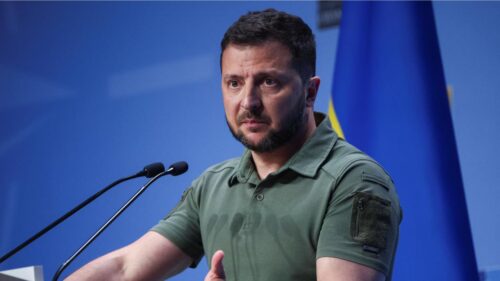
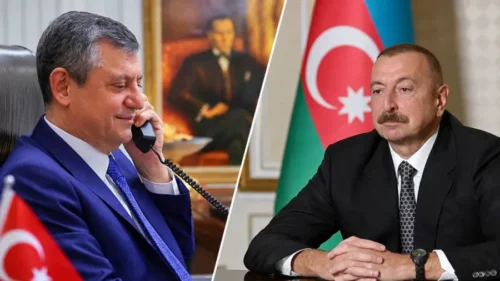
US Secretary of State Marco Rubio has said that the West can give Ukraine only security guarantees that Russia will also accept.
According to Rubio, the key to ending the war will ultimately be understanding that Ukraine will feel secure after the war.
“Of course, for the process to justify itself, Russia must also agree to this,” the US official noted.
Speaking to Globalinfo.az, political scientist Yusif Bagirzade said that the comments Marco Rubio made on ensuring Ukraine’s security in fact lay bare one of the most sensitive points of the diplomatic discussions aimed at ending the Russia-Ukraine war:
“Rubio states openly that the security guarantees the West will give Ukraine must be shaped on the basis of mechanisms that Russia can also accept. This position raises the fundamental question of which principles the post-war European security architecture will be built on.
The main contradiction here is that Ukraine demands reliable, long-term security guarantees to protect its sovereignty and territorial integrity. Russia, for its part, strives to retain its capacity to influence Ukraine’s future military and political direction. Reconciling these two approaches is the most difficult stage of the diplomatic process.
The striking aspect of Rubio’s statement is that Washington now presents security guarantees not simply as a bilateral matter to be agreed between Ukraine and the West, but as a component of a geopolitical agreement that must also be agreed with Russia. Although this approach creates certain opportunities for halting the war diplomatically, it raises serious questions regarding Ukraine’s future security. Because turning Moscow’s consent into a key condition could in effect give Russia leverage over Ukraine’s future security choices.

Another important point is the issue of security guarantees similar to NATO’s Article 5. Such a mechanism could envisage concrete Western support for Ukraine in the face of possible new military aggression. However, Rubio’s statement suggests that the plan on the table does not provide for such a thing.”
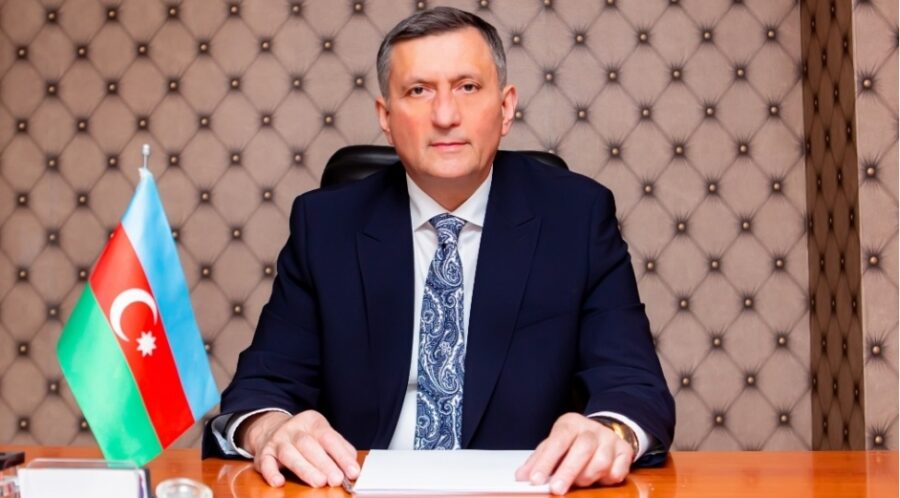
Yusif Bagirzade
The political scientist noted that this is precisely where the significance of the talks to be held in Abu Dhabi on November 10-11 comes from:
“Alongside the discussions between the US, Russia and Ukraine, the participation — even indirect — of representatives of the European Union (EU), NATO, France, Germany, the United Kingdom and Italy shows that the security issue is being discussed on a broader international plane. At the same time, given that Europe will be one of the main participants in future guarantees, its exclusion from the decision-making process could create serious problems.
The position of the European Union and especially of official Kyiv is that halting the war must not be limited to a ceasefire along the front line. The main issue is the creation of a reliable security mechanism that would make a resumption of the war impossible. This mechanism must not restrict Ukraine’s right to sovereign decision-making, and at the same time must reconcile international obligations with real political and military guarantees. Otherwise, any agreement reached with Russia’s consent but without Ukraine feeling secure will not be a lasting peace, and in general such a security guarantee will not be acceptable to either the EU or Ukraine.
I believe that the main geopolitical essence of this issue is the balance between defining the terms of peace and the right to decide Ukraine’s future fate. How exactly this balance is preserved will be one of the main factors determining the results of the Abu Dhabi talks.”
Turan Rzayev
Globalinfo.az
Read also