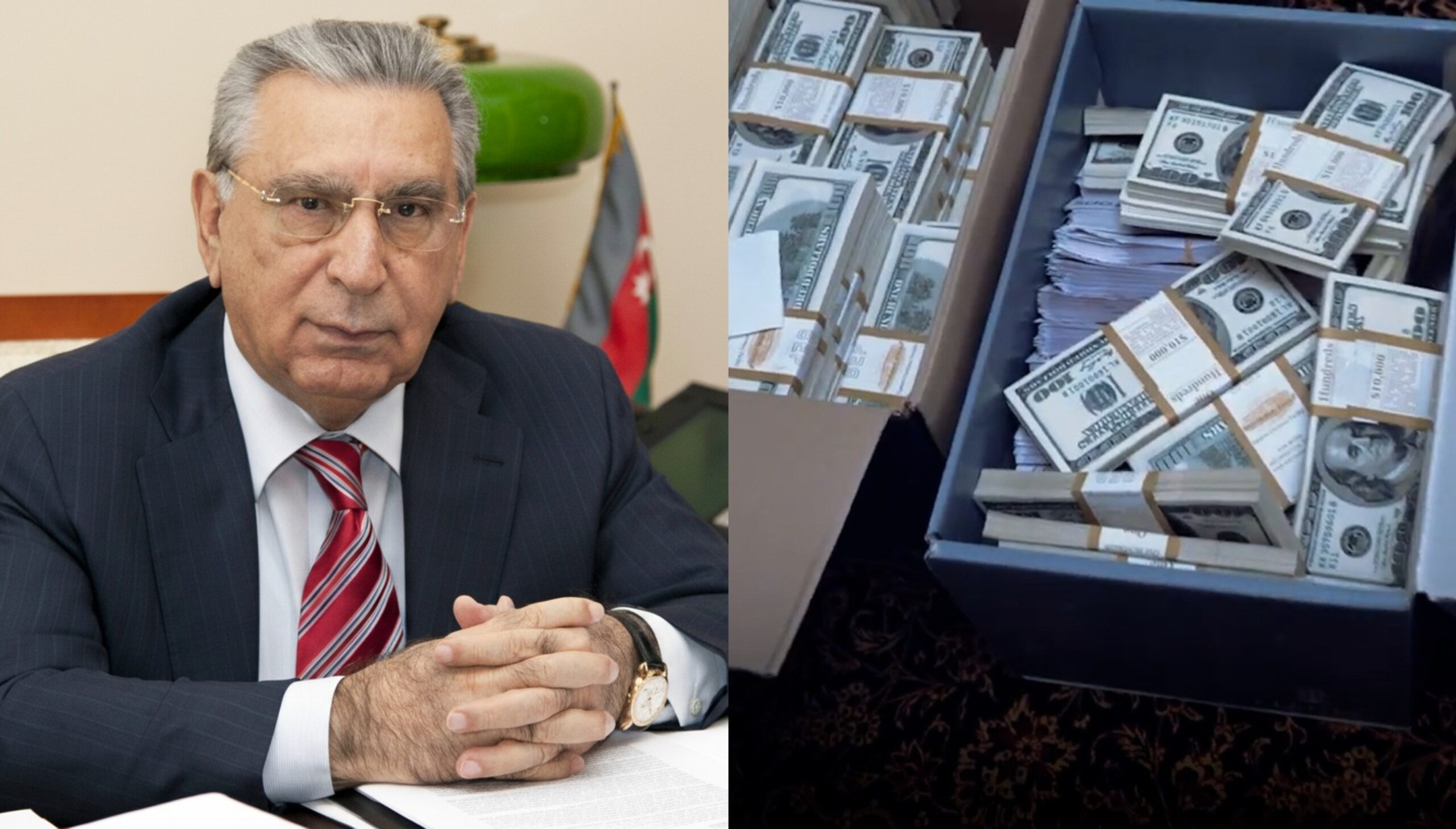
Reports that more than 17 million manats in cash were found at Ramiz Mehdiyev‘s home have sparked debate. In response to a relevant question in court, he said he had accumulated the money through his own labour, working since 1957.
But could Ramiz Mehdiyev have saved 17 million manats from the salary he received over those years? How economically realistic is it for him to have obtained such a sum? Taking daily and family expenses into account, how much income per month and per year would have been needed to accumulate that much money?
Speaking to Globalinfo.az, Doctor of Law and economist Vusala Ahmadova said that roughly 69 years pass from 1957 to 2025:
“Dividing 17 million manats by this period gives us average savings of 250,000 manats a year, or 20,833 manats a month. This means the person would have had to set aside more than 20,000 manats every month for 68-69 years, and on top of that pay all daily and family expenses from another source. It is known that Ramiz Mehdiyev headed the Presidential Administration in 1995-2019, and was president of the Azerbaijan National Academy of Sciences (ANAS) in 2019-2022. Open sources contain information about the salary he received during the periods in which he worked.”
The economist noted that since 2013 the monthly salary of the head of the Presidential Administration has been 2200 manats:

“For academicians, a monthly rank salary of 2000 manats has been set since 2018. Naturally, there may also be various allowances and other legal income.

Vusala Ahmadova
But even taking these factors into account, justifying the formation of a 17 million manat fortune solely from a state salary is absurd. So the argument of long years of salaried work is not enough to explain this wealth.”
According to Vusala Ahmadova, it must also be taken into account that since 1957 Azerbaijan has passed through several economic systems:
“Adding up 68 years of nominal income without taking into account Soviet-era salaries, the inflation of the 1990s, the 2006 denomination of the manat and subsequent changes in the purchasing power of the national currency is not a correct methodology. Therefore, for a real economic assessment, the incomes of each period, currency changes and investment opportunities must be analysed separately. Most importantly, this is about the wealth of a person who held high office in state administration for many years. The demand for transparency over the origin of the income and assets of such persons must be higher. It must be shown how that capital was formed, from which income sources it arose and through which financial mechanisms it was increased. If the volume of the wealth many times exceeds known income opportunities and the country’s economic possibilities, investigating its origin becomes an economic and legal necessity.”
Zaira Akifgizi
Globalinfo.az
Read also