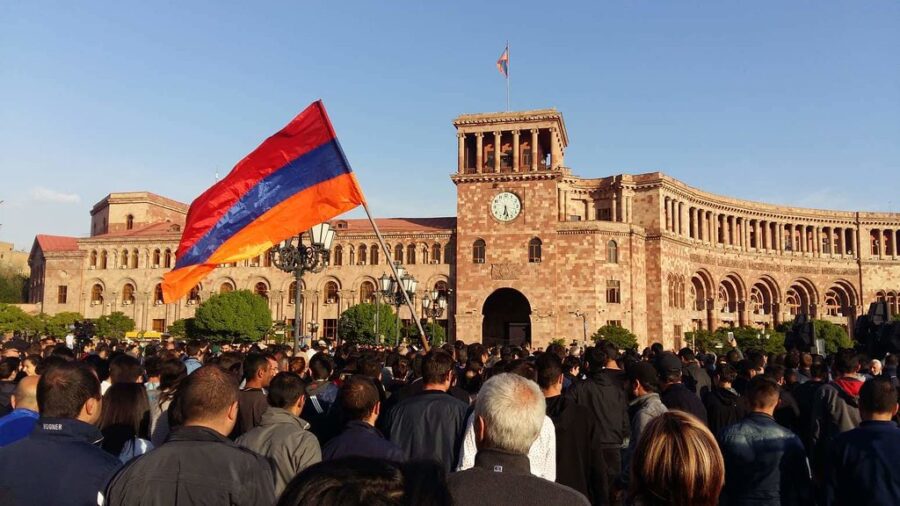
“Although this historic development concerning Armenia may at first appear to be an initiative to revise a country’s fundamental law, it does not merely entail changing the Constitution. It means a state redefining its vision from scratch, changing its political and philosophical thinking, and redefining its concept of national statehood and foreign policy priorities.”
Shabnam Hasanova, a PhD in political science and political analyst, told Globalinfo.az.
The political analyst said this raises the question of the ideological foundations on which state-building will be shaped from now on, the path to be chosen in relations with regional states, the political principles to be applied, and how soundly the fundamental pillars of a state can be built on healthy political thought rather than conflict:
“For Azerbaijan, its significance is clear. Removing territorial claims against our country contained in Armenia’s Constitution is important in terms of strengthening the legal and political foundations of relations between the two states and ensuring that no shortcomings, obstacles, potential risks or threats exist in the future.
Armenia’s Declaration of Independence is an important document in the formation of its modern statehood ideology. However, it is a document with inflammatory and problematic content. It seeks to politically and legally substantiate territorial claims against Azerbaijan’s historical and ancestral lands. This is a mistaken approach, and that mistake must be eliminated.
Thus, Armenia’s territorial claims against Azerbaijan did not remain at the level of any historical or political declaration, but were also reflected in its constitutional framework. This is precisely the basis of our objection. On the one hand, Armenia declares that it recognises Azerbaijan’s territorial integrity and sovereignty, while on the other, its Constitution contains entirely different political and legal references.”
The political analyst said putting the draft Constitution up for discussion does not mean it has been adopted:
“However, putting it up for public discussion is itself a major historic event. The removal of the term ‘Armenian people’ created a second shock effect. Because, alongside the other changes envisaged in the draft, this terminological change is also quite new for society.
I believe that when we say ‘Armenian people’, we see a concept that foregrounds ethnic-national identity and the historical tradition of statehood. When we say ‘the people of the Republic of Armenia’, we encounter a concept that expresses the country’s political and civic unity as the bearer of the state’s sovereignty.
In other words, there was previously a political emphasis based on ethnic-national identity. Now, we see this political emphasis transforming into a model of statehood based on the principles of territory and citizenship.
For example, former opposition MP Tigran Abrahamyan, in a position published by the Hraparak outlet, portrays this change as Armenia moving away from its model of national statehood. Naturally, the opposition’s goal is also clear: to cast a shadow over the draft by offering society a different explanation, to prevent the process, and, as they themselves note, to present it as a factor that could affect the country’s national and demographic profile.
However, I believe that removing the phrase ‘Armenian people’ from the preamble should not be understood as the legal abolition of either the Armenian ethnic group, its language or its national identity. The issue here is how the constitutional subject of state power and sovereignty is expressed.”
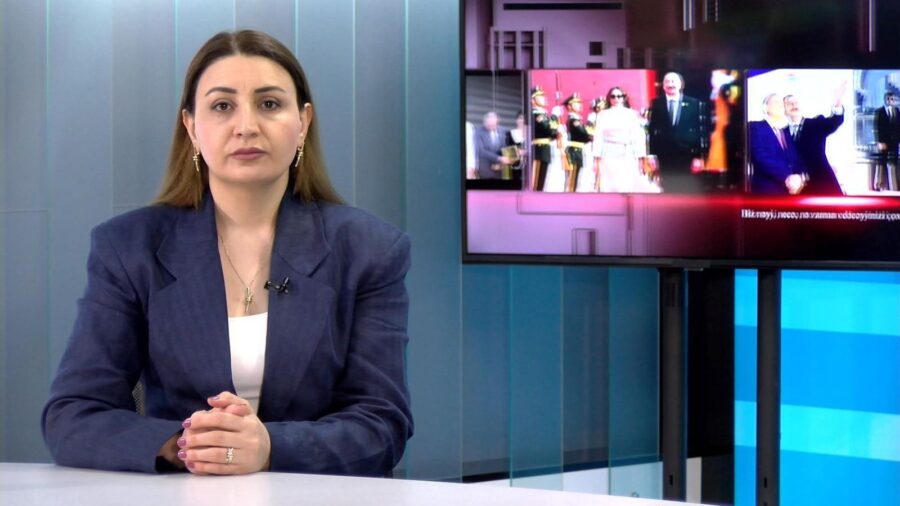
Shabnam Hasanova
The expert believes that it is precisely at this point that the political essence of the issue becomes deeper:
“Because Armenia had for many years shaped its concept of statehood around territorial claims and conflict. Historical claims, national memory and the Karabakh issue were the product of flawed ideological thinking. In other words, Armenia had not limited itself to building its concept of statehood solely on existing borders and the principles of citizenship.
In Prime Minister Nikol Pashinyan’s position, however, we see an attempt to build the concept of statehood more around the principles of internationally recognised territory, sovereignty, security and peace. Undoubtedly, this is an attempt at a fundamental conceptual change not only in Armenia’s legal document but also in its political thinking.
I would assess this process from another perspective as well. At the time, our National Leader Heydar Aliyev, as a great historical figure, managed to unite Azerbaijan around a single ideology. The philosophy of ‘Azerbaijanism’ became the foundation of our unity. I have always expressed the view that, when we speak of a state’s historical figures and personalities, there is not even a historical figure who could be considered the founder of the Armenian state and its political-philosophical thought. Since 1991, and even in the period before that, there has been no political figure who laid the foundations of Armenian statehood, was accepted as a foundational leader and formed a unified ideological concept in this direction. Armenia is beginning these processes not 35 years behind, but seemingly centuries later.
We see that the debate is not limited solely to the issues of Karabakh and national identity. Notable changes concern relations between the state and the church, the economic model, foreign policy, diaspora policy, electoral rights and public administration.
The diaspora issue is extremely important. We now see greater attention being directed towards citizens living within Armenia. This indicates that these changes do not concern only relations with Azerbaijan; there have also been certain gaps in Armenia’s domestic political and institutional system, and efforts are being made to fill them.
I believe it is possible to change a country’s Constitution, renew its legal norms and define new principles of statehood. But the most important issue is that changing mindsets and renewing collective memory is a long-term process. The adoption of the draft Constitution does not automatically mean the elimination of revanchist thinking. This will take years.
But accepting the post-Karabakh conflict reality and adapting the country’s concept of statehood to the new geopolitical conditions is Armenia’s only way out. What political legacy will be passed on to future generations is important. Will this legacy be shaped on the basis of confrontation, or built on regional cooperation and peace? The ‘people of the Republic of Armenia’ must answer this.”
Turan Rzayev
Globalinfo.az
Read also