“There is an interesting group of sculptures in the former Molokan Garden, named after Khagani Shirvani. This composition is called ‘Three Beauties’. There is virtually no information about the history of this group of sculptures.”
Globalinfo.az reports that historian Zaur Aliyev wrote this in an article.
He shared interesting information about the history of the sculptures:
“Elderly people in Baku whom I have spoken to about this say that, when the sculptures were installed, they were intended to symbolise the three peoples of the Caucasus — Azerbaijanis, Georgians and Armenians. It is enough to look at the form of the sculptures. The figures’ body types, head coverings and forms of worship are depicted in such a way that it is possible to conclude that they represent three peoples.
However, according to other elderly people, an urban legend circulating in Baku at the time said that the architect who created the sculptures intended them to symbolise the three elements of nature — the sun, air and water.
Other claims suggest that the composition embodies faith, hope and love. Some notes I have read interpret the sculptures as the three stages of a woman’s life — a young girl, a mother and a wise woman. The fact that all three figures turn their heads in different directions also symbolises looking towards the past, present and future.”
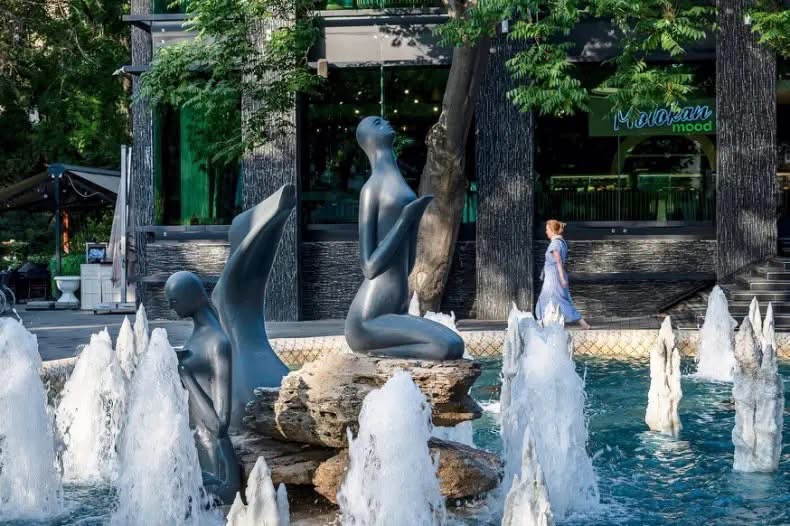
Citing sources, the historian notes that the sculpture composition was installed during the post-Second World War reconstruction years, in the 1960s:

“Created on the initiative of Alish Lambaranski, remembered as one of Baku’s legendary figures, the original of this composition disappeared in the 1990s. The sculptures we see in the area today are not the originals.
Let me add one important fact: the late Alish had to overcome the strict censorship barriers of the time to have these sculptures erected in Baku, and he succeeded. Otherwise, it would have been impossible to place such sculptures, created in a nude and minimalist style, in a city like Baku.
When the garden was renovated during the years of independence, artists made copies of the sculptures based on archival photographs and returned them to their original locations. The fate of the original figures remains unknown to this day. Although it is one of the city’s most famous and central monuments, the name of the sculptor of this work has not been recorded in any official catalogue or archival document.
In fact, the name ‘Three Beauties’ was given to the sculpture on the initiative of Baku residents. In reality, the composition never had an official name. Baku residents gave it this name because of its resemblance to the Charites, the goddesses of beauty and grace in ancient Greek mythology.
Another interesting fact is that this type of sculpture also existed in the Ottoman state. Despite public protests, sculptures known as the ‘Three Beauties’, which Pargali Ibrahim Pasha, the vizier of Sultan Suleiman I, brought from Buda after the Battle of Mohacs, were erected in the garden of his palace at At Meydani.
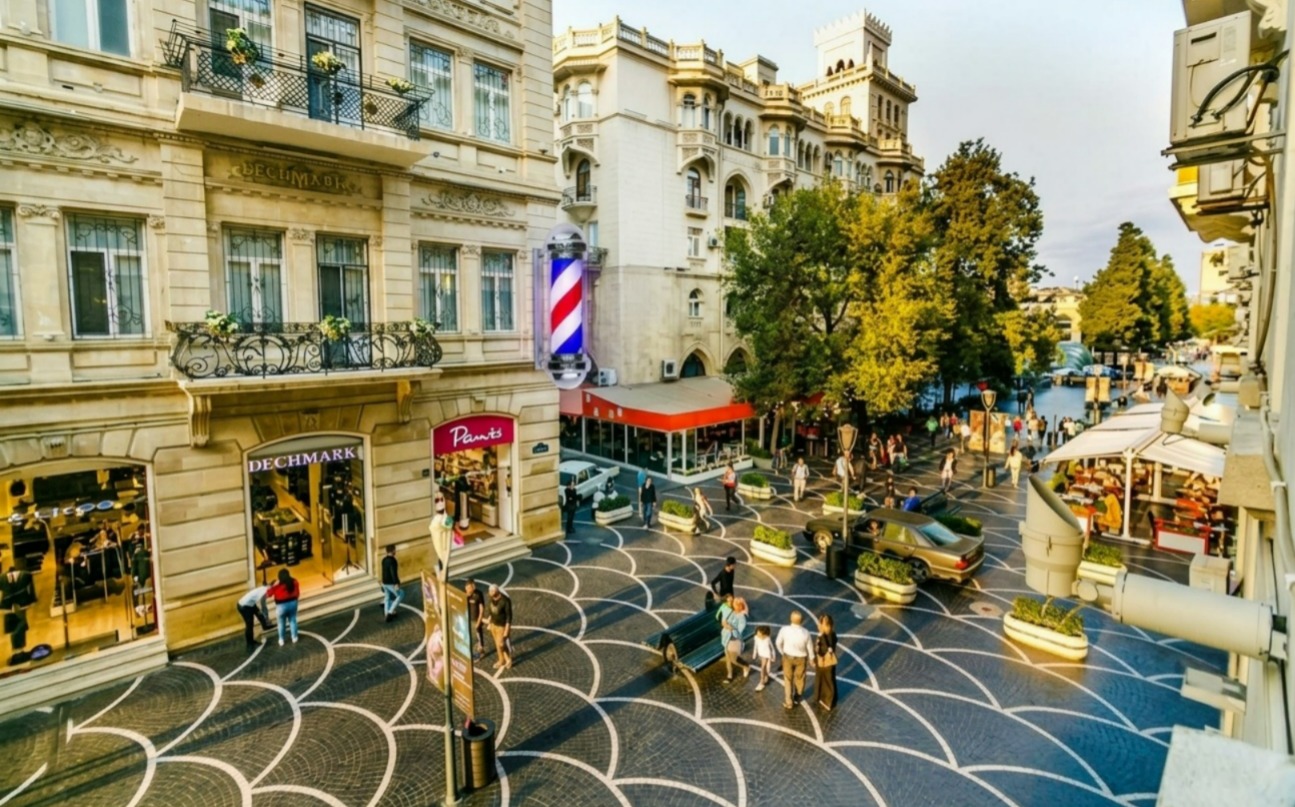
It is possible to encounter such mysterious and interesting sculptural compositions in central Baku.
Aliyar Khalil
Read also