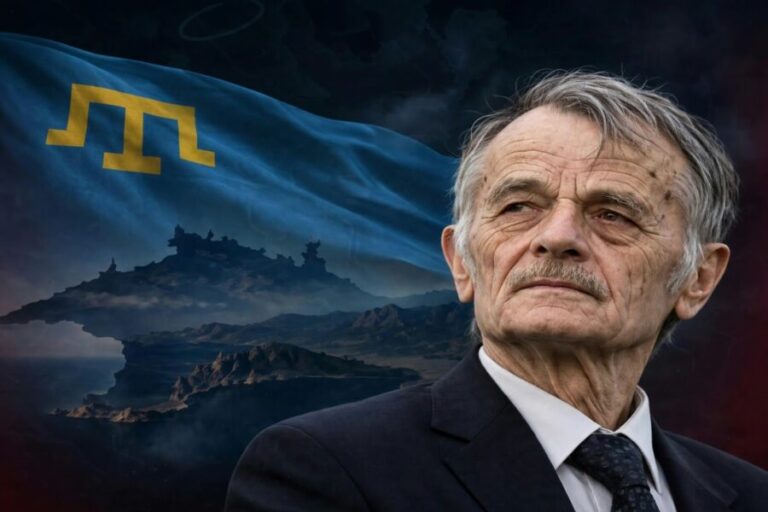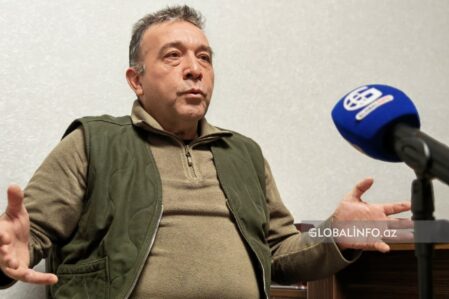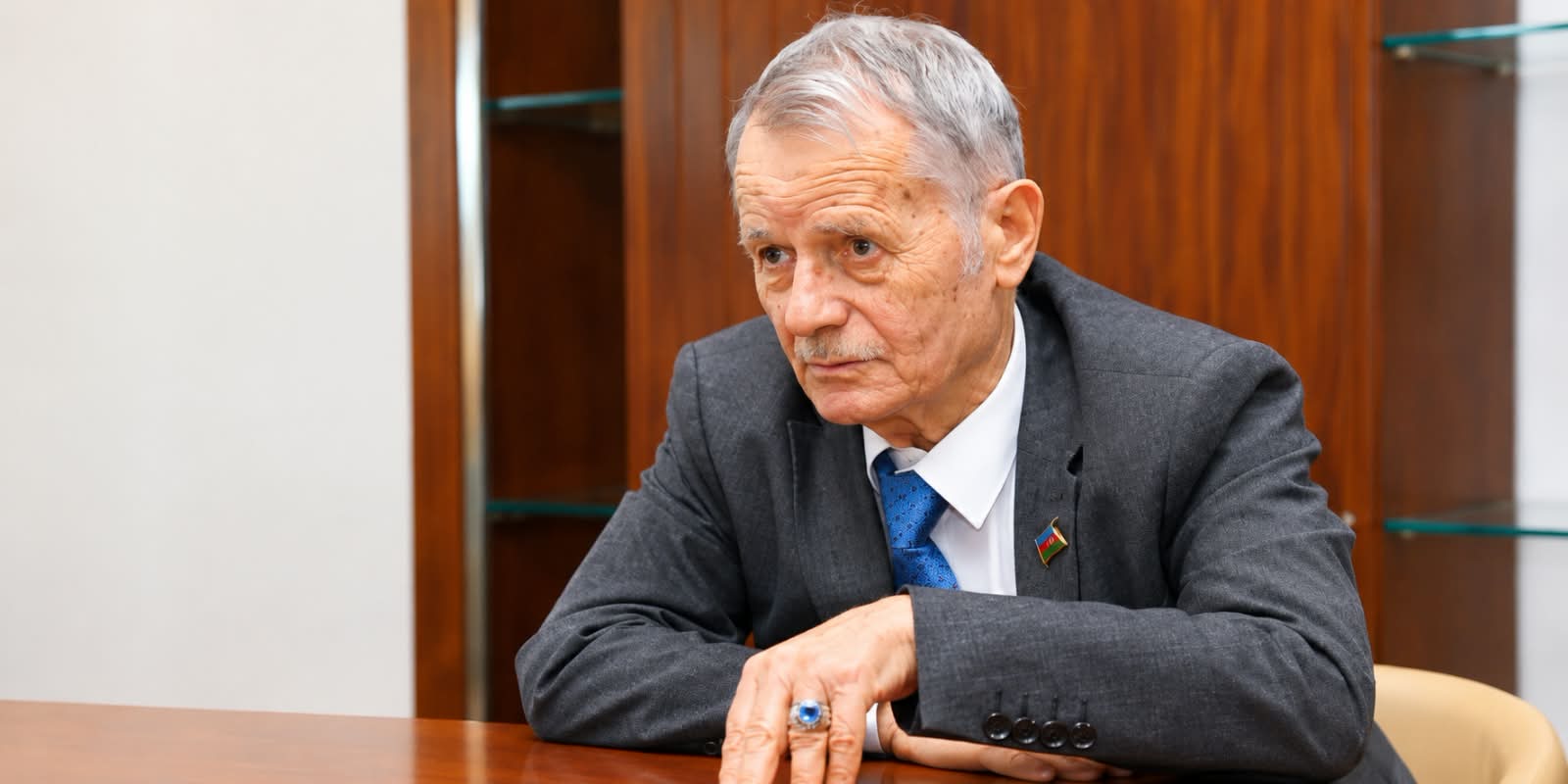
Globalinfo.az presents an interview with the leader of the Crimean Tatars and a deputy of the Verkhovna Rada of Ukraine, Mustafa Abdulcemil Krymoglu:
– Mr. Mustafa, in your interview with “Türkiye Gazetesi” you said that preparations for the creation of a new model of the Autonomous Republic of Crimea had been completed. This envisages the creation of a national-regional autonomy within the framework of Ukraine’s territorial integrity. Could you explain the significance of this proposed model, or roadmap, for the Crimean Tatars?
– In fact, this was the demand of the Crimean Tatar National Movement that emerged after Stalin’s death. First, the return of the Crimean Tatar people to their homeland. The return of the lands unjustly taken from them. Third and most important, the restoration, within the Soviet Union, of the Crimean Tatar Autonomous Republic that had existed before the war. That is why the participants of the Crimean Tatar National Movement were called “autonomists,” because we demanded autonomy. After the collapse of the Soviet Union, and after the Crimean Tatars began returning to their homeland with Ukraine’s support, this issue came onto the agenda again. Our demands were now addressed to the Ukrainian state. In 1991 a referendum was held in Crimea on the creation of the Autonomous Republic of Crimea. At that time there were only about 40,000 Crimean Tatars on the Crimean peninsula. The rest, the majority, were in exile in Kazakhstan, Uzbekistan and other places. We were against it, because this autonomous republic should have been an autonomy based on international law concerning the self-determination of the indigenous people. But in practice they set up a Russian Crimean republic. Hundreds of thousands of Russians had been brought to the Crimean peninsula, and Russians made up the majority there. At that time I personally met with then-president Leonid Kravchuk. I said, “You are now planting a bomb against Ukraine’s integrity. You are building a Russian republic. We are categorically against this.” But Kravchuk said at the time that “we are creating it on a fully national basis.” But that did not happen. In practice it was a Russian republic. Those in power, from top to bottom, were Russian chauvinists and Russophiles.
Now the situation has changed. After the occupation they again set up the Russian republic of Crimea. Formally, the Ukrainian language, the Crimean Tatar language and Russian were recognized as official languages. But in practice the Ukrainian language was completely banned. As for the Crimean Tatar language, there are only the texts of the Verkhovna Rada and some official documents, and the language is found nowhere else. In short, thorough Russification is being carried out.
After the occupation, everyone understood what had happened on the Crimean peninsula. In particular, the Crimean Tatar people and their representative body, the Crimean Tatar National Mejlis, resolutely opposed the occupation, did not recognize it and said that Crimea is Ukrainian territory. Before the occupation is over, it demanded the creation of a Crimean Tatar Autonomous Republic here, not a Russian one. It is not a condition that the word “Tatar” must necessarily be used; as I said earlier, a republic must be created based on international law concerning the self-determination of the indigenous people. These words must be written in the preamble. In the Constitution of the Autonomous Republic of Crimea of Ukraine, the Crimean Tatar language must be an official language alongside the Ukrainian language. In order to defend themselves, the Crimean Tatar people must be adequately represented in the system of governance, in the legal system and in the Verkhovna Rada. No other privileges are envisaged for the Crimean Tatars.
This demand was in fact also supported by the European Parliament. In February 2021, a resolution on Ukraine’s cooperation with the European Union was adopted in the European Parliament. The document also set out conditions for Ukraine’s accession to the European Union. These articles stated that the fundamental rights of the Crimean Tatar people must be ensured. The Crimean people must be recognized as an indigenous people of Ukraine, a separate law on their status must be adopted, and Section 10 of the Ukrainian Constitution, on the status of the Autonomous Republic of Crimea, must be amended to give it a status based on the right of the indigenous people to self-determination. In Ukraine, the law adopted in July 2021 recognized the Crimean Tatars as an indigenous people. Now two articles remain: the status of the Crimean Tatar people and the amendment of the Ukrainian constitution regarding the Autonomous Republic of Crimea. However, Ukrainian laws do not provide for constitutional changes in wartime. Therefore, if there is a ceasefire or any peace treaty, this status issue must be resolved first.
After the 2019 presidential election we met with Volodymyr Zelensky. We conveyed these demands to him. Zelensky said that he was not against it: “Give us these projects of yours, let our experts look at them, and let us start work on them.”
In the interview with “Türkiye Gazetesi” it was written that “an agreement has been reached with the Ukrainian state regarding the Autonomous Republic of Crimea,” but this is not exactly correct, because Ukraine is not a monarchy and the president’s opinion may be such, but decisions are adopted in parliament. We are now working on this. And other media outlets began writing absurd things, as if “a Crimean Tatar state is being established” there.
– And a thought was voiced in the interview that “if circumstances require it, we can declare a republic in exile”…
– He asked whether you can establish your own government in exile. I said, why in exile? He thought we were outside Ukraine, in emigration. I said that we are on our own land, in our own state. Therefore we have no intention or idea of going outside Ukraine. The Ukrainian state always supports us in these matters.
– How do you think Turkey could contribute to this process?
– Turkey, in fact, has always stated, including after the 2014 Russian occupation, that it does not recognize this occupation and that Ukraine’s territorial integrity must be ensured. We are of course grateful for that. But statements alone are not enough to free the territory from occupation; practical support is needed here.
After the occupation we met with Mr. Erdoğan. He asked us, “How can we help?” And we said, “Join the sanctions imposed by the European Union or Western countries. Ban ships from passing through the Bosphorus Strait. Blockade the land territory of Crimea with your ships so that Russian soldiers and ships cannot approach.” He stated that “we cannot join the sanctions imposed by European and Western countries, because there are reasons for this.” Apparently the reason at that time was that 65-70% of natural gas was purchased from Russia. They did not want to spoil their relations with the Russians. “We cannot close the Bosphorus either, because there is the Montreux Convention. But we are a NATO country, and if NATO takes any measures against this occupation, we will be the first country to join those measures.”
So this position is normal, and we received this answer with understanding, especially on the sanctions issue. Turkey helps and supports us as much as it can. But unfortunately, this support is not enough.
– You said “Vuslat uzak değil” — “Reunion is not far off.” Azerbaijanis never lost faith that they would regain the occupied territories. And after 30 years we were reunited with those lands. Is it this just struggle that gives you this hope?
– We undoubtedly greeted the results of this Karabakh war with great joy. Because it truly gave us hope, both in Crimea and here. However long the occupation continues, in the end those lands will be liberated. We conveyed our congratulations to Azerbaijan.
– How do you assess the current situation regarding the Ukraine war?
– As for the current situation, as you know, perhaps the people who suffered most in this war were the Crimean Tatar people. We opposed the occupation on the Crimean peninsula as a single nation, and the greatest pressure was exerted on our people. Now 65-70% of political prisoners are Crimean Tatars. But imagine, our share of the population there is about 13%. That is, the pressure on us is five or six times greater. Therefore, as a result of this pressure, a large number of Crimean Tatars were forced to leave their lands and go to other countries. Our people who left Crimea before this big war mostly came to the mainland part of Ukraine. But after the big war began, the borders were closed, and the Crimean Tatar people leaving Crimea were forced to take refuge in various countries of the world. An intensive policy of Russification and assimilation is being carried out on the Crimean peninsula. What I want to say is that if the Crimean peninsula is not liberated from occupation, the Crimean Tatar people will have no future. Either the majority of our people will again leave their homeland, or they will be Russified there and become mankurts.
Now peace plans and a ceasefire are being discussed. But this war will not end until not only Crimea but all the occupied territories are liberated. Even if there is a ceasefire, it will be only a temporary pause. Both sides will prepare for a new war. The next war will perhaps be bloodier. Therefore peace must be based only on international principles. According to the second article of the Charter of the United Nations, the territorial integrity of states must be ensured unconditionally. If this does not happen, the war will not end.
– Thank you very much, Mr. Mustafa. On behalf of the Globalinfo.az editorial staff, we once again congratulate you on your birthday. We wish that the return of the Crimean Tatars, to whom you have devoted your life, to their homeland will be realized soon.
Gulnar Salimova
Globalinfo.az
Istanbul
Read also