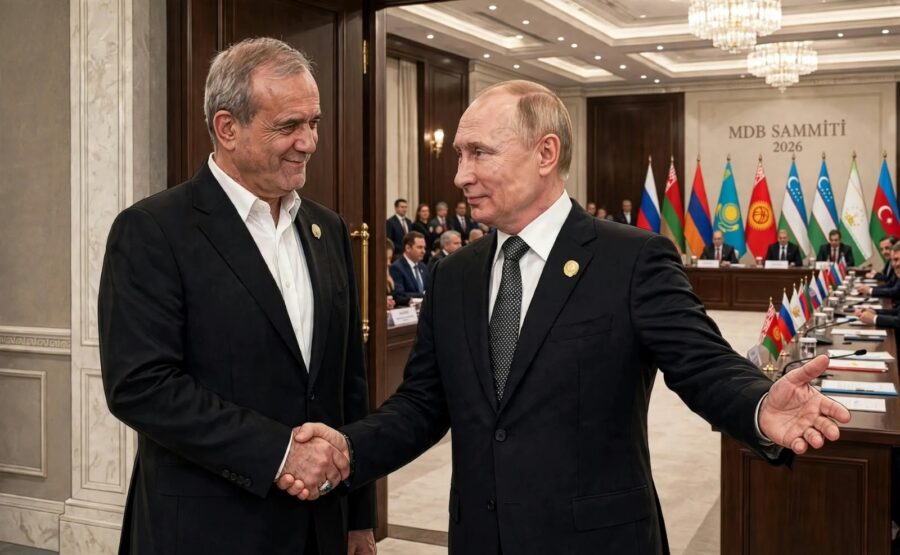
Commonwealth of Independent States Secretary-General Sergei Lebedev said Iran could become the first country to obtain participant status under this format. He said the matter is currently under discussion and that the initiative has been broadly welcomed by CIS member states.
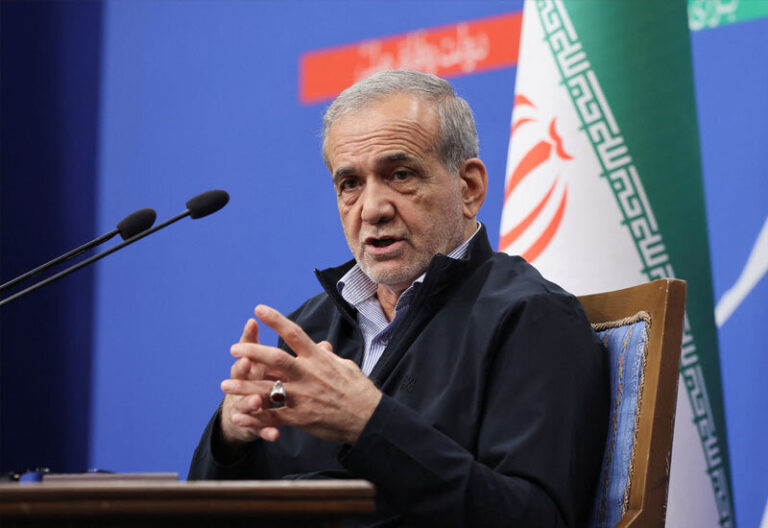
The issue has not emerged by chance. At the summit of the CIS Council of Heads of State held in Avaza, Turkmenistan, on October 9, 2026, Iranian President Masoud Pezeshkian proposed creating a cooperation mechanism called “CIS+1” between Iran and the bloc’s member states. He said the format could expand regional cooperation in trade, investment, technology, energy and transport.
The decision to create the “CIS+” format was adopted at a summit in Dushanbe on October 10, 2025. The mechanism envisages involving non-CIS states and international organisations in cooperation with the Commonwealth. For example, the Shanghai Cooperation Organisation has been granted observer status with the CIS. If Iran’s initiative is accepted, Tehran will become the first state to participate in the CIS’s new cooperation mechanism.
In recent days, the development has generally been interpreted as Iran joining the CIS. However, the process that appears to be Iran’s accession to the CIS in fact carries different political and economic implications.
The CIS is a regional cooperation organisation established after the collapse of the Soviet Union in 1991. Azerbaijan, Russia, Belarus, Armenia, Kazakhstan, Kyrgyzstan, Tajikistan, Uzbekistan and Moldova are full members of the Commonwealth. Turkmenistan participates as an associate member. Moldova’s participation in the organisation’s activities has been severely restricted in recent years.
The CIS’s main objective is to preserve and develop cooperation among member states in economic, political, humanitarian, transport, security and other fields. CIS membership is not the same as participation in the CIS+ format.
Full membership means that a state assumes certain obligations under the Commonwealth’s charter, takes part in the organisation’s institutional mechanisms and becomes a full party to decision-making. “CIS+” is a more flexible cooperation mechanism. It allows non-member states that seek to expand their economic and political ties with CIS countries to participate in the Commonwealth’s activities in specific areas. In other words, a state can establish broad cooperation with the CIS without becoming a full member. This is a favourable model, particularly for states that do not wish to join the organisation but want to develop economic and political ties with post-Soviet countries.
The CIS is effectively seeking to expand its geographical and political sphere of influence. In other words, the organisation does not want to remain solely a platform for cooperation among former Soviet republics; it also seeks to draw states in neighbouring regions into its economic and political agenda.
Tehran wants to participate in the “CIS+” format. Iran will therefore not become a CIS member but will cooperate with the Commonwealth through a special partnership mechanism. This distinction is important both for Iran and for CIS countries, as Iran’s full membership of the CIS would raise broader political and legal issues.
According to Sergei Lebedev’s statement, the issue of Iran’s status is still under consideration. Therefore, the matter is currently a discussion of a political initiative, not an adopted final decision.
What would Iran gain by joining the “CIS+” format?
Tehran’s interest in the initiative is not accidental. In recent years, Iran has paid particular attention in its foreign policy to regional cooperation, integration into the Eurasian space and reducing the economic impact of sanctions imposed by Western countries.

For Iran, the main advantage of the CIS+ format could be the expansion of new economic and transport links.
First of all, trade comes to the fore. CIS countries represent a broad market for Iran. Deepening economic ties with these states could expand Iran’s export opportunities and pave the way for new cooperation projects in agriculture, industry, petrochemicals and other sectors.
The second important area is transport and logistics.
Due to its geographical location, Iran is an important transit country between Europe, the Caucasus, Central Asia, the Persian Gulf and the Indian Ocean. The International North-South Transport Corridor also serves Tehran’s strategic interests in this regard.
Expanding cooperation with CIS countries could allow Iran to increase its transit potential, expand freight volumes and strengthen its position in the region’s transport network.
The third area is energy cooperation.
Iran has large oil and gas reserves. The CIS region also includes countries rich in energy resources. Alongside competition, there are significant opportunities for cooperation.
It should also be noted that Pezeshkian raised the idea of creating a unified energy network at the Avaza summit. According to the Iranian president’s approach, countries should coordinate production and supply issues rather than squeeze each other out of the energy market. This could create new opportunities for electricity exchanges, gas and oil transportation, energy infrastructure development and the formation of a regional energy market.
Another important issue is financial settlements. Iran has long faced international financial restrictions. Tehran is therefore interested in expanding settlements in national currencies, creating alternative payment mechanisms and barter trade.
Cooperation with CIS countries in this area could increase Iran’s room for manoeuvre in foreign trade.
Turan Rzayev
Globalinfo.az political writer
Read also