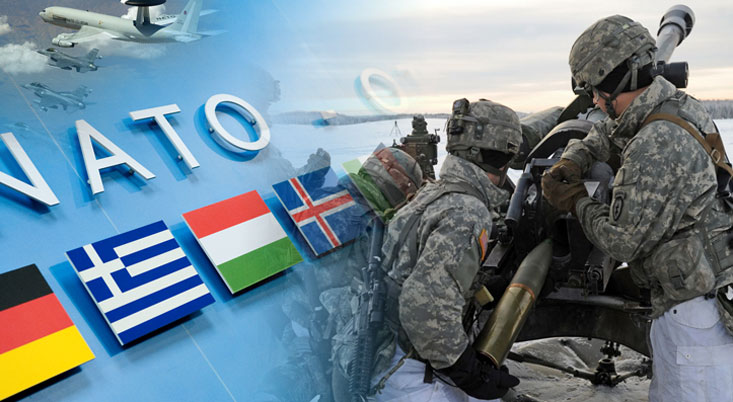
Sevim Dagdelen, foreign policy expert for Germany’s Sahra Wagenknecht Alliance (BSW) party, has proposed that her country immediately leave NATO.
In an article published by NachDenkSeiten, she argued that Germany’s current policy increases the risk of a military confrontation with Russia. According to Dagdelen, the North Atlantic Alliance intends to turn the proxy war in Ukraine into an open military conflict with Russia.
“They want to draw another country into the war. That country is Germany. I propose that our country urgently leave NATO,” Dagdelen said.
Speaking to Globalinfo.az, political analyst Gabil Huseynli said there are several important points to consider:
“The first point is Germany’s strategic dependence on the United States. Although Germany became one of Europe’s strongest economies after the Cold War, it has long relied on US military and political guarantees on security issues. However, after President Donald Trump returned to power in the United States, changes in Washington’s approach to Europe, demands that NATO members increase defence spending and discussions over the US military presence in Europe have caused concern in Berlin. Dagdelen’s statement comes against the backdrop of these debates.
The second point is Germany’s rearmament and its economic and social consequences. One of Dagdelen’s arguments is that increasing defence spending within NATO will undermine Germany’s social welfare model. She draws a link between expanding the military budget and reduced funding for social security, healthcare and other areas. This could, in fact, become the subject of a broader debate in German society. As the country faces economic stagnation and problems related to social spending, increasing military expenditure is a politically sensitive decision for the government.
The third point is the approach towards Russia and Europe’s future security system. There is no unified political position in Germany on the war in Ukraine. One group of politicians considers it essential to strengthen NATO’s military capabilities to deter Russia, while another believes this raises the risk of a direct confrontation with Moscow. Dagdelen represents the second position. The essence of her call is for Germany to prioritise diplomacy and neutrality, rather than military confrontation, in its relations with Russia.”

Gabil Huseynli
The political analyst said Dagdelen’s proposal does not mean that Germany will leave NATO in the near future:
“BSW is not currently one of the main forces that determines power in Germany’s political system, and there is no broad political consensus in the country on leaving NATO. Moreover, under Article 13 of the North Atlantic Treaty, a member state can leave the Alliance one year after giving notice of its intention to do so. Therefore, the political and institutional obstacles to implementing this call are quite substantial.
In my view, the real significance of this statement lies less in the likelihood of Germany leaving NATO than in showing weakening confidence in transatlantic relations in Europe. The Trump administration’s tougher and more demanding stance in relations with Europe, questions over the future of US security guarantees and the prolonged war in Ukraine are forcing European countries to reconsider their strategic choices.
I believe Germany leaving NATO is not a realistic scenario in the near future. However, discussions may expand in Berlin on pursuing a more independent security policy from the United States, strengthening Europe’s defence capabilities and keeping diplomatic channels open in relations with Russia. The main question is not whether Germany remains in NATO, but how independently it will be able to make political decisions within the Alliance in the future.”
Turan Rzayev
Globalinfo.az
Read also