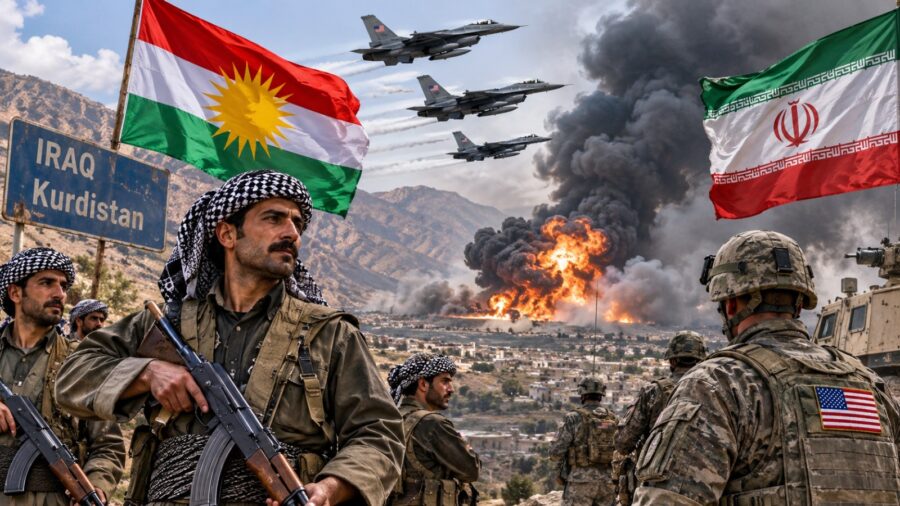
The political and economic standoff between the central government in Iraq and the Kurdistan Regional Administration, which has lasted for many years, has entered a new phase. The decisions announced by Iraqi Prime Minister Ali al-Zeydi on November 24 were the main starting point of this tension. Baghdad demanded that all border crossings controlled by the regional administration be handed over to federal bodies, and that the management of a number of oil fields located outside Kurdistan’s official administrative borders — though secured by Kurdish forces — be transferred to the Iraqi Oil Ministry. In addition, instructions were issued that oil exports be carried out only with the consent of the federal government. The Iraqi Supreme Federal Court’s confirmation of the federal government’s authority to exercise control over international borders legally strengthened Baghdad’s position.
This step by Baghdad is an attempt to restore unified state control over energy revenues, customs duties and strategic territories. The Kurdish administration long derived serious economic and political leverage from oil production and export, as well as cross-border trade with Turkey. The central government claims that this system operates outside Iraq’s overall economic and legal mechanisms. Disputes over the distribution of oil revenues, delays in budget transfers and the struggle for control of the customs system have deepened mistrust between the sides.
The resumption of Iraqi oil exports through Turkey creates an opportunity for the central government to use alternative and more controllable routes. At the same time, the implementation of the Development Road project is of strategic importance for turning Iraq into a regional transit and logistics hub. Under such conditions, ensuring unified control over the country’s northern borders, oil infrastructure and transit capabilities becomes even more important for Baghdad. In other words, the Iraqi government is seeking to limit the capabilities of parallel economic and political power centers within the country before implementing future economic projects.
The factor raising tensions
However, this policy of Baghdad faces a serious obstacle. The Kurdistan Regional Administration considers itself not an ordinary administrative unit of Iraq but a federally recognized entity enshrined in the constitution. For this reason, it does not regard the central government’s attempt to seize control over borders and oil fields as simply an anti-corruption fight. According to Erbil’s position, these decisions are interference in the regional administration’s constitutional status and right to self-governance. Prime Minister Masrour Barzani called Baghdad’s steps unacceptable and said that everyone is ready to become Peshmerga to protect Kurdistan’s status. Kurdish political forces have also demonstrated a joint position against the federal government’s decisions. Protest actions in Erbil and Duhok, the movement of Peshmerga forces toward disputed areas and the strengthening of military positions move the dispute beyond the level of political statements.
Another noteworthy point here is the serious deterioration in recent times of relations between the Barzani and Talabani families. For some time there have been disagreements between the Kurdistan Democratic Party and the Patriotic Union of Kurdistan over the formation of the government, the work of parliament and the distribution of administrative powers. The Talabanis had even withdrawn from the regional government. In fact, this is precisely what prompted Baghdad to act. It is true that Baghdad’s interference in the main economic and security levers of regional autonomy has brought the two political families closer to a common position, at least on this issue, but it cannot be said that internal contradictions have been fully eliminated.
Alongside these steps, the Iraqi government’s efforts to limit the activity of Shia armed groups known for their closeness to Iran are also noteworthy. The al-Zeydi government presents its policy not as a fight against a particular political or ethnic force but as the restoration of the Iraqi state’s central authority.
Washington’s regional interest
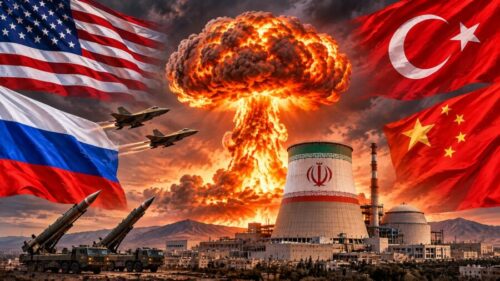
The point that drew my attention most in this matter is the position of the United States. In a speech in London on November 11, US Special Envoy for Syria and Iraq Tom Barrack said that Iraq’s internal affairs would not be resolved by the Americans and that this was Iraq’s own decision. He stressed that Washington would not intervene and could only offer advice, assistance and mediation. Barrack also called on Kurdish leaders to normalize relations with Baghdad and overcome internal political fragmentation. On November 25, after tension between Erbil and Baghdad increased, Barrack offered to mediate between the sides and called on al-Zeydi to refrain from the military option.
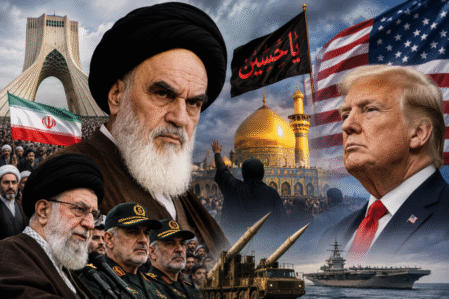
I believe there are concrete strategic calculations behind Washington’s approach. In my view, what is happening should be viewed precisely in the context of the expansion of the US-Iran confrontation. Washington has long regarded the Kurdish factor as an important instrument in its Middle East policy. But the Kurds also have their own political calculations. They have repeatedly supported the United States and were among Washington’s main partners, particularly in the fight against ISIS. In return, they expect not only political support and security guarantees but more concrete political outcomes. For certain wings of the Kurdish political movement, the highest form of that outcome is the creation of an independent state.
By allowing Baghdad to increase its leverage over Erbil, the United States could put Kurdish political forces before a choice. That is, the Kurds could be sent the message that if they do not provide sufficient support for Washington’s regional policy, particularly the cooperation expected in the confrontation with Iran, protecting their existing autonomy will become difficult.
My other and main hypothesis is that the United States wants the tension between the Iraqi central government and the Kurdistan Regional Administration to deepen, even to the point of armed confrontation. In this way, the Kurdish issue could again be brought onto the international agenda. If Baghdad’s pressure increases anxiety in Erbil about the future of autonomy, the question of independence could again become relevant among Kurdish political forces. That would create a political basis for putting the demand for a referendum on the agenda.
In any case, in this situation the Kurds will either have to take a position more in line with Washington’s regional strategy or accept that their own capabilities vis-à-vis Baghdad are gradually diminishing.
Turan Rzayev
Globalinfo.az political columnist