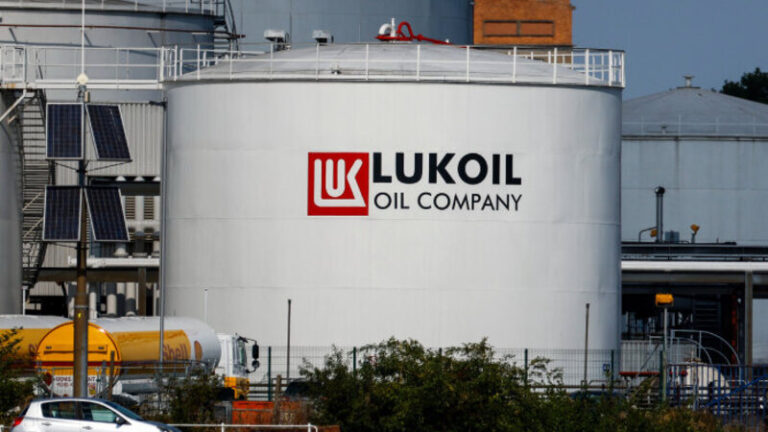
The agreement to sell the international assets of the Russian oil giant LUKOIL to a consortium led by US billionaire Todd Boehly has raised serious questions about the company’s future. The roughly $10 billion deal is being closely watched not only in Russia’s energy sector but also in other countries where the company operates, including Azerbaijan. Of particular interest is the fate of LUKOIL’s 19.99 percent stake in Azerbaijan’s strategically important Shah Deniz gas and condensate field. If the sale of the international assets goes through, that stake is also expected to pass under the new owner’s control. However, the completion of the deal, sanctions restrictions and the partners’ pre-emptive right to buy remain open questions.
Meanwhile, the company’s owner Vahid Alakbarov says the exit from the international market was not a voluntary decision and that he hopes to return in the future. According to him, LUKOIL’s international reputation and the trust it has earned in various countries could enable the company to operate in those markets again.
What do these developments mean for the future of Vahid Alakbarov’s business empire? Will he settle for losing his international assets, or will he have the opportunity to protect and rebuild his business under the new circumstances?
Speaking to Globalinfo.az, the chairman of the Center of Liberal Economists, Akif Nasirli, said this deal is the most painful part of the business empire:
“This is not about the sale of the entire company. We are talking only about LUKOIL International, the company that manages the foreign assets. That is, the oil fields, plants and the core business in Russia remain with Vahid Alakbarov. But the international empire he built over the years is slipping out of his hands. This is not a voluntary decision but a forced step. Because after the US imposed sanctions on LUKOIL in October 2025, the company could not operate normally abroad. Banks closed accounts, partners withdrew from cooperation, and ships, plants and filling stations were left at risk. Either the assets had to be sold, or there was a danger of losing them. The deal itself is not an ordinary sale either. The consortium led by Todd Boehly is not paying cash. It is handing over roughly $10 billion worth of LUKOIL shares and in return acquiring international assets valued at about $16 billion.”
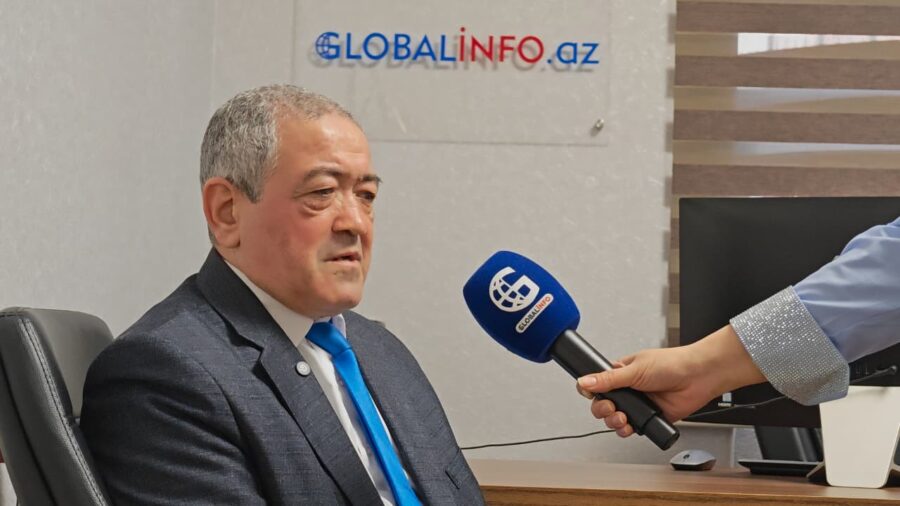
Akif Nasirli
The economist said that LUKOIL is in fact giving away its assets at a discount:
“Moreover, those shares do not reach LUKOIL immediately either. They will be held in a blocked account in the United Arab Emirates (UAE) and can only be used after the sanctions are lifted or after five years. That is, Alakbarov is not earning real money now; he is simply preventing the full confiscation of the assets. The most sensitive issue for Azerbaijan is Shah Deniz. LUKOIL holds a 19.99 percent stake there. Since that stake is part of LUKOIL International, formally, if the deal goes through, the stake should pass to the new owner. But this is not certain. Because the deal has not yet been completed. The Office of Foreign Assets Control (OFAC) of the US Treasury Department must give its approval. Two previous attempts, the talks with Gunvor and Carlyle, stalled at precisely this stage. Boehly says completion could take up to a year.”
The expert noted that the partners in Shah Deniz have a pre-emptive right to buy:
“That is, when the stake is sold, the other partners, for example the operator bp and SOCAR, can first say whether they want to buy that stake. In 2022, when the stake was bought from Petronas, it was precisely because of this right that the stake fell from 15.5 percent to 9.99 percent. Now the same mechanism could come into play. That is, the stake will not automatically pass to the American consortium; the partners may buy it.
Vahid Alakbarov will not settle for losing his international assets, but he has already lost the ability to preserve them as they are. He is now shifting to a strategy of protecting his business in Russia, surviving under sanctions and preserving his capital and his name for the future. If policy changes, he could return. But it will be in a completely new form, not like the old LUKOIL.”
Laman Imran
Globalinfo.az
Read also