After the votes were counted in the midterm elections held in the US, the Democrats won 162 seats in the House of Representatives and the Republicans 102. In the Senate, the Democrats hold 51 seats and the Republicans 39. Thus the Democratic Party has gained a majority in both the Senate and the House of Representatives.
In an interview with The New York Times, US President Donald Trump said he accepted the results of the midterm elections and was ready to cooperate with the Democrats.
“I am fully prepared to accept these results. We will cooperate with the Democrats and we look forward to working with them. We will probably find common ground,” – Trump said.
Interestingly, according to the results of the parliamentary elections held in Israel on 27 October, Prime Minister Benjamin Netanyahu‘s bloc won 53 seats, Gadi Eisenkot’s bloc 48, and the Arab parties 19. That means both leaders will have to act together with the opposition.
Moreover, the end of former Prime Minister Viktor Orban’s long rule in Hungary, Lula da Silva’s victory over Flavio Bolsonaro in Brazil’s presidential election, and, in Serbia, the student movement’s transformation into a political force that defeated President Aleksandar Vučić’s ruling party in the parliamentary elections all show that Trump and Netanyahu have also lost their international political allies.
Looking at the election results in both countries, at first glance one gets the impression that Donald Trump and Benjamin Netanyahu have lost their positions. However, I am not in favor of viewing the matter only through this prism. I believe more complex political calculations lie behind the current processes.
A new plan on the Trump-Netanyahu front
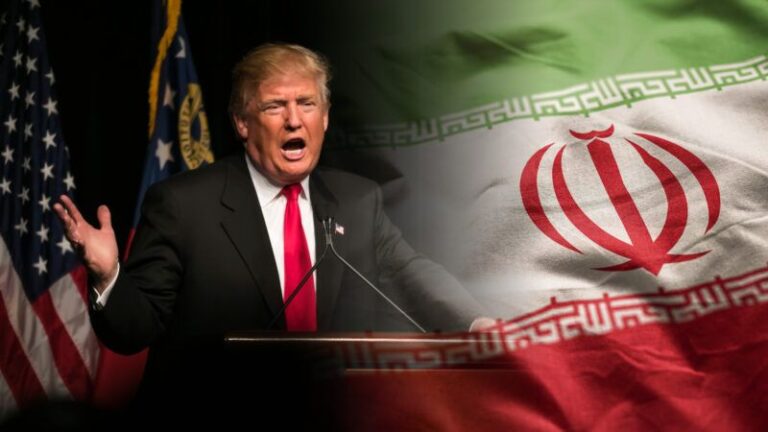
In general, it should be borne in mind that in recent days there have been serious claims that the US will use nuclear weapons against Iran. True, I do not think Washington will use nuclear weapons directly, but at the current stage the US could launch large-scale military operations against Iran with conventional weapons. In any case, Trump’s main goal is less to completely destroy Iran through war than to force it to accept Washington’s terms at the negotiating table.

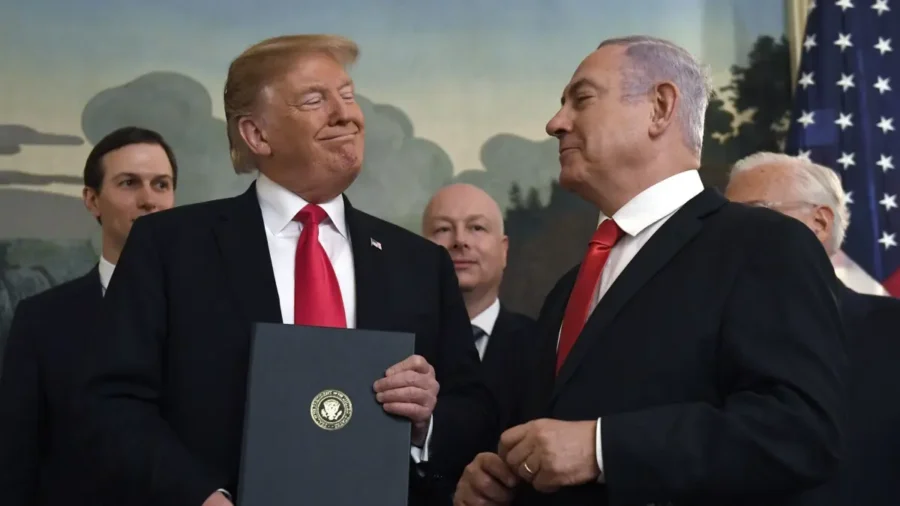
It is precisely in this context that Trump’s statement that he is ready to cooperate with the Democrats and Netanyahu’s facing a new political reality in parliament are, in my view, noteworthy. That the two leaders have lost influence is an undeniable fact, but these two men are also trying to turn the crisis into an opportunity.
War with Iran is not just a military operation for the US and Israel. It is also a decision with long-term political, economic and diplomatic consequences. The consequences of such a war could create a political crisis not only in Washington and Tel Aviv, but throughout the Western world. In particular, a protracted war, serious shocks in energy markets, deepening security problems around the Strait of Hormuz and the opening of new military fronts in the region will increase pressure on the US administration.
In this sense, it is understandable that Trump does not want to personally bear all the political and economic responsibility for the war. Against the backdrop of the Democrats’ strengthening in Congress, drawing them too into the discussion of decisions on Iran and possible political processes could be of great importance in the future. If some agreement is reached with the Democrats on expanding military operations or adopting new strategic decisions, it will become harder to place responsibility for a subsequent political crisis solely on the Trump administration.
I do not think the situation is any different in Israel. For Netanyahu, the consequences of a possible war with Iran are an even more sensitive matter. Because in Israeli society, security issues are among the main factors determining the legitimacy of the government. A confrontation with Iran ending in failure, the weaknesses of Israel’s security system being exposed, and the war producing heavier consequences than expected could deal a serious blow to Netanyahu’s political career.
In such a situation, making the political forces in parliament party to certain decisions could also serve as an additional political insurance mechanism for Netanyahu. If strategic decisions on Iran are taken within the framework of a broader political agreement, it will become harder to place responsibility for the consequences of the war solely on the prime minister.
In my view, the main issue to focus on now is not whether Trump and Netanyahu have lost political power. The main issue is how they will manage the emerging political situation and with whom they will share the political burden of a possible major confrontation with Iran. Because starting a war is one decision, and bearing responsibility for its consequences is an entirely different matter. What is apparent is that the calculations for the second matter are being made in Washington and Tel Aviv.

Turan Rzayev
Political writer for Globalinfo.az
Read also