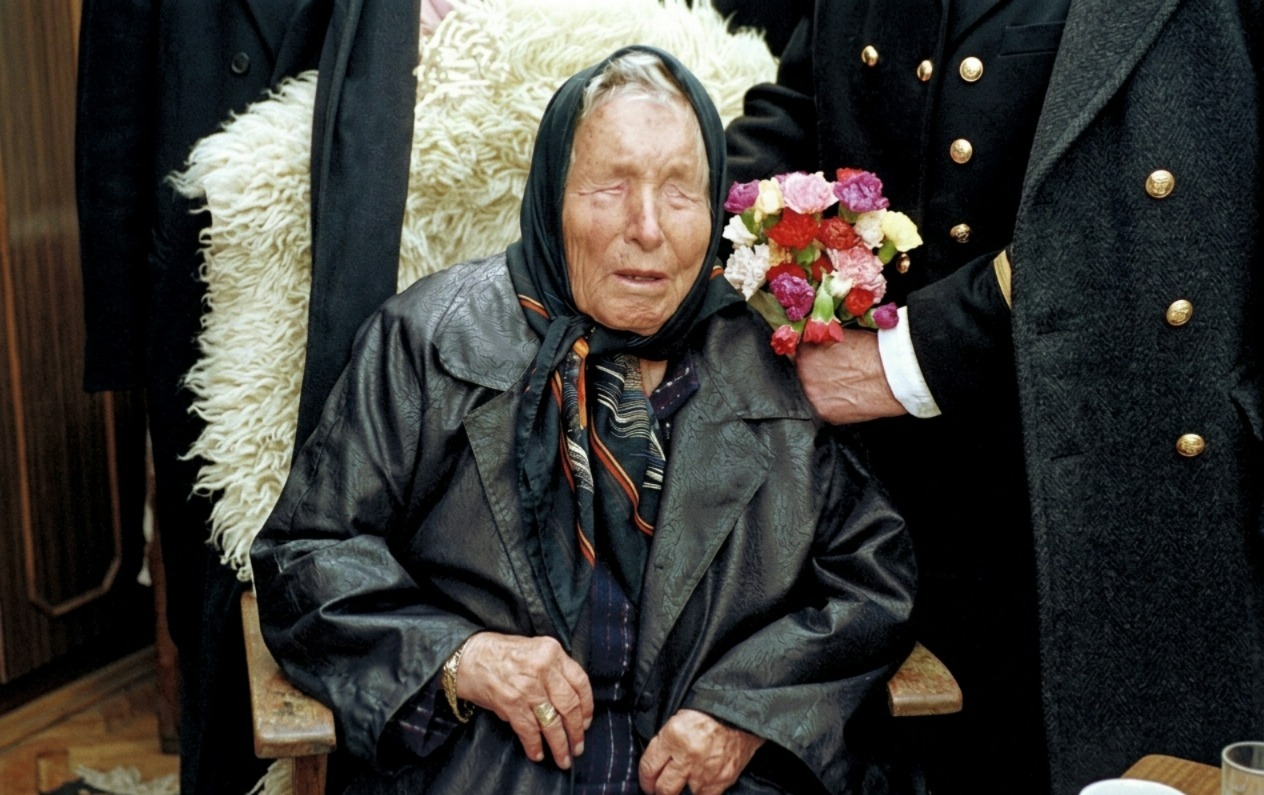
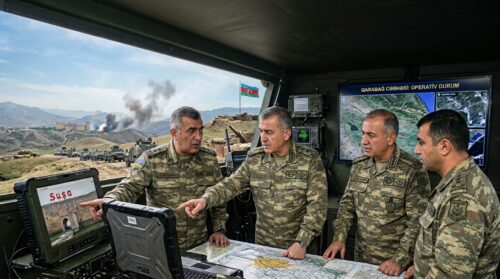
On social media and in the media we come across predictions circulated in the name of the Bulgarian clairvoyant Vanga. It is claimed that she foresaw the wars that would take place in the world, Russia’s future, various political processes and even the Karabakh war.
When I was a child, news spread that Vanga was in fact not a clairvoyant but a person connected to the Russian government. According to the claims, certain information was passed to her, and she passed it on to people as if she were bringing news from the future.
Of course, I do not know how accurate this information is. I have no confirmed fact that Vanga was a person of the Russian government. But the fact that this claim was voiced years ago is itself enough to make me approach the subject with doubt. Moreover, Vanga’s name is most often mentioned in predictions connected with Russia.
Vanga was Bulgarian by origin. She was born in 1911 in the city of Strumica, which was then part of the Ottoman Empire and now lies in the territory of North Macedonia, and she died in 1996.
Interestingly, no precise source is cited for most of the predictions circulated in Vanga’s name. It is often unclear on what date, under what circumstances and to whom she said exactly what. It is said that a number of predictions attributed to her about global disasters and political events were fabricated or exaggerated after the fact. Researchers also note that Vanga’s name was used for various political and public purposes, especially after her death.
So what is it that drives people to believe these predictions?
Uncertainty about the future has always aroused interest and questions in people. In times of wars, political tensions, economic crises and natural disasters, people may be more inclined to believe that the events taking place were predicted in advance. Often, after an event has occurred, general statements made in the past are linked to those events.
The claims about Karabakh circulated in Vanga’s name also require particular attention in this regard. On such a sensitive topic, attributing any statement to her requires a specific source, a date and reliable evidence.
I do not intend to pass a definitive judgment on whether Vanga saw the future. But one point is important to clarify: there is no evidence confirming that every word circulated in her name actually belongs to her. Even scholars who have conducted research on her stress the importance of identifying the source of various predictions.
Do we come across specific statements from her relatives, neighbours or acquaintances confirming or refuting what she said? If no such facts exist, then what drives us to believe that Vanga saw the future?
Perhaps the answer to the debate that has gone on around Vanga for years lies right here: there is a need to examine not so much what she said as what is being said in her name today. Although claims about Vanga’s clairvoyance have circulated for years, specific statements by her relatives and acquaintances on the matter, as well as whether any fact confirms that she saw the future, still raise questions. At the very least, until now I have not come across any statement by anyone close to Vanga confirming her extraordinary abilities with concrete facts.
Zaira Akifgizi
Globalinfo.az
Read also