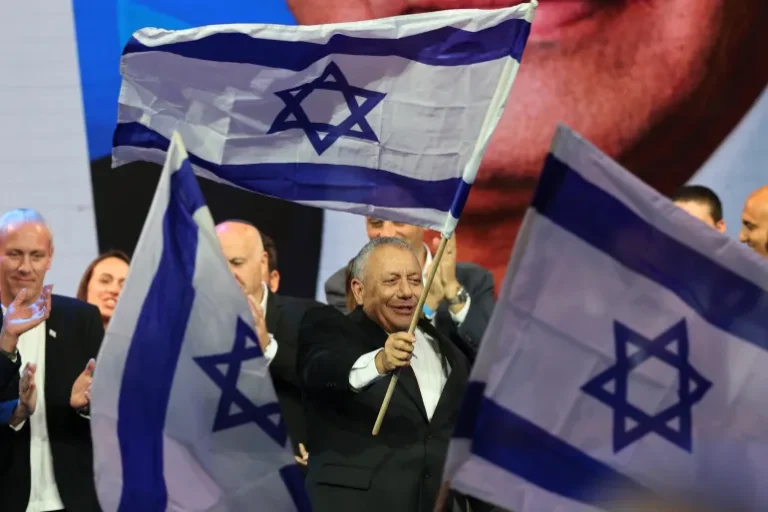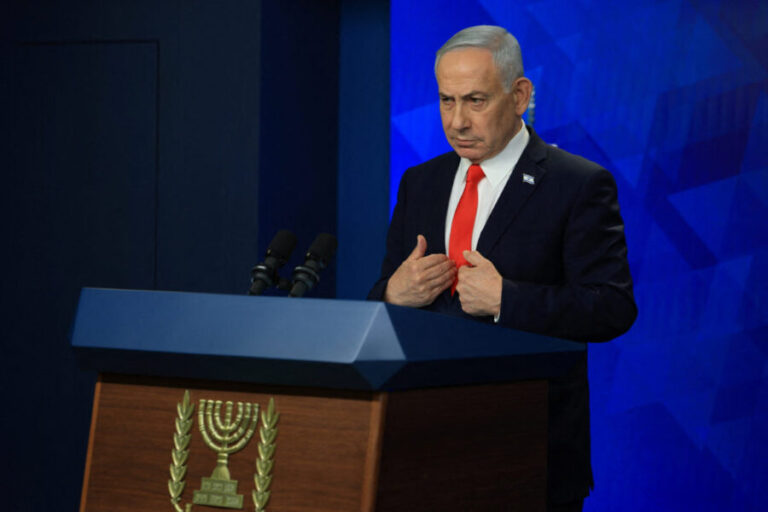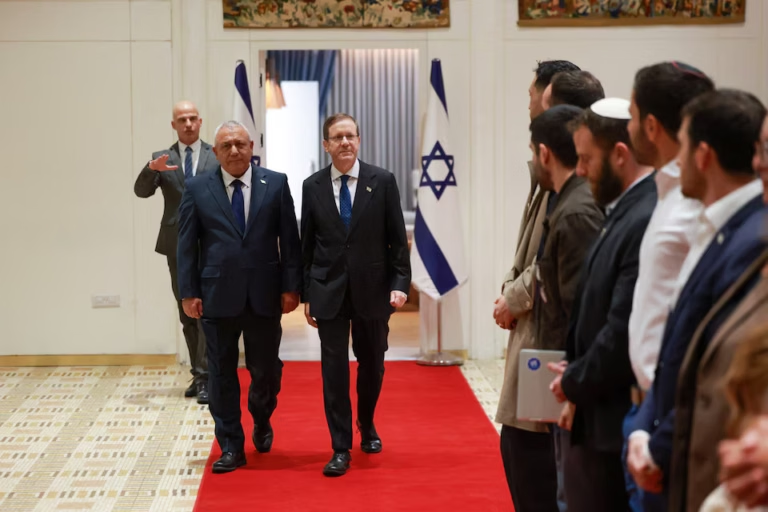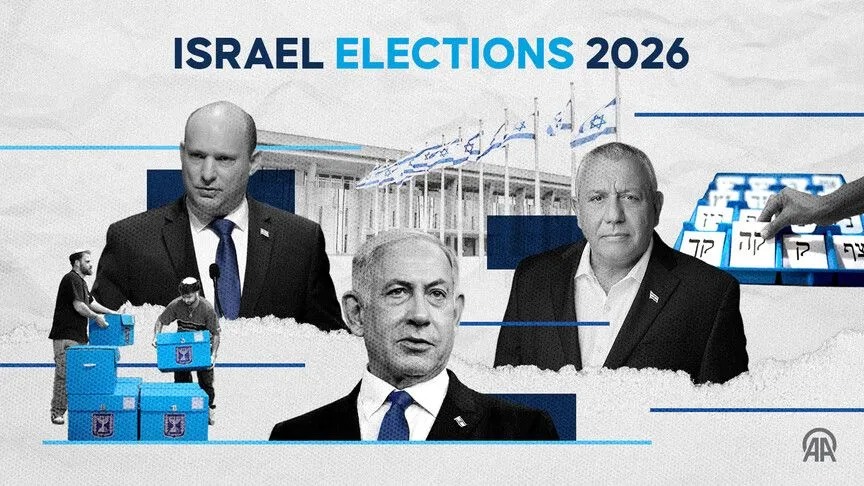
After 53.7 percent of the votes were counted in Israel, the bloc of Prime Minister Benyamin Netanyahu is in the lead. Likud has won 27 seats, United Torah Judaism 9, Shas 7, Otzma Yehudit 6, and Religious Zionism-Noam 6. As a result, Netanyahu‘s bloc has secured 55 seats in the Knesset, while Gadi Eisenkot’s bloc has won 49. The Arab parties have taken 16 seats.
Although Benyamin Netanyahu and his bloc appear to have come out on top with this result, Israel’s political system is structured so that finishing first in an election does not automatically translate into forming the next government. The reality is that, with this outcome, no bloc can form a new government on its own. Forming a government in the 120-member Knesset requires the support of at least 61 lawmakers. That depends less on the individual results of each party than on which side they are prepared to cooperate with after the election.
In the current picture, the forces opposed to Netanyahu show a certain advantage in terms of public support, but they are struggling to unite around a single political strategy and a shared coalition model. For that reason, there is still a significant political gap between the opposition’s success at the ballot box and Netanyahu’s actual removal from power.
For example, although the Arab parties offered to help the opposition form a minority government with outside support, Liberman and Eisenkot rejected that option as well. In that case, Eisenkot and Netanyahu have no choice but to reach an understanding. And that works in Netanyahu’s favor.
Netanyahu’s main advantage stems precisely from this fragmentation. Although ideological contradictions and clashing interests exist within the political camp he leads, the right-wing and religious parties have years of established cooperation behind them. For these parties, an alliance with Netanyahu is not merely a political choice but also a means of protecting their own electorates’ interests at the government level. The demands of the ultra-Orthodox parties regarding the rights of religious communities, exemption from military service, and the distribution of state resources also occupy an important place in coalition relations. Thus, even as the ruling camp’s position weakens, the fact that its internal political ties are more established than those within the opposition gives Netanyahu additional room to maneuver.
The prospect of an alliance against Netanyahu
The main problem facing the opposition is not so much criticizing Netanyahu as determining what kind of government would replace him. While Gadi Eisenkot, Naftali Bennett and other political figures share an interest in creating an alternative to Netanyahu, that shared interest does not mean they agree on every issue. Differences over possible cooperation between secular right-wing forces, the liberal camp, and the Arab parties limit the opposition’s options. In particular, the role the Arab parties could play in forming a government is both an opportunity for the opposition to reach a parliamentary majority and a politically sensitive matter.
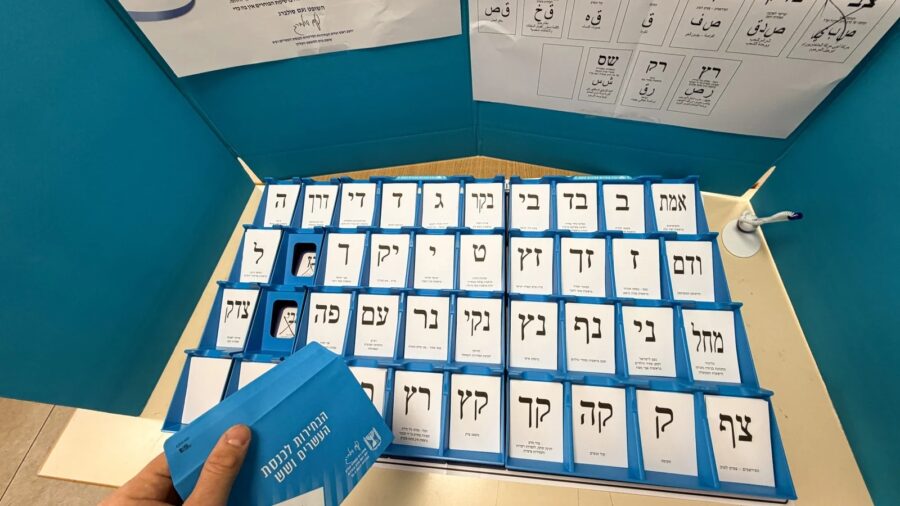
In my view, this contradiction exposes the main gap in the opposition’s political strategy. In other words, opposing Netanyahu is not enough on its own to form a stable government in his place. A portion of voters want the current government to change, and that is no secret to anyone, but this desire does not in itself create agreement on what principles a new government would operate under. Until opposition leaders clarify who will claim the post of prime minister, what concessions will be made to coalition partners, and in what form the Arab parties’ support will be secured, it will remain difficult for electoral success to translate into a real change of power.
The position of the Israeli voter
One of the main factors that has strengthened the opposition’s position during the election campaign is public discontent over security issues. The attacks of October 7, 2023 raised serious questions within Israeli society about the government’s security policy and the functioning of state institutions. The war in Gaza, military operations toward Lebanon, and confrontation with Iran keep the security issue on voters’ agenda.
On one hand, voters who believe the government bears responsibility for what happened may lean toward a change of power. On the other hand, the continuation of threats in the region can bring to the fore arguments for a tough security policy and strong leadership. Throughout his long political career, Netanyahu has used precisely this argument to strengthen his position.

Another issue affecting the government’s future fate is the conscription of ultra-Orthodox Jews into military service. This is not simply a dispute between religious communities and the state, but a broader problem concerning the fair distribution of the burden within Israeli society. Since military service is an inseparable part of the security system, exempting one group from service creates discontent among other segments of society. Netanyahu faces a difficult choice between preserving the support of religious parties and maintaining his government’s parliamentary base. This contradiction both limits his room to maneuver within the coalition and creates additional political opportunity for the opposition to present an alternative to power.
However, it would not be correct to assume that public discontent will automatically translate into political change. The point is that voters’ dissatisfaction with the government’s performance and their trust in the alternative offered by the opposition are two different matters. Eisenkot’s main task is not merely to criticize Netanyahu’s policies, but to present a convincing program in the areas of security, military service, the economy, and state administration. If the opposition fails to do so, the weakening of those in power may not necessarily lead to the formation of a new political majority.
The post-election situation
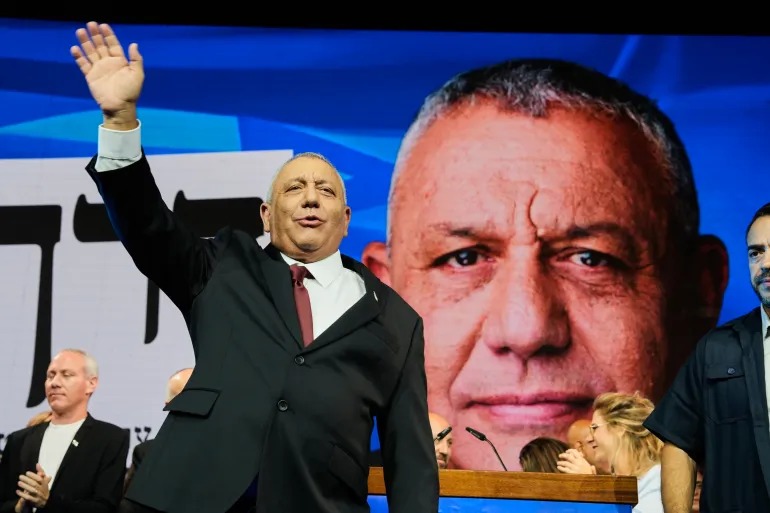
The completion of voting shows that the uncertainty that existed before the election has not been resolved. According to initial election forecasts and exit-poll results, although Likud leads among individual parties, neither Netanyahu‘s supporters nor the opposition camp led by Eisenkot have secured the 61 seats required to form a government. The seats won by the Arab parties have also become a significant factor in the process of forming a new government. Still, until the final results and the course of coalition negotiations are determined, it is not possible to say with certainty who will take power.
This picture shows that the political crisis in Israel did not end with election day. On the contrary, the main struggle is now beginning over the formation of a parliamentary majority. Despite the expected political losses in the election, Netanyahu will try to preserve the possibility of cooperation with right-wing and religious parties. Eisenkot, for his part, must reach agreement among disparate political forces in order to turn voters’ desire for change into a real alternative to power. The support of the Arab parties could be decisive in this respect, but the form in which such support would be secured, and whether it would be accepted within the opposition, is a separate political problem. If the sides fail to reach a compromise, the possibility of Israel holding another early election could come onto the agenda.
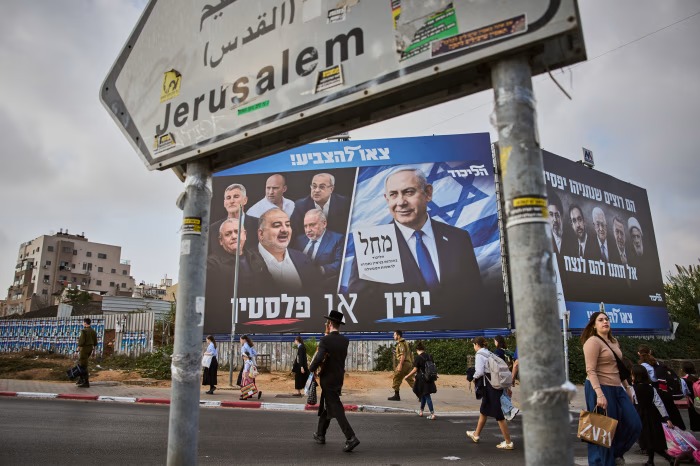
Naturally, at this point the main question from a foreign policy standpoint is how a possible change of power in Israel would affect the country’s regional course. I do not believe there will be a fundamental change. For example, limiting Iran’s regional influence, preserving strategic partnership with the United States, and ensuring Israel’s security interests are significant points of common ground among the political camps. Differences are more likely to emerge over the means by which these goals will be achieved, how much room will be given to diplomacy, and how relations with regional partners will be built.
Relations with Turkey and Azerbaijan
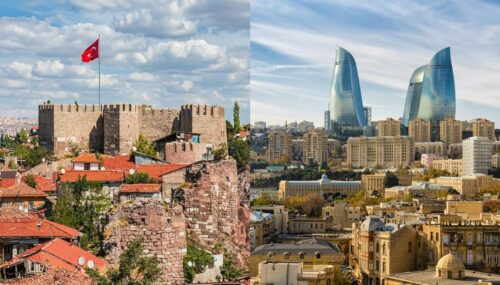
The serious differences that have emerged between Ankara and Tel Aviv over the Gaza war and regional security issues will not automatically disappear with a change of government. Nevertheless, a more pragmatic political approach could create certain opportunities for restoring diplomatic channels and managing the confrontation. Still, this does not mean these relations will necessarily normalize, but conditions for dialogue could take shape in areas where the sides have common interests.
As for Azerbaijan-Israel relations, the continuity of strategic cooperation rests on broader institutional and mutual interests. Ties established in the defense industry, security, energy, and other fields form the foundation of relations regardless of political changes in Israel. Even if certain tactical shifts occur in the new government’s regional policy, there are serious mutual interests ensuring that cooperation between Baku and Tel Aviv will continue.
Turan Rzayev
Political columnist for Globalinfo.az
Read also