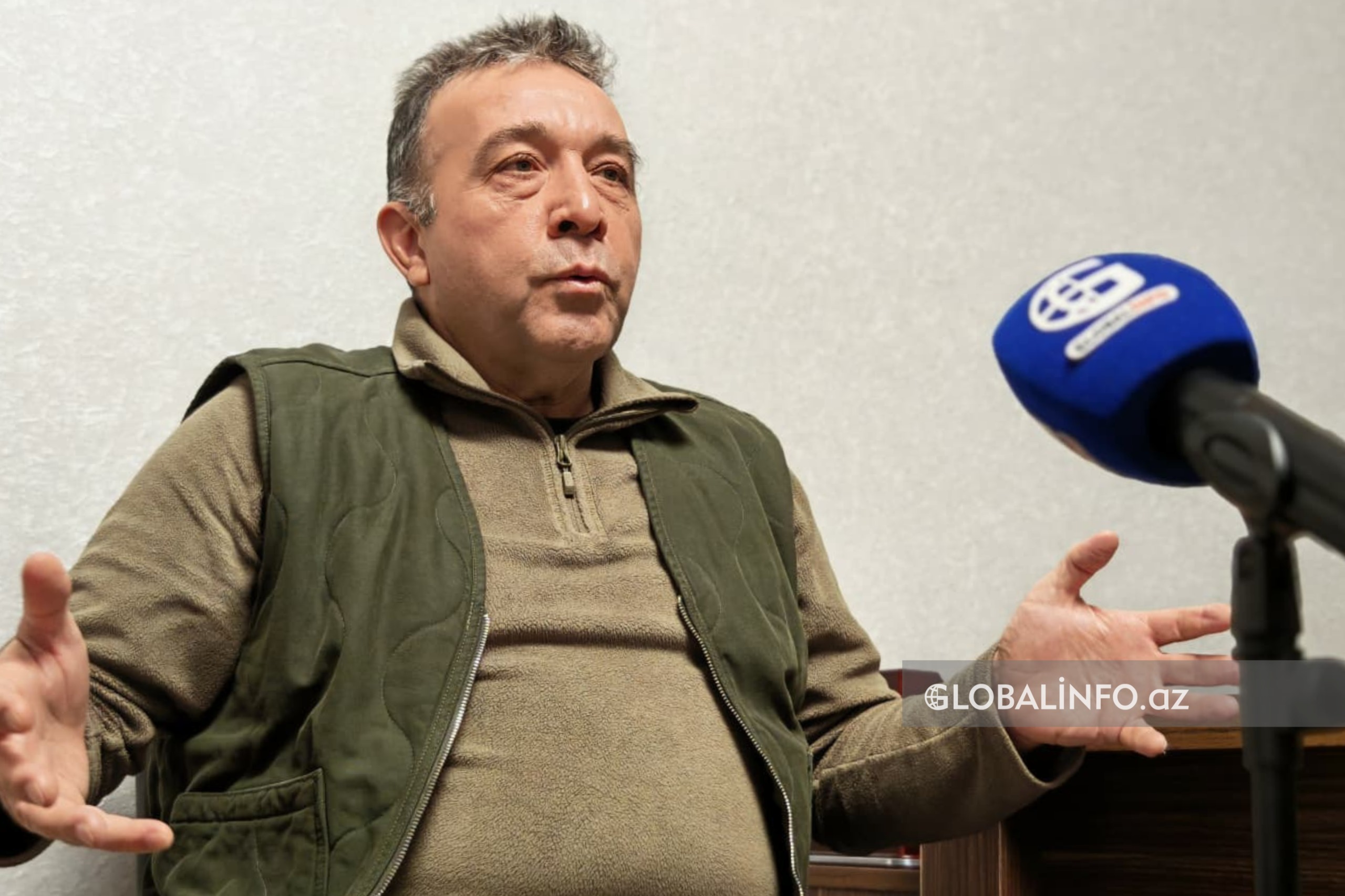
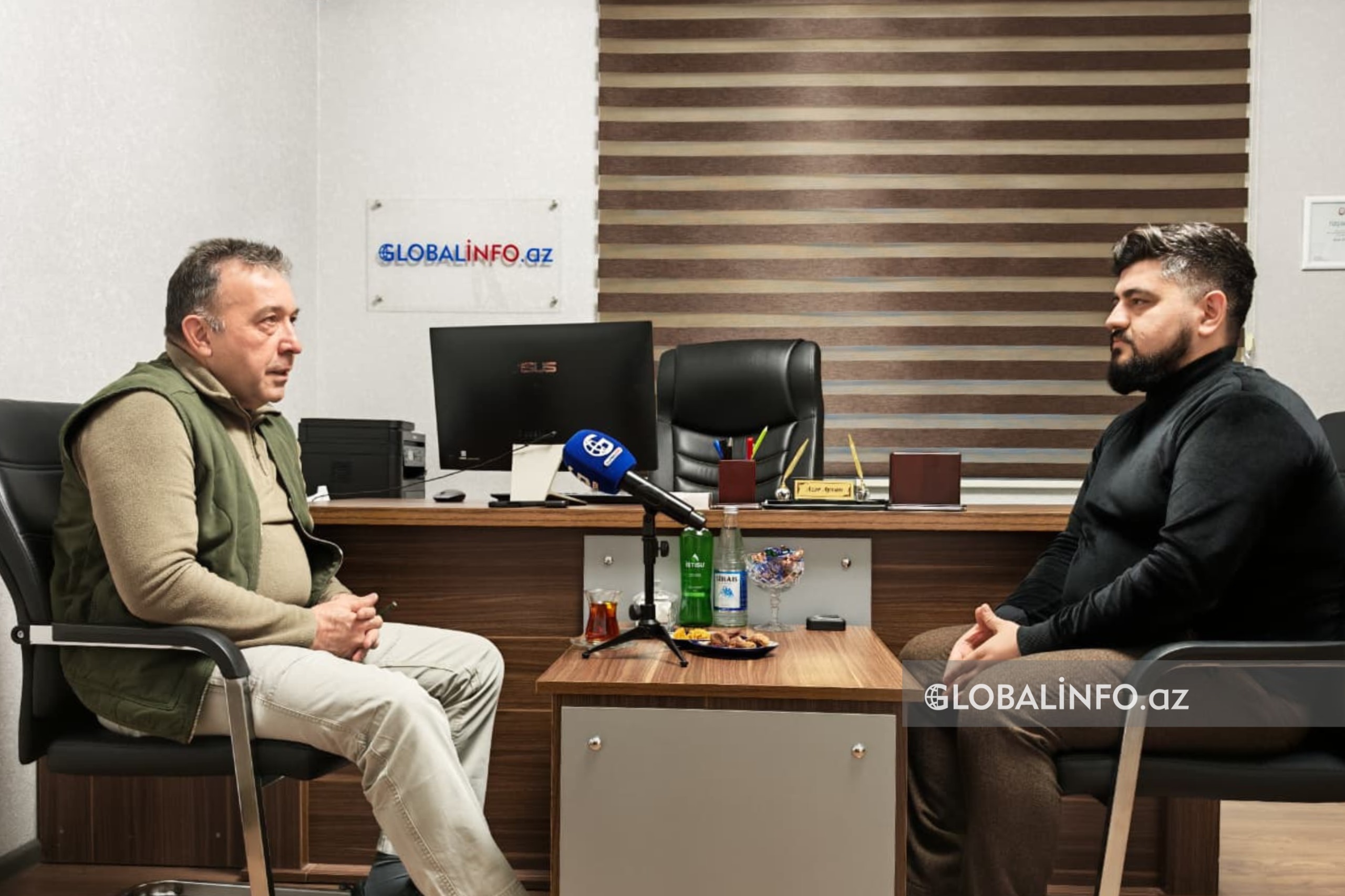
Globalinfo.az presents an interview with Turkish military and security expert Abdullah Ağar:
– Mr. Abdullah, welcome to Azerbaijan and to our editorial office.
– Thank you, Turan. I am very glad to be in Azerbaijan and to be a guest in your editorial office.
– As far as I know, you travelled to Karabakh. What are your impressions?– Karabakh is the most important place in the heart not only of Azerbaijan, but of all Turks and of everyone who loves Azerbaijan. We know very well what pain and suffering Azerbaijan and the Azerbaijani people endured for 30 years, and how they longed for it. At the same time, over these years we saw how Azerbaijan prepared. This is not only about military preparation, but about preparation at the level of the nation and the state. Thank God, with the 44-day war and the local anti-terror operations, Karabakh returned entirely to its true owner.
I travelled through these territories especially when I came to Karabakh after the 44-day war to write my book “The Karabakh Epic”. At the same time, I took relevant notes. At that time I visited Jabrayil, Gubadli, Fuzuli, Hadrut, Tugh and Shusha. While in Shusha, I looked at Khankendi with particular longing. I even asked myself when these territories would be liberated from occupation. With the anti-terror operations, these territories too were liberated in a short time.
I would especially note that these operations were conducted in a highly precise and sensitive manner from a military point of view. Because there was serious civilian sensitivity in this area, and if a wrong step had been taken, the Armenians could have exploited it seriously. But Azerbaijan did not hand this trump card to the Armenians and, by conducting precise, error-free operations, did not give anyone such a trump card. As a result, Aghdam, Khojaly, Khankendi and Lachin passed to Azerbaijan.
This was a great longing in my heart. On the 6th anniversary of the victory, I very much wanted to be together with our brothers. Thank God, our friends made it possible, and we got up and came. We always miss Baku, but the longing for Karabakh, our yearning, is something else entirely for us.
– What drew your attention in Karabakh?
– I went to the places I had not been able to reach – Khojaly, Khankendi, Lachin, Kalbajar. Naturally, in this geography that I had observed and studied before the war, I saw that incredible changes had taken place. In the truest sense of the word, there has been a very rapid transformation. Azerbaijan restored the region in a short time. I know well how difficult and costly this process is. It is not only about restoring the territory, but about eliminating the destruction and disaster created by the war.
Azerbaijan is restoring these territories with great determination and difficulty. However, based on my observations I can say that there are still mined areas. In addition, there are still unexploded remnants of military ordnance. Clearing all of this and carrying out the restoration process in Karabakh while withstanding the pressures is commendable. I saw serious determination. Beyond that, being able to attract such serious investment to the region in such a short time is a great achievement. The Azerbaijani state has truly created magnificent work, and the process continues successfully.
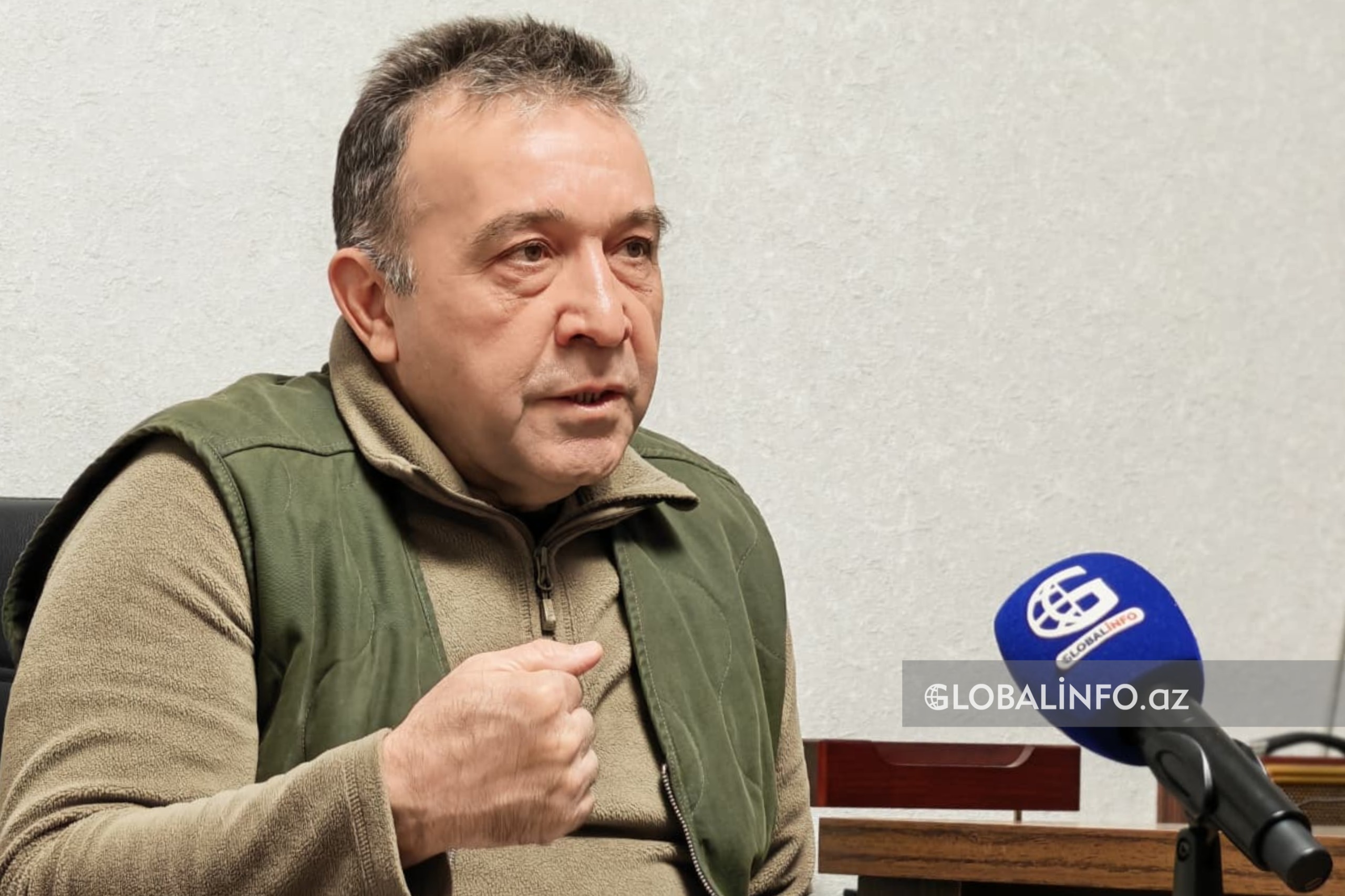
It is not only about constructing a building, but about providing everything for it. The laying of roads and the construction of water, gas and electricity lines and the ability to deliver these services to people are very important. All of this and more has been implemented in Karabakh. Roads and tunnels especially amazed me. I saw the tunnel at the Omar Pass. And let me say that this is not a simple tunnel, it is a system of tunnels. This in itself is a very magnificent work. That is, in a sense, the insurmountable mountains linking Kalbajar and Ganja have been crossed with these tunnels. The roads and infrastructure built in high mountains where in normal conditions birds do not fly and caravans do not pass are wondrous.
Beyond that, I also saw a magnificent will. Frankly speaking, the Armenians destroyed and plundered the territory, while Azerbaijan set construction and restoration as its goal. I think this detail alone gives grounds to say who these lands actually belong to.
– Thank you. You have described in the truest sense of the word the construction work Azerbaijan is carrying out in Karabakh. Unfortunately, however, today both the Armenian lobby and the diaspora are trying to present these works to the world public differently. More precisely, they claim that Azerbaijan is supposedly destroying their so-called “Armenian heritage” in Karabakh. Did you see Azerbaijan destroying any historical monument in Karabakh?
– Those who committed genocide today accuse Azerbaijan of committing genocide. In other words, by attributing their own nature to Azerbaijan, they want to show the world what they are really like. I witnessed in Karabakh how historical and cultural monuments are protected and restored. Yes, Azerbaijan has demolished some buildings. But these are not, as claimed, Armenian cultural and historical heritage; they are objects built during the occupation period that served the purpose of putting forward political claims in the future and of Armenizing the area. In other words, the traces of occupation in Karabakh are being erased and restoration work is under way.
While in Kalbajar I saw a monastery complex that is an important part not only of Azerbaijan’s but of the world’s cultural heritage, and I witnessed how it is being restored and protected. As for the Ghazanchetsots church in Shusha, I was simply amazed by its magnificence. Today Azerbaijan is rightly reducing and erasing the traces and supports of separatism in Karabakh.
Is this the right step?
In my view, it is an entirely correct and rational step. The Armenians’ claims have no basis. In general, Azerbaijan has no issue with religious monuments. Because all of them are its own. If the aim had been to destroy churches, the church I mentioned in Shusha would have been destroyed long ago. But I saw that it had been made much more beautiful and restored. At the same time, I can say the same about the monastery in Kalbajar.
All religious and cultural monuments that played a role in the history of Karabakh are protected at a high level and restored anew. Today Azerbaijan is also restoring the mosques destroyed by Armenians in many places in Karabakh. While in Lachin I saw a very beautiful and majestic mosque being erected. This mosque is visible very well not only from Karabakh but also from the Armenian side. The mosque in Shusha is also a work of art of magnificent beauty. The entire Turkic world can be proud of this mosque.
Azerbaijan has great respect for religion and faith, and it demonstrates this clearly through the work being done. On my first visit, most of the monuments I mentioned were destroyed and unrecognizable. But after what I have seen, I can say that great work has been done. In Karabakh a very beautiful synthesis has been created between faith and national identity.
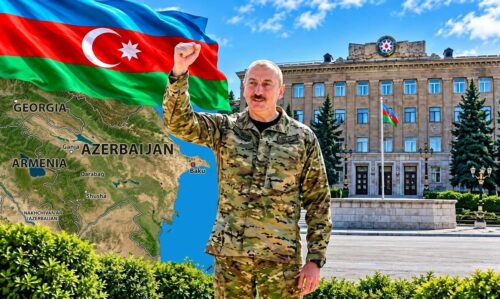
– As a result, peace negotiations between Azerbaijan and Armenia are continuing today. We are witnessing meetings of both the heads of state and the governments, as well as of the delimitation commissions. Overall, can we consider the negotiations successful?
– The period we are living through is called “a peace period without a peace treaty”. This phrase is extremely risky. Ultimately, there was a war. After the war, an agreement that the Russians called a “gentlemen’s agreement” was reached, and it contained obligations that Armenia had assumed. But we witnessed that these obligations were not fulfilled and that anti-terror operations subsequently took place.
Today we are talking about a different reality. In this reality, Armenia has completely lost its claims in the geography. But it must turn this into a political text. In particular, the Armenian Constitution must change in this sense. Armenia, however, is not approaching this. On the other hand, there was an obligation regarding the Zangezur corridor, which Armenia is also trying to manipulate and exploit today.
I believe there must be a just force that will create stability in the region. That is, without any doubt, the Turkish-Azerbaijani union. Indeed, those who want to break this union are today interfering, doing everything in their power. I believe that the underlying problem was precisely this.
– In fact, you have touched on an interesting point. Recently, Turkish-Azerbaijani brotherhood has been put to a serious test. True, there have been similar situations before, but this time the situation looked different. In particular, the decision on a unified school uniform in Azerbaijani schools drew harsh and unnecessary reactions from Turkey. We even witnessed the start of a certain campaign…
– First, let me say that Turkey did not do this. It is essential to know this difference. The main authors of this work were certain groups and mindsets within Turkey. Their overall share is in fact not even 3 percent. But no one who thinks normally, who has the capacity for judgement, a conscience, state wisdom and humanity, and who knows Azerbaijan’s sensitivities, approached this matter destructively.
We clearly see that attempts are being made to sow discord between the two brotherly countries. Certain individuals interpret the issues you mentioned through their own prism and want to exploit people’s beliefs, consciences and minds for their own interests.
Anyone who knows what threats Azerbaijan faces and from which direction pressure and threats come would never make destructive statements. On the contrary, they would take a position by making more conciliatory and constructive statements.
Azerbaijan remained under Soviet influence for 70 years. When I came to Azerbaijan during the First Karabakh War, I saw how sincerely people approached their faith. But at the same time, I observed that people experienced a considerable lack of information about their own beliefs. In South Azerbaijan the situation is in fact similar. There, however, people’s faith has been subjected to manipulation.
In the 1990s I saw how a dangerous Wahhabi-Salafi religious ideology spread among Sunni believers in the northern regions of Azerbaijan. I saw that Iran, for its part, was trying to create a Shia sphere of influence in the southern zone. Over time this threat grew. Worst of all, similar tendencies were observed in this period among religious orders and communities in Turkey as well. To understand the threat this issue creates, it is enough to look at FETÖ terror alone.
But is the matter only FETÖ?
In general, there are religious movements that exploit religion, the religious and the state’s power structures for their own interests. FETÖ is merely one of them. The number of such groupings and movements runs into the dozens. Today Iran is carrying out Shiaization work in Georgia in places where Azerbaijan Turks live compactly. Taken together, all of this means Azerbaijan faces a threat and a danger. This must be stopped at the very outset.
There is also a sociological side to the matter. The issue is in no way children and their clothing. For states, no matter how extreme a person’s personal belief may be, it is not a threat. But if these people unite and create ideological organizations, act systematically, and especially become pawns of outside forces, that becomes a threat. This threat not only increases the state’s risks, but also deals a direct blow to religion itself. Looking at the matter from this aspect, Azerbaijan is seen to have taken steps to defend itself.
Countries and, in general, groups concerned by this situation can normally discuss it with Azerbaijan and express their concerns. But we see people attacking without knowing or investigating. Here we also see another asymmetric approach in which sociological and theological sensitivity is exploited.
It can be seen that different intelligence agencies stand behind these processes. Unfortunately, today in Turkey itself there are those who follow such groups and individuals. But ordinary people are not aware of it. While the matter is one of religious sensitivity, those who intervene drag it into a channel that will damage relations between the two states. Behind it, again, come the intelligence services and the people they nurture. Look, those holding actions in front of Azerbaijan’s consulate and embassy in Turkey are people serving these intelligence agencies and groups.
I understand Azerbaijan’s sensitivity very well. It is normal for there to be resentment. But the situation, in my view, is in fact this.
– Mr Abdullah, these groups in Turkey that you also mentioned actually conduct anti-Azerbaijan propaganda based on both the hijab and religion, and they do not stop. As you walked the streets of Baku, you surely saw women in hijabs. At the same time, you described a little earlier, beautifully, the magnificent mosques being built in Karabakh. When no religion or belief is interfered with in Azerbaijan, and on the contrary special attention is shown to Islamic monuments, how can these groups speak with such lies and slander?
To be continued…
Interview by: Turan Rzayev
Photos: Intigam Ahmadov
Read also