Globalinfo.az presents an interview with Turkish strategic analyst Dr Mehmet Bozkuş:
– As a result of the 44-day war, Azerbaijan fully restored control over Karabakh. This process was not merely about ensuring a state’s territorial integrity and the return of internally displaced persons to lands liberated from occupation; it was also an important political event serving to uphold the principle of the supremacy of international law. Mr Mehmet, what is the historical significance of Azerbaijan’s victory in the Second Karabakh War, and what has it contributed to the system of international relations?
– The 44-day war in 2020 changed the military and political status quo that had existed for nearly 30 years. Azerbaijan’s full restoration of control over all of Karabakh in 2023 marked the second important stage of this transformation. To understand the historical significance of the Karabakh Victory, the event should be assessed according to three main criteria. First, it restored Azerbaijan’s sovereignty and territorial integrity. Second, it changed the long-standing balance of power in the South Caucasus. Third, it created the possibility of transforming the region from a zone of military conflict into a centre of economic ties and diplomatic cooperation. In this context, the Karabakh Victory is a significant historical event not only in terms of resolving past problems, but also in shaping the future Eurasian order.
From the perspective of international relations, the particular significance of this event lies in its highlighting of the importance of states’ sovereign rights and the principle of territorial integrity in the regional security system. However, the supremacy of international law is not limited to protecting territorial integrity. The protection of civilians, legal obligations towards prisoners of war, the principle of proportionality (the appropriateness of means to the objective, ed.), humanitarian aid, property rights and the protection of cultural heritage are also integral components of international law. Therefore, the Karabakh Victory’s contribution to international law will take on greater meaning by transforming military success into a peace order based on law.
Another important aspect of the Karabakh Victory is the impact of modern warfare technologies on military strategy. During the war, unmanned aerial vehicles, armed unmanned aerial vehicles, electronic warfare systems, precision targeting capabilities, intelligence and the concept of joint operations played a decisive role. Azerbaijan’s success was achieved not only through technological superiority, but also through long-term military preparedness, training, logistical capacity, political determination, intelligence coordination and diplomatic support. The Second Karabakh War has become one of the major conflicts studied in international defence circles in terms of the development of modern military doctrines.
The social aspect of the victory is also extremely important. The safe and voluntary return of Azerbaijanis displaced by Armenia for many years to their lands, reconstruction efforts and economic development are among the main priorities of the post-war period.
– The geopolitical landscape in the South Caucasus changed fundamentally after the war. The reshaped balance of power in the region marked the beginning of a new phase in which competing regional powers such as Russia and Türkiye, as well as superpowers such as the United States and China, also became actors. How would you interpret the post-war period in the history of international relations?
– After the Second Karabakh War, the South Caucasus moved from traditional security-related rivalry into a process of new geopolitical transformation. Historically within Russia’s sphere of influence, the region has become a strategic area where the United States, China, Iran and the European Union seek to exert influence based on differing interests.
The 2020 war and subsequent developments exposed the limits of Russia’s regional influence. In particular, the Russia-Ukraine war’s significant absorption of Moscow’s military and diplomatic resources affected its room for manoeuvre in the South Caucasus. The withdrawal of Russian peacekeeping forces from Karabakh in 2024 was one of the important events demonstrating a shift in the region’s security architecture.
From Türkiye’s perspective, the Karabakh Victory has contributed to strengthening its strategic influence in the South Caucasus. The historical and cultural ties between Türkiye and Azerbaijan, built under the slogan “one nation, two states”, have taken on a more comprehensive character through the development of institutional partnership in defence, energy, transport and diplomacy. The Shusha Declaration, signed on 15 June 2021, strengthened the institutionalisation of the Türkiye-Azerbaijan partnership in terms of regional security and strategic cooperation. Türkiye’s strategic approach to the South Caucasus is not limited to supporting Azerbaijan’s security. The region’s economic integration, normalisation with Armenia after a peace agreement, the development of the Middle Corridor and stronger ties with the Turkic world are important to Ankara’s long-term interests.
From the United States’ perspective, the South Caucasus is strategically important in terms of balancing Russia’s and Iran’s regional influence, diversifying Europe’s energy supply security and developing Eurasian transport networks. The diplomatic process launched in Washington on 8 August 2025 has made the United States’ role in Azerbaijan-Armenia relations more visible. The TRIPP initiative related to this process has created a new diplomatic and geo-economic space for the future of transport and economic ties in the region.
From China’s perspective, the South Caucasus is one of the alternative trade routes that can be considered within the framework of the Belt and Road Initiative. China’s regional approach is shaped more by economic ties, logistical potential and the diversification of international trade routes than by creating direct military influence.
Iran, meanwhile, directly links developments in the South Caucasus to its national security. Preserving its border connection with Armenia, north-south transport routes, regional transit control and border security are among Tehran‘s key strategic priorities.

For the European Union, the region’s importance is increasing through energy supply security, trade relations and border stability. Azerbaijan’s natural gas reserves and the energy potential of the Caspian basin are important for Europe’s energy diversification policy.
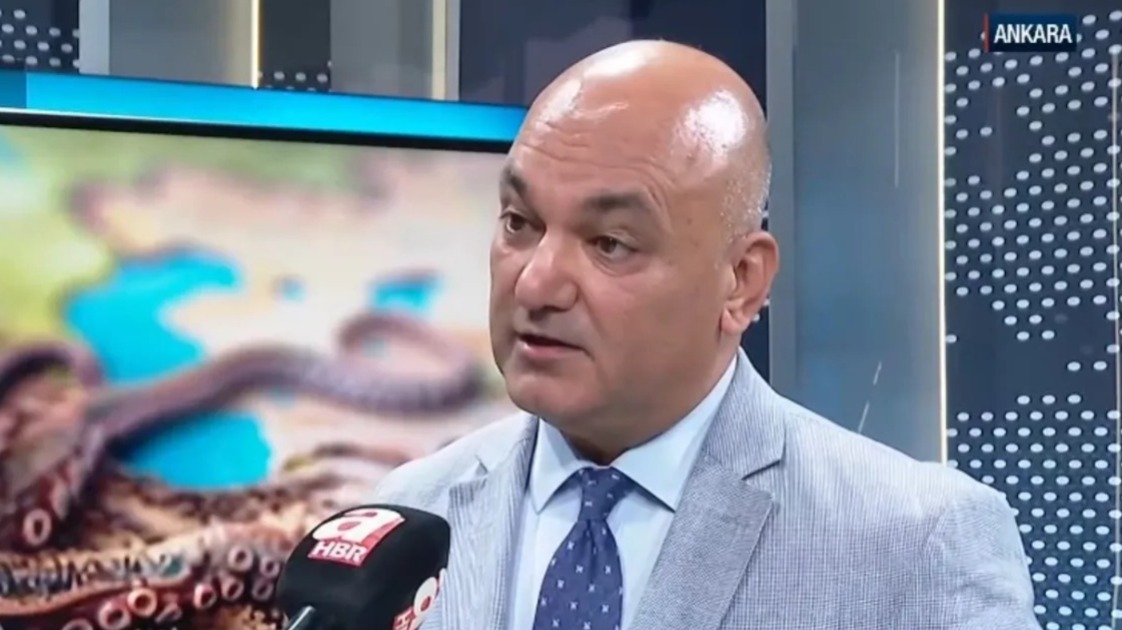
Dr Mehmet Bozkuş
All this is changing the nature of geopolitical competition in the South Caucasus. This transformation can be explained through the Geopolitics of Flows approach. In the geopolitics of flows, strategic power stems not only from controlling a geography, but also from ensuring the security and continuity of the flows of energy, trade, transport, information and finance passing through it. Therefore, the future of the South Caucasus after the Karabakh Victory will be determined not only by military balances, but also by the extent to which the region can integrate into the international economic system.
– Another distinctive feature of this victory is that not only Azerbaijan, but all parties benefited from it. This victory promoted peace and cooperation in the region. What can you say about this?
– The new political environment that emerged in the South Caucasus after the Karabakh Victory has created significant opportunities for regional peace and economic cooperation. However, the end of military conflict does not mean the establishment of lasting peace. Achieving lasting peace depends on states recognising each other’s sovereign rights, ensuring the security of borders, developing economic relations and restoring trust between societies.
From Azerbaijan’s perspective, peace means integrating the reclaimed lands into economic and social life, the return of displaced persons, completing infrastructure investments and developing international trade ties.
For Armenia, lasting peace could create important opportunities to reduce security risks, overcome economic isolation and establish new trade links with neighbouring countries.
From Türkiye’s perspective, regional peace could support the diversification of ties with Azerbaijan, progress in normalisation with Armenia and the South Caucasus’s transformation into a stronger trade hub between Europe and Asia.
For Georgia, regional stability could strengthen the security of existing transport and energy routes. At the same time, the development of alternative routes will require Georgia to improve its logistics infrastructure and economic competitiveness.
For Russia, peace could contribute to the development of regional trade and economic ties. However, the decline in its traditional political influence complicates Moscow’s approach to the new regional order.
For Iran, the positive outcomes of lasting peace depend on preserving border security and developing regional transport projects based on respect for sovereign rights.
Therefore, it cannot be said that the Karabakh Victory has brought direct and equal gains to all parties. The human losses of the war, displacement, security problems and political instability must be taken into account. Nevertheless, the new diplomatic environment that emerged after the war creates significant opportunities to advance mutual interests.
To ensure lasting regional peace, border demarcation work must be completed, mutual sovereignty rights recognised, the legal processes for the peace treaty finalised, and the secure operation of transport links ensured. In addition, mine clearance, clarifying the fate of missing persons, protecting property rights, preserving cultural heritage and building trust between civil societies will form the social foundation of peace. The most important issue for the future of the South Caucasus is to turn the region’s geographical location, which caused conflict in the past, into an advantage that fosters economic cooperation and interdependence in the future.
Gulnar Salimova
Globalinfo.az
Istanbul
Read also