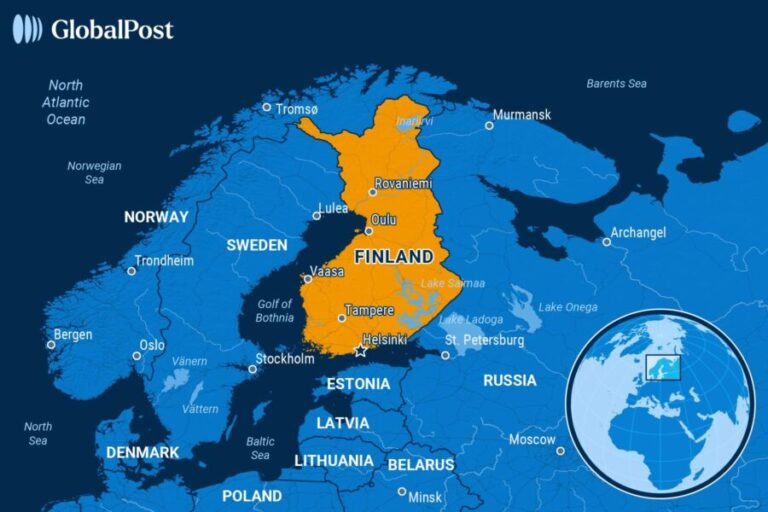
The threat posed by unidentified unmanned aerial vehicles (UAVs) in the Baltic states and Ukraine’s attack on Russia’s strategic port of Ust-Luga have heightened tensions in the region. Air-raid alerts were issued in Lithuania, Latvia and Estonia, NATO fighters were scrambled, and operations at some airports were temporarily suspended. The events have revived concerns that the war could spill over to NATO’s borders.
Globalinfo.az reports that Kaunas, Lithuania’s second-largest city with a population of 300,000, was also included in the area covered by the alert. The country’s Chief of the General Staff, Giedrius Premeneckas, said attempts to shoot down the unidentified UAVs had failed and that the aircraft may have lost their direction under the influence of electronic warfare systems.
On the same night, UAVs believed to belong to Ukraine targeted the strategic port of Ust-Luga on Russia’s Baltic coast.
Turkish political commentator Murat Jane said the developments in the Baltic region were a serious security warning. However, he said it would be wrong to view the events as the direct start of a NATO-Russia war.

The expert opposed describing the failure to shoot down the UAVs as a complete collapse of NATO’s defence capabilities. He said two interception attempts had been made in Lithuania, but no fire was opened over Kaunas due to the safety of civilians.
He said there were still insufficient grounds to claim that the centre of gravity of the war had shifted to the Baltic region. However, the effects of the Russia-Ukraine war have already extended beyond the borders of the two countries, encompassing Eastern Europe and NATO’s security interests.
The expert said Black Sea security was extremely important for Türkiye and drew attention to the instability caused in the region by both Russian and Ukrainian UAVs. In his view, if demand for defence and surveillance capabilities rises, expectations regarding Türkiye’s contribution could also increase.
Aliyar Khalil
Globalinfo.az
Read also