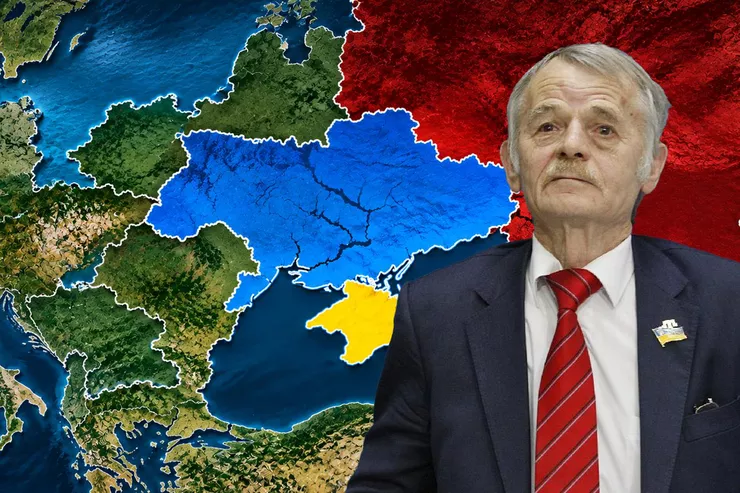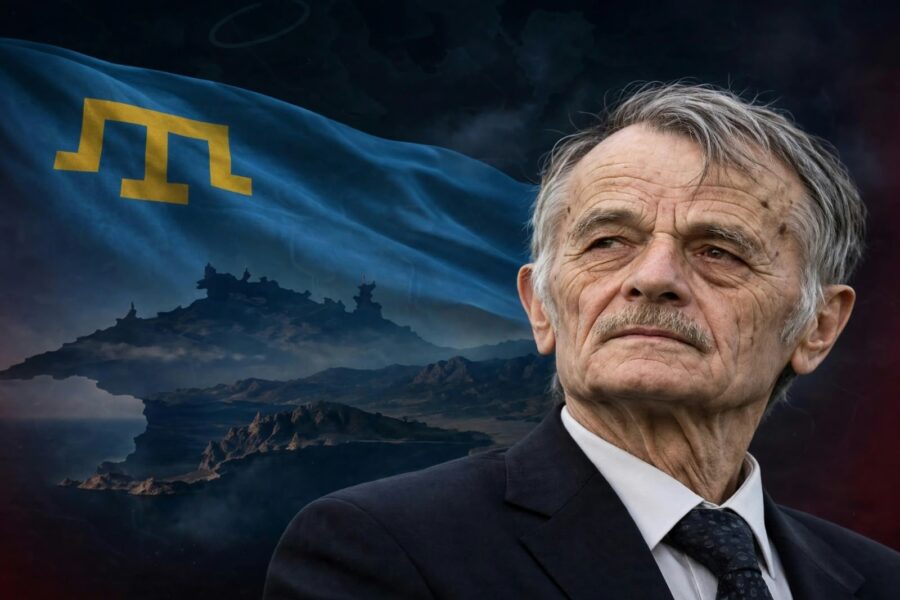
Mustafa Abduldzhemil Dzhemilev (Kirymoglu), national leader of the Crimean Tatars, has announced that all key issues concerning the region’s future autonomous status have been agreed with the Ukrainian leadership. According to him, preparations for establishing a new model for the Autonomous Republic of Crimea are complete. However, due to the ongoing war and martial law, amending the Constitution of Ukraine is currently not feasible. Dzhemilev noted that declaring a republic in exile could also be considered if necessary, emphasising that a liberated Crimea will have Crimean Tatar self-governance.
Dzhemilev’s announcement is particularly noteworthy under current circumstances. First, Crimea previously held autonomous republic status within Ukraine. Articles 134–139 of the 1996 Ukrainian Constitution defined the status, powers, and governing bodies of the Autonomous Republic of Crimea. Therefore, this is not about creating a territorial autonomy from scratch.
The principal shift lies in the political and national character of the autonomy.
Under the previous framework, Crimean autonomy was established on a purely territorial basis. The entire population residing on the peninsula formed the subject of this autonomy. While Crimea maintained its own parliament and council of ministers, the specific national self-governance rights of the Crimean Tatars were not guaranteed under that system. In other words, Crimea was autonomous, but that autonomy was not rooted in Crimean Tatar national governance.
The approach now being advanced is fundamentally different. The proposed model envisions broader political and institutional guarantees for the rights of Crimean Tatars as the indigenous people of the peninsula. This encompasses representation in state administration, legal consolidation of the Mejlis, preservation of language and culture, and functional mechanisms for self-governance.
Consequently, the initiative does not involve establishing an independent Crimean Tatar state separated from Ukraine, but rather forming a national-territorial autonomy within Ukraine’s territorial integrity. Realising this model would grant Crimean Tatars broader political participation in governing their ancestral homeland alongside cultural rights.
What lies ahead for the region
The mass deportation executed by the Stalinist regime in 1944 forcibly uprooted the Crimean Tatar people from their homeland. Russia’s occupation of Crimea in 2014 once again severely jeopardised the prospect of returning to their historical homeland. In this regard, the concept of national autonomy is not merely an administrative model; it represents the restoration of historical justice, redress for deportation, and the securing of the Crimean Tatars’ political future.
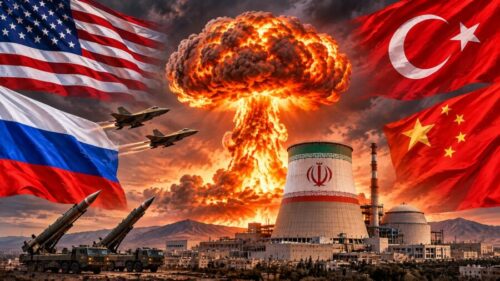
Crucially, Dzhemilev’s statement comes amid potential political settlement tracks for the Russia-Ukraine war. The Crimean issue remains among the conflict’s most complex and sensitive matters. Moscow considers the peninsula part of its territory, while Kyiv views its restoration as non-negotiable for its territorial integrity.
Turkey plays a pivotal role in this equation. Ankara never recognised the 2014 annexation. Furthermore, a substantial portion of the Crimean Tatar diaspora resides in Turkey, forging profound historical, ethnic, and cultural ties. Through cooperation with Ukraine, Turkey could contribute substantially to securing international recognition and support for this autonomy model.
This issue also aligns with Turkey’s core strategic priorities. For Ankara, Crimea’s trajectory touches not only historical ties but also Black Sea security and the geopolitical standing of the Turkic world. In this context, Crimean Tatar national autonomy could further bolster Turkey’s regional influence.
Turan Rzayev
Political columnist, Globalinfo.az
Read also