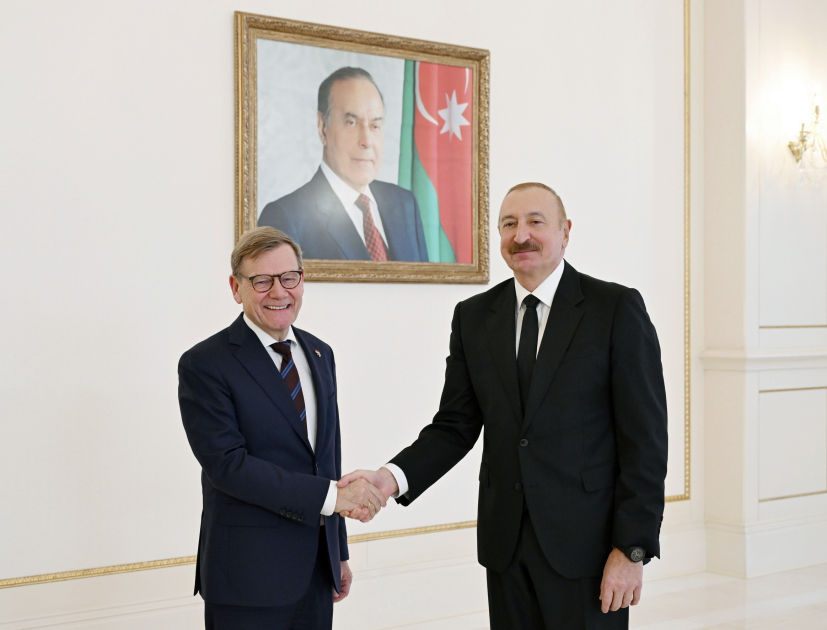
German Foreign Minister Johann David Wadephul paid a visit to Baku on 17-18 November. During the visit, the head of Germany’s Federal Foreign Office held talks with President Ilham Aliyev as well as his Azerbaijani counterpart, Jeyhun Bayramov. In my view, the notable aspect of the visit is that it reveals Berlin’s stance on the new political and economic realities taking shape in the region.
Germany is one of Western Europe’s most pragmatic and constructive states in terms of foreign policy. Berlin’s relations with Azerbaijan have long been built on cooperation based on mutual interests. Although differences of opinion exist between the two sides on various issues, political dialogue, economic ties and cooperation within international organizations have continued. Relations with Germany occupy a special place in Azerbaijan’s balanced foreign policy, since Berlin, besides being one of the European Union’s leading political and economic powers, is also an important partner in the development of Azerbaijan’s relations with Europe.
In recent times, notable dynamism has been observed in Baku-Berlin relations. In particular, the Joint Declaration on a Strategic Agenda for Bilateral Partnership between Azerbaijan and Germany, signed during President Ilham Aliyev’s official visit to Germany in July this year, laid the foundation for a new stage in the development of relations. The signing, during that visit, of a document on the establishment and operation of the Azerbaijan-Germany Business Council also shows that cooperation is not limited to political dialogue alone. These documents reflect the two sides’ intention to shift their relations toward a more systematic and long-term format of cooperation.
It is no coincidence that economic and energy issues featured prominently during Wadephul’s visit to Baku. Azerbaijan is an important partner in Europe’s energy security. Moreover, the start of Azerbaijani gas exports to Germany this year has added new economic substance to bilateral relations. For Germany, diversifying energy sources and ensuring supply reliability are of strategic importance. Azerbaijan, for its part, wants to expand its position in the European market and complement energy cooperation with new investment and technology projects. In this respect, relations between Baku and Berlin are developing on the basis of mutual need and concrete economic interests.
Transport and logistics
Azerbaijan’s position on the Middle Corridor and the growing importance of routes connecting Europe and Asia across the Caspian are reinforcing Germany’s interest in the region. For Berlin, the South Caucasus is not merely an energy source but also a strategic geography where alternative trade and transport links between Europe and Asia could develop. For this reason, expanding cooperation with Azerbaijan aligns not only with Germany’s economic interests but also with Europe’s broader connectivity strategy.
The most important political dimension of Wadephul’s visit to Baku is, without doubt, Azerbaijan-Armenia relations and the peace process. Germany has long supported the normalization of relations between the two countries and the signing of a peace treaty. Berlin is seeking to step up its diplomatic engagement on this issue. It is no coincidence that, at a joint press conference with Jeyhun Bayramov, Wadephul said the peace issue would be one of the main topics of discussion during his visit to Armenia. “We will do everything so that the peace treaty is signed. The President of Azerbaijan has also expressed his readiness for this,” he said.
What stands out in this statement is Germany’s attitude toward the peace process. Berlin openly notes that Azerbaijan is ready to sign the peace treaty and assesses this position positively. On the other hand, Wadephul’s visit to Yerevan also shows that Germany intends to support the process not only through talks with Baku, but through parallel political dialogue with both sides. Germany’s core interest here lies in the emergence of long-term stability in the South Caucasus, the opening of transport links, and the expansion of the region’s economic integration with Europe.
Berlin’s regional stance
The future geopolitical orientation of the South Caucasus is also significant for Germany. Changes in Europe’s security architecture following the Russia-Ukraine war, the fact that Moscow’s traditional influence in the region has become a subject of debate, and the growing importance of alternative transport routes have all increased Berlin’s interest in the South Caucasus. In this regard, it is noteworthy that, in a statement before his visit, Wadephul emphasized that Russia is trying to preserve its influence in the region and that countries must determine their own future, not Moscow.
Azerbaijan’s position here is particularly important. While supporting the establishment of peace in the region, Baku preserves the principle of independent decision-making in its foreign policy. Azerbaijan is developing relations with Germany, expanding cooperation with the European Union, and at the same time maintaining ties with other power centers in the region. This policy increases Azerbaijan’s ability to secure its national interests without becoming a party to geopolitical rivalry.
Overall, Wadephul’s visit demonstrates Berlin’s intention to further deepen relations with Baku and to continue its political support for the peace process in the South Caucasus. For Germany, Azerbaijan is an important partner in terms of energy security, transport connectivity and regional stability. For Baku, the development of relations with Berlin is significant for expanding political and economic ties with Europe.
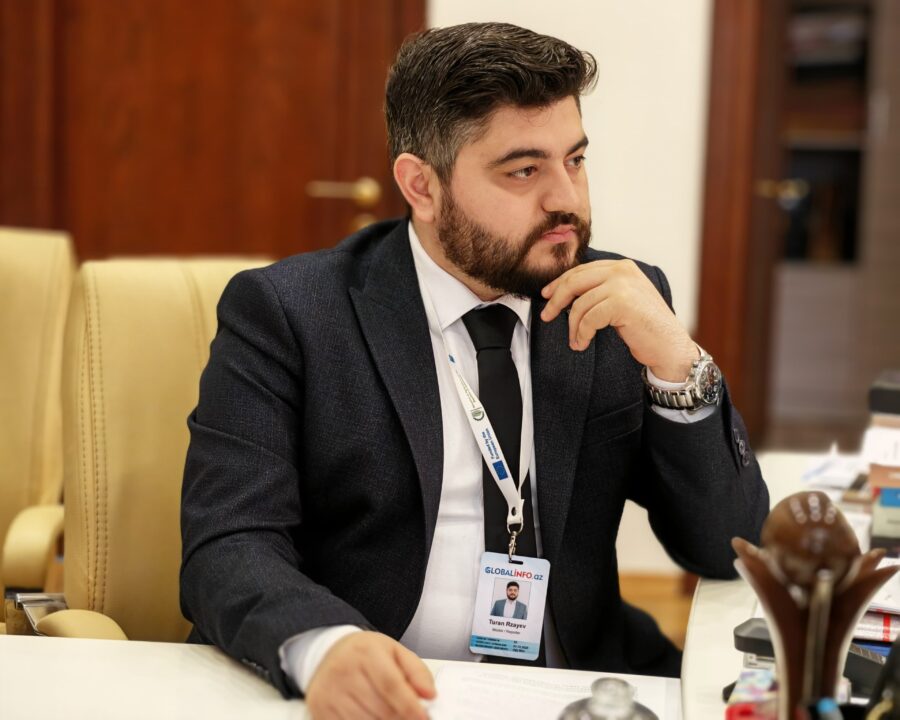
Turan Rzayev
Political columnist, Globalinfo.az
Read also