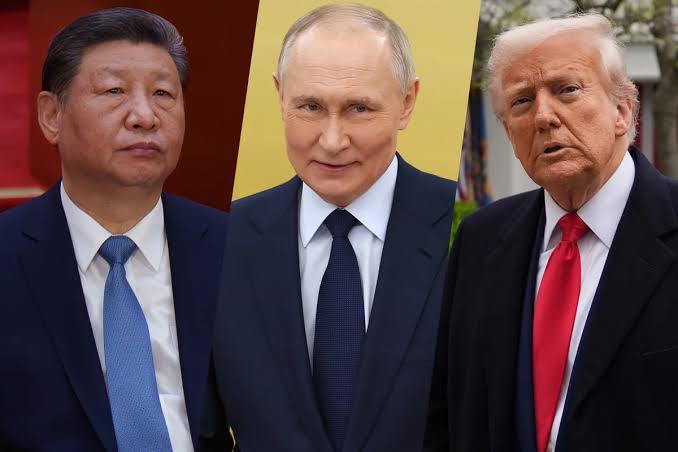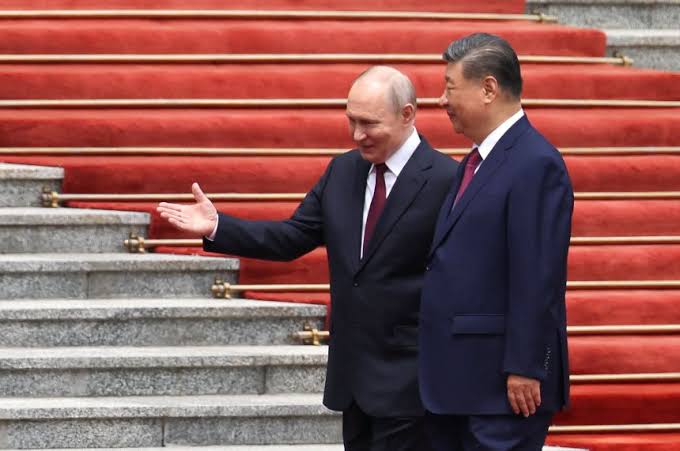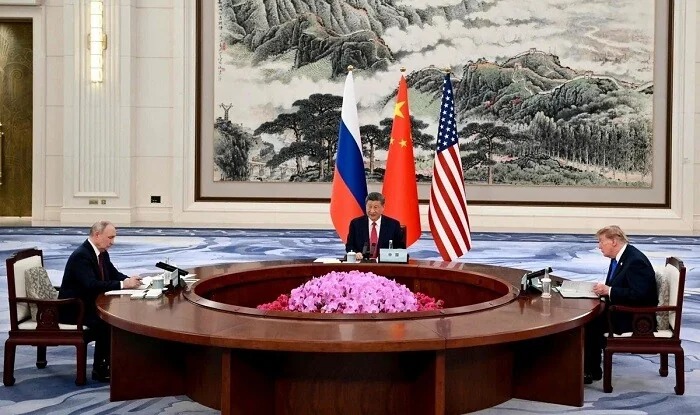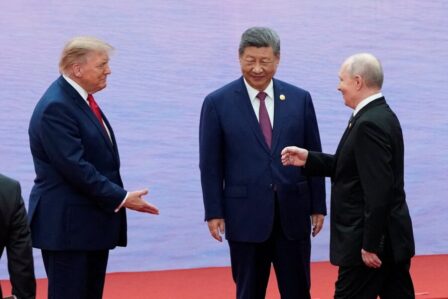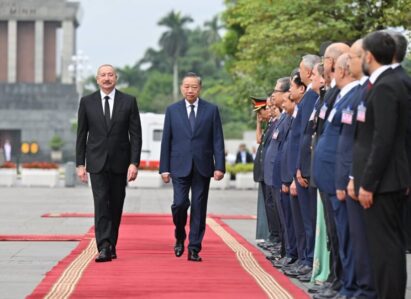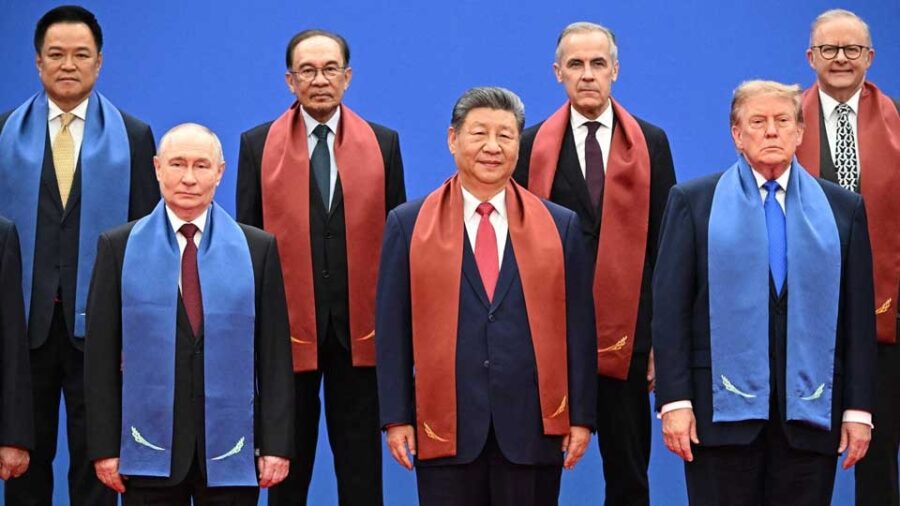
US President Donald Trump made a notable statement while commenting on a trilateral meeting with his Russian counterpart Vladimir Putin and Chinese President Xi Jinping in Shenzhen. Trump said China had agreed, for the first time, to take part in joint consultations with Russia and the United States on reducing nuclear risks.
“They had been reluctant to do this because China lags far behind Russia and the United States in the number of nuclear warheads. But they will catch up with us within 10 years,” Trump said.
Political analyst Yusif Bagirzade told Globalinfo.az that a possible agreement between Beijing and Washington on nuclear security could be an important development in the international relations system:
“However, the key issue here is not whether the two countries will come to the negotiating table, but how sustainable the agreement they reach will be and whether it is designed to produce real results.
In my view, the United States and China may act jointly on certain issues, but this will not mean that they put their strategic rivalry aside or trust one another. On the contrary, nuclear security is one of the rare areas where the interests of both states overlap at a certain point.
For Washington, the rapid expansion of China’s nuclear capability is creating a new strategic reality. Therefore, the United States can no longer be satisfied with considering only the bilateral nuclear balance with Russia. The expansion of China’s arsenal could make US security calculations, defence strategy and nuclear deterrence policy more complex in the future. Washington is therefore interested in involving Beijing in nuclear arms control and risk-reduction mechanisms.
For China, such dialogue creates an additional diplomatic opportunity in its relations with the United States. Beijing seeks to preserve its right to increase its nuclear capability while strengthening its image as a responsible major power on the international stage. From this perspective, participation in negotiations could offer China both political and diplomatic dividends.
Nevertheless, serious contradictions exist between the parties’ interests. The biggest problem is their approach to the number of nuclear weapons. While the United States and Russia possess thousands of nuclear warheads, China’s arsenal is considerably smaller. Citing this disparity, Beijing does not consider it fair to limit itself under the same conditions as Washington and Moscow. This position will remain one of the most complex aspects of the negotiations.”


Yusif Bagirzade
The political analyst said US-China relations face fundamental problems, including the Taiwan issue, competition in the South China Sea, technological restrictions and trade disputes:
“An escalation of tensions on any of these issues could adversely affect the political climate surrounding agreements reached on nuclear security.
The results of the latest trilateral meeting should also be treated with caution. Although the leaders reaffirmed their position that nuclear war is unacceptable, no clear roadmap was announced for the start of concrete arms control talks. This shows that political will exists for now, but practical mechanisms have not yet been formed.
I believe that, in the near term, cooperation between the United States and China is more likely in limited areas than a broad strategic agreement. For example, preventing nuclear incidents, advance notification of missile tests, keeping military communication channels open and mutual consultations in crisis situations are areas that could produce real results.
As for the sustainability of an agreement, it would be wrong to measure it by a few months of political rapprochement. If the parties can turn negotiations into institutional mechanisms, cooperation could continue for years. Otherwise, this initiative will remain a temporary diplomatic process dependent on the personal relations of the leaders.
In other words, while remaining rivals, Beijing and Washington can cooperate to reduce nuclear risks that pose a common threat to humanity. In fact, under the current international circumstances, such limited cooperation appears more realistic and important than a strategic partnership.”
Turan Rzayev
Globalinfo.az
Read also