NVIDIA Chief Executive Officer Jensen Huang has said artificial intelligence will affect every sphere in the future. His view that “sooner or later, every company will become an AI company” has revived debate about technology’s impact on business and the labour market.
How will the spread of artificial intelligence across all spheres change the world of work? And what will people do in the future? Is the idea of a “golden billion” people becoming reality?
Farid Musayev, head of the IT department at Khazar University and an expert at the “Azerbaijan Cybersecurity Organizations Association” public union, told Globalinfo.az that a new era is beginning in the modern business world:
“The integration of artificial intelligence into various spheres will accelerate the transition to the next stage of digital transformation, that is, to an economy based on artificial intelligence. Routine, repetitive and data-processing tasks will gradually be performed by artificial intelligence algorithms. This will speed up work processes in industry, logistics, finance and law. Artificial intelligence will also affect companies’ decision-making mechanisms. As a result, new business models and economic opportunities will emerge. One of the main concerns in this process is the reduction of jobs. However, this must be approached not only in terms of unemployment but also in the context of the changing nature of work. People may move away from routine and execution-oriented tasks and turn to areas of activity that create higher value. In these conditions, demand will grow for specialists who develop and manage artificial intelligence systems, as well as for those who oversee their operation in line with ethical principles. The successful employee of the future will be someone who can use artificial intelligence not as a rival but as a tool that helps perform work more efficiently.”
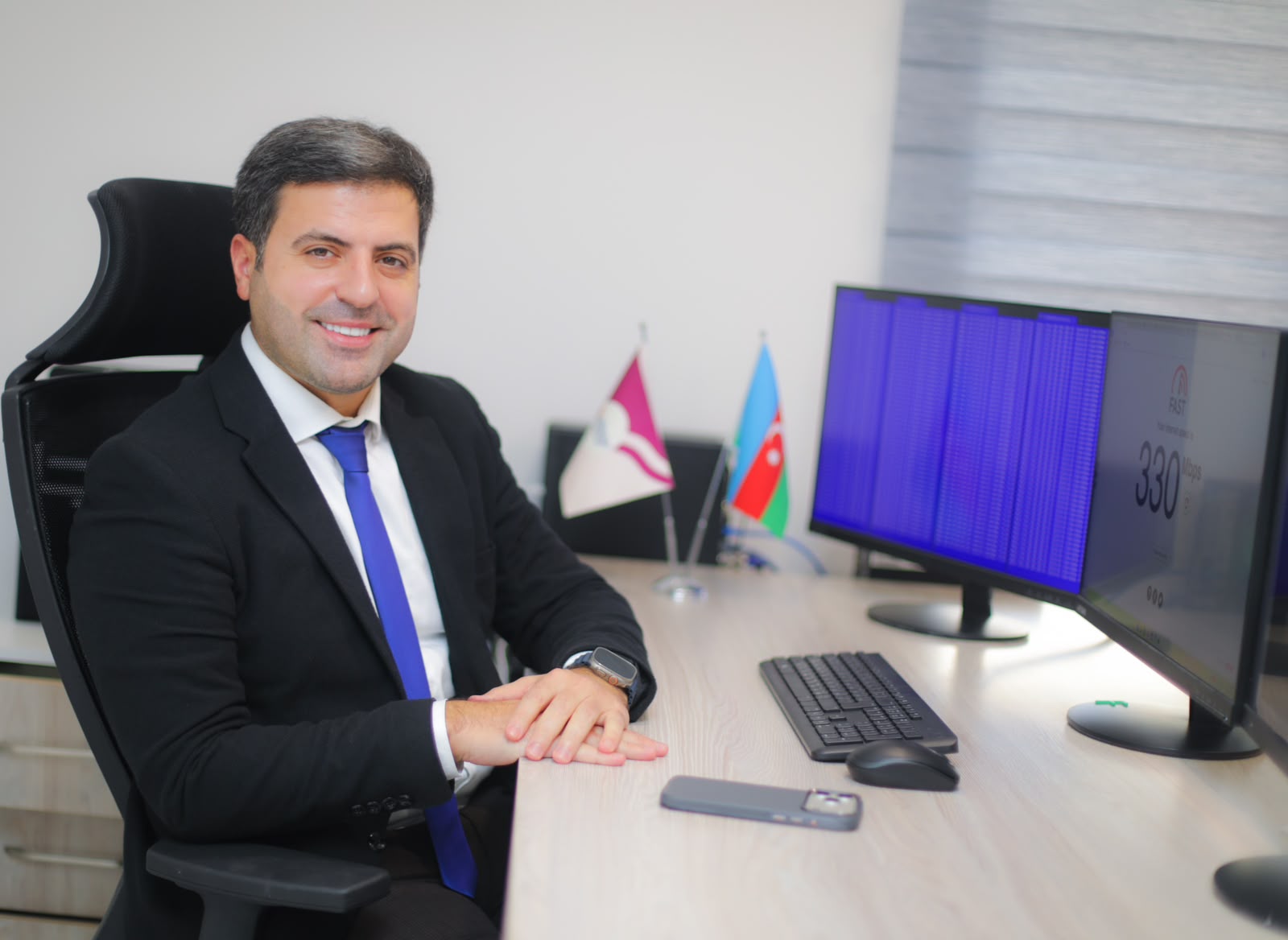
Farid Musayev
The expert said the “golden billion” concept is mainly used in discussions about the limited nature of the world’s resources and their distribution for the well-being of a certain group of the population:

“In a technological context, however, this concept can be linked to a model of society in which a high quality of life and intellectual labour predominate. If artificial intelligence takes on a significant part of mass and heavy work, people will be freed to a greater extent from physical labour and will be able to devote time to scientific discoveries, art, philosophy and personal development. This means the beginning of a new stage of development for humanity.
But the realisation of such a future depends on how technological capabilities are used. Artificial intelligence must become a technology that raises the well-being of all humanity, not merely a tool serving the interests of certain groups. Artificial intelligence is already the technology of the present, not of the future. The main issue for companies and people is how to adapt to it and in what form to make efficient use of its capabilities.”
Note that the idea of the “golden billion” came onto the agenda in the 1970s during discussions in the USSR about the growth of the world’s population and the decline of natural resources. In the late 1980s and early 1990s, this idea began to be linked to claims that Western countries wanted to keep the world’s wealth under their control. The Russian publicist Anatoli Tsikunov also wrote on this topic in 1990, helping to spread the idea more widely.
The main essence of the idea in question is the notion that only the populations of wealthy and developed countries live at a high standard of living in the world, while the people of other countries cannot benefit equally from these opportunities. According to some claims made in defence of this concept, wealthy countries seek to protect the world’s wealth and natural resources in their own interests.
Laman Imran
Globalinfo.az
Read also