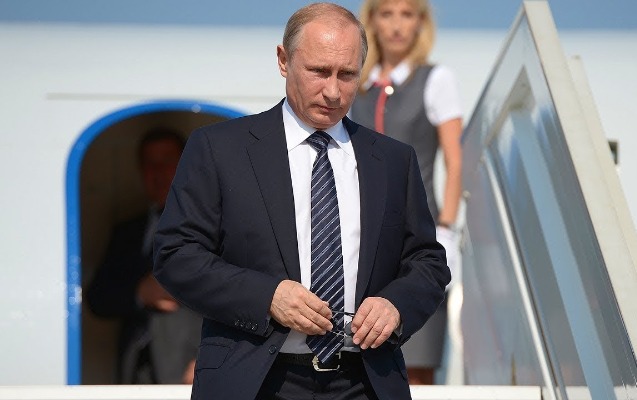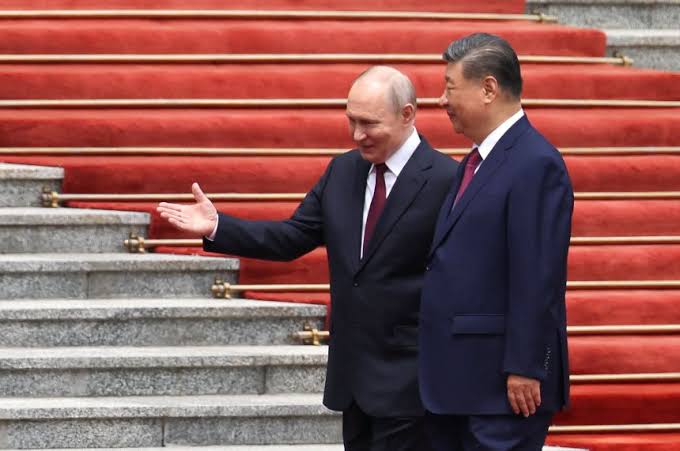
Russian President Vladimir Putin’s visit to China has drawn attention at a time when prospects for an end to the war between Ukraine and Russia are being discussed and tensions around Iran are escalating.
What does the rapprochement between the two nuclear states signal? How could relations between the major powers affect the world order? Is the geopolitical map of the world changing, and how will these processes affect Azerbaijan?
Political analyst Bakir Hasanbayli, speaking to Globalinfo.az, said geopolitical processes in the modern world are characterised by the fragmentation of the old international order and the formation of a new multipolar balance of power:
“As the influence of international legal norms and global institutions weakens, direct power politics, economic pressure and regional bloc formation among states are coming to the fore. Strategic competition over artificial intelligence, semiconductors and critical minerals is deepening between the world’s two largest economies. Although Washington and Beijing continue high-level diplomatic contacts, trade tariffs and the Taiwan issue remain the main points of tension. Due to geopolitical risks, major states and companies are moving production to their own countries or to regions of reliable allies. Control over energy and strategic raw material resources is becoming a key criterion of national security. The expiry of key international treaties on limiting nuclear weapons and record global defence spending are fuelling a new arms race.
Long-running tensions in the region have entered a new stage with a direct military clash between the United States and Israel and Iran, and the crisis around the Strait of Hormuz. At the same time, new security alliances are forming among regional powers such as Saudi Arabia, Türkiye and Pakistan. Against the backdrop of the security crisis caused by the war, differences in strategic approaches between the United States and the European Union are deepening. European countries are seeking both to strengthen their defence capabilities and to formulate positions on possible peace talks with Russia and security guarantees. The United States’ military-political interventions in Latin America, particularly Venezuela, and its claims concerning strategic territories such as Greenland have caused serious upheaval in transatlantic and regional relations. Military-political obstacles on northern and southern routes are making the Middle Corridor linking China and Europe an indispensable alternative for global trade. As the peace process between Azerbaijan and Armenia advances, Türkiye’s growing influence, Russia’s changing position, and the geo-economic interests of the West and China are shaping a new security architecture in the region.”
The political analyst said the rapprochement between China and Russia signals a shift in the global balance of power, expanded economic and military-technical cooperation, and the emergence of new diplomatic formats among major powers:
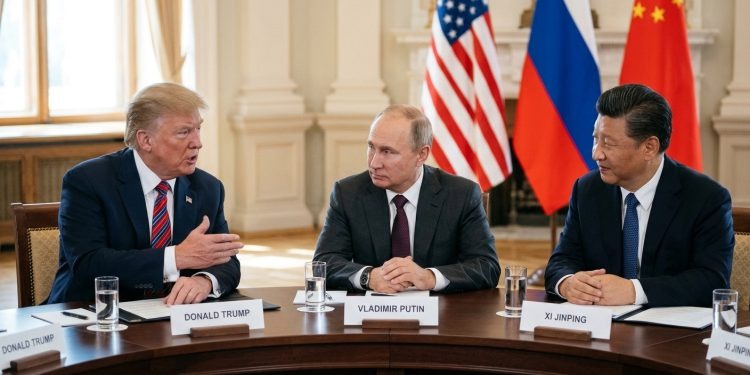
“During a meeting lasting more than two hours between Chinese President Xi Jinping and Russian President Vladimir Putin on 18 November 2026, the sides discussed prospects for economic cooperation. Chinese companies supply sanctioned Russian enterprises with dual-use components and materials essential for drone production. A trilateral meeting of the leaders of the United States, Russia and China is planned on 19 November 2026 on the sidelines of the APEC summit in Shenzhen. Issues such as normalising relations, the Ukraine conflict, security and nuclear control are expected to be on the agenda. Strategic cooperation between China and Russia is now entering a stage of institutional deepening, high-level economic integration and joint shaping of a global multipolar order.
The year 2026, marked by the 30th anniversary of the partnership and the 25th anniversary of the Treaty of Friendship, demonstrates that relations are moving onto a practical and long-term footing. Bilateral trade turnover has consistently exceeded $200 billion, and growth is forecast to continue in 2026. China has remained Russia’s main trading partner for 16 years. Cooperation is no longer limited to the exchange of raw materials. While China exports automobiles, household appliances and high-tech equipment to Russia, more than 90 joint projects are being implemented in the energy, agriculture and transport sectors. New agreements signed for projects such as the Power of Siberia-2 gas pipeline and Yamal LNG strengthen long-term energy security and cooperation along the Northern Sea Route.”

Bakir Hasanbayli
Hasanbayli noted that Beijing plays an important economic and technological support role for Moscow in evading sanctions and supplying critical components for its defence industry:
“Both countries are coordinating their positions within BRICS and the SCO to create alternative mechanisms to Western global hegemony. The prospect of trilateral contacts on global stability and resolving regional conflicts, with the participation of US President Donald Trump, is increasing Beijing’s role as a global mediator and balancer. Although the partnership is officially declared equal, Russia’s growing dependence on the Chinese market and technology creates structural asymmetry in the relationship. China’s increasing economic and geopolitical activity in Central Asia and the Arctic could create areas of covert competition between Moscow and Beijing in the future. Relations between major powers directly determine the structure of the world order, global security and economic stability. Whether these countries choose cooperation or competition could change the future shape of the international system.
Their interactions could create various scenarios in the global system. The simultaneous rise of several centres of power weakens the unipolar system and leads to a redistribution of the balance of power in decision-making. Intensifying competition compels states to unite in various political and military alliances. This situation increases the risk of polarisation resembling the Cold War era. The effectiveness of global institutions such as the United Nations and the World Trade Organization depends on the willingness of major powers to reach common agreement. Differences of opinion may slow the work of these institutions. Tensions between major powers are changing the nature of globalisation and directly affecting regional stability. To avoid direct confrontation, major states may seek to protect their interests through regional conflicts in third countries. The weakening of strategic dialogue could lead to the abolition of treaties controlling nuclear and other weapons of mass destruction and trigger a new arms race. The map of world politics is rapidly shifting towards a multipolar system, and this process creates both new strategic opportunities and certain security challenges for Azerbaijan.”
According to the political analyst, growing competition among global power centres, the weakening of traditional spheres of influence and the formation of new trade routes have fundamentally renewed the geopolitical importance of the South Caucasus:
“Changes in the international relations system are manifesting themselves in several key directions. Economic and technological competition between the United States and China is deepening, while the European Union is restructuring its security and energy policies. The Russia-Ukraine war and tensions in the Middle East are limiting Russia’s and Iran’s traditional influence in the South Caucasus. Northern and southern trade routes have become risky due to global conflicts, increasing the need for alternative corridors. In the new world order, Azerbaijan has gained a number of advantages by becoming an independent regional actor that has restored its territorial integrity. The strategic importance of the Middle Corridor, an alternative to northern routes, has increased sharply. The expansion of the Baku International Sea Trade Port and the opening of communications in the region are turning Azerbaijan into a key transport hub of Eurasia. Europe’s efforts to diversify energy sources are strengthening Azerbaijan’s position as a natural gas exporter and supplier of green energy. Projects such as the transmission of electricity to Europe via the Caspian Sea have entered a more tangible stage. The fact that major powers are preoccupied with one another enables Azerbaijan to build equal partnerships with the Organization of Turkic States, Central Asia, the European Union and China without joining any military or political bloc. The diminishing influence of foreign mediators has created conditions for progress in bilateral talks between Baku and Yerevan and in the peace process initialled in Washington.
The redrawing of the global map also carries risks for Azerbaijan that require caution. The expansion of conflicts in the Middle East, security tensions around Iran and a deepening Russia-West confrontation could indirectly affect the security environment in the South Caucasus. Political processes within Armenia, delays related to constitutional changes and issues of border delimitation could prolong the signing of a final peace agreement. Trade wars among major states and price volatility in energy markets make the development of the non-oil sector and economic diversification even more necessary for Azerbaijan.”
Turan Rzayev
Globalinfo.az
Read also