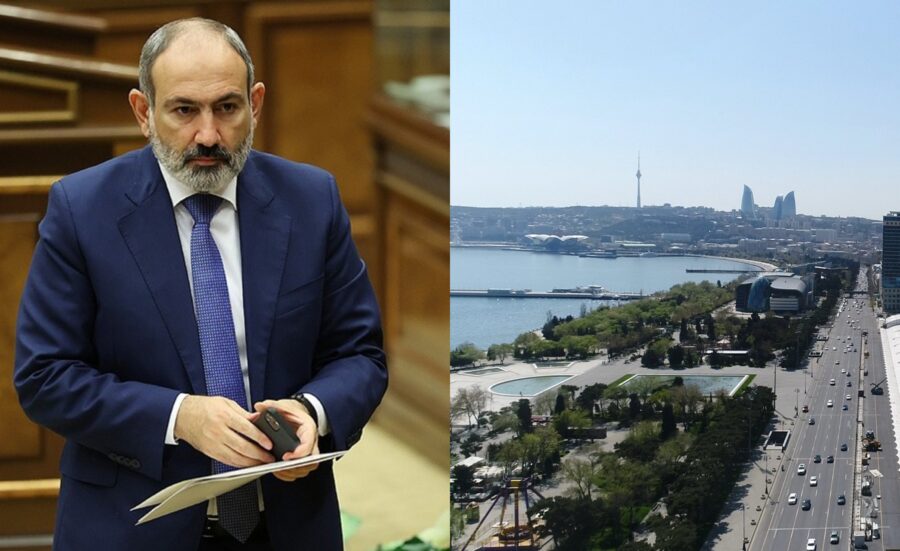
The issue of using water resources has also been raised in the process of normalising relations between Azerbaijan and Armenia. Speaking in parliament, Armenian Prime Minister Nikol Pashinyan stressed the need to discuss the joint use of water from rivers flowing through the two countries and cooperation in this area. He said compliance with environmental standards should also remain in focus.
Do we need any cooperation on rivers and water resources? For example, could Yerevan use the Mingachevir Reservoir, which it has threatened to strike for years, in the future?
Speaking to Globalinfo.az, biodiversity expert and ecologist Arzu Mustafayev said that after the conflict ends, a normalisation process should be carried out in many areas, including the economy and ecology:
“Environmental issues cannot be overlooked between two countries that share more than 1,000 kilometres of border. Under the laws of physics, the impact on Azerbaijan of waste from Armenia, which lies at a higher elevation geographically, is inevitable. For more than 30 years, Armenia’s occupation policy has caused serious environmental consequences, particularly in the Karabakh region, by starting fires, cutting down valuable trees, degrading specially protected natural areas and harming wildlife. Nevertheless, Armenia is a neighbouring country, and we share the same geographical space — the South Caucasus. In this respect, there are a number of environmental problems that can be discussed and addressed, as well as prospects for cooperation.”
The ecologist said Azerbaijan has cooperated with Armenia and Georgia, another South Caucasus state, on environmental issues through various regional formats and similar projects and initiatives:
“Overall, we have had common approaches and ties concerning environmental protection. However, the existing hostile relations have also adversely affected this cooperation. The intensification of the normalisation process and peace talks is now gradually removing the factors hindering cooperation in this area.
The issues raised by Pashinyan will also be discussed step by step within a possible cooperation framework and implemented on the basis of concrete plans after the main problems are resolved. One of the key issues in this direction is pollution of the Araz River. Environmentally harmful substances, particularly pesticides, generated in Armenia and discharged into rivers pollute the Araz River via the Okhchuchay River. This is a highly relevant issue and has already been discussed. Azerbaijan is also a party to the international convention against transboundary pollution. The issue must be resolved within the framework of those international obligations.”
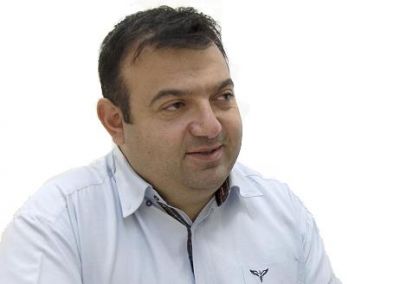
Arzu Mustafayev
The expert noted that contaminated wastewater generated by the Qafan copper-molybdenum plant is discharged into the Okhchuchay River, also negatively affecting the Araz River:
“The waters of the Araz flow into the Kura River. This consequently creates an environmental risk for sources used to supply water to Baku. Water drawn from the Kura River constitutes one of the main arteries of Baku’s water supply. Thus, this is not only a matter of transboundary pollution, but also a problem that could affect the population’s water security. Another area of cooperation could concern transboundary specially protected natural areas. Zangezur National Park, the newly established national park in Karabakh and the Garagol State Nature Reserve are of particular importance in this regard. Certain joint efforts could be undertaken to protect and manage these areas in the future. In addition, a number of our water sources originate in Armenia. Plans could be developed to establish links between institutions operating in this field in both countries and to create more optimal management mechanisms for these waters.”
A. Mustafayev added that the main existing problems with Armenia must be resolved positively and in line with Azerbaijan’s interests:
“After that, environmental issues should also gradually be brought to the negotiating table, and common ways should be sought to resolve the existing problems. No one should forget that we are neighbours. Just as we share borders, we also share nature, border forests and biodiversity. For example, a number of rare species found in Nakhchivan and Eastern Zangezur spend certain parts of their life cycles in Armenia and others in Azerbaijan, moving within a single habitat. Their protection can also be organised more effectively through joint action.”
Laman Imran
Globalinfo.az
Read also