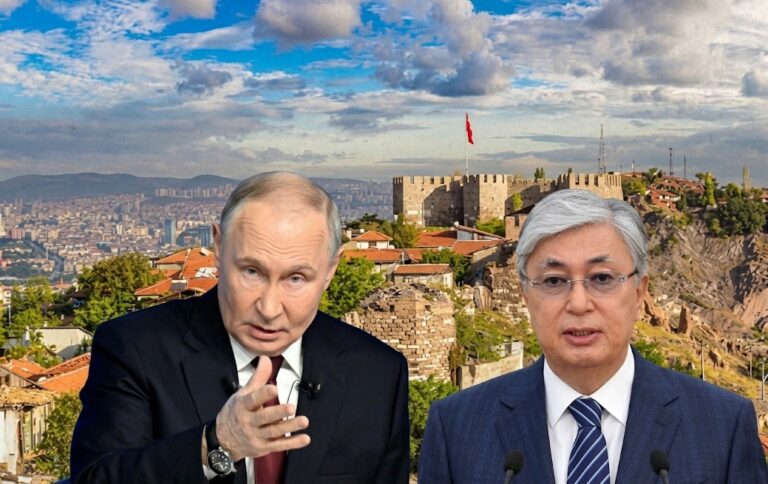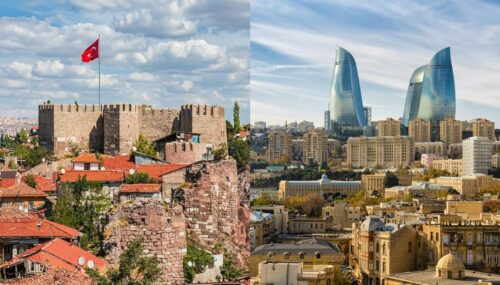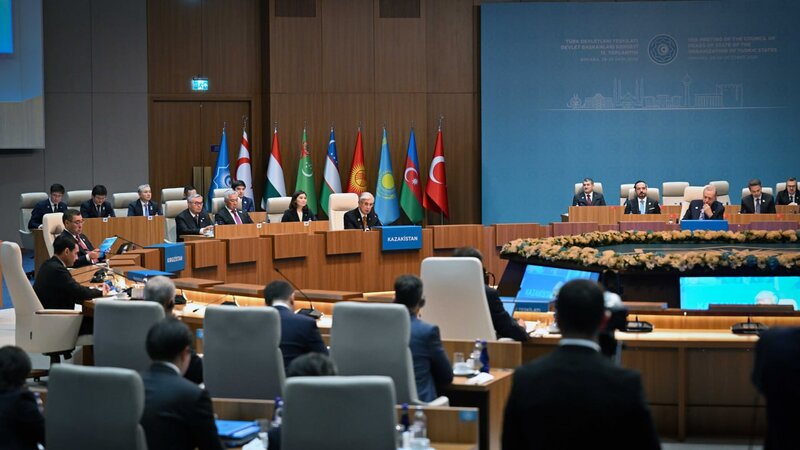
Kazakh President Kassym-Jomart Tokayev has proposed that Russia join the Organization of Turkic States (OTS) as an observer, at the organization’s summit held in Ankara.
The Kazakh leader said that, in order to boost the organization’s standing, it would be the right and fair decision to respond positively to Russia’s intentions in this direction and to invite Moscow either to join the organization or to take part in the OTS’s activities as an observer.
Tokayev emphasized that Russia is a great power and has maintained close ties with the Turkic world for centuries.
“Representatives of numerous Turkic peoples have historically lived on the territory of this country. Russia is currently advancing the project ‘Altai – the Cradle of Turkic Civilization,’ which Kazakhstan also supports. The Russian language contains many words of Turkic origin. Overall, Russia becoming part of the Turkic states, that is, part of our organization, would benefit all of our states,” — the Kazakh President said.
Tokayev’s proposal has indeed drawn attention. Numerous Turkic peoples live on Russian territory, and the population of some of them exceeds that of many independent states. For instance, there are approximately 4.7 million Tatars, 1.5 million Bashkirs and more than 1 million Chuvash people in Russia. In addition, Yakuts, Tuvans, Kumyks, Nogais, Karachays, Balkars and other Turkic peoples also occupy an important place in the ethnic landscape of the Russian Federation. In this sense, Tokayev’s reference to Russia’s historical ties with the Turkic world is not without basis. However, there are very important and undeniable points that Tokayev has failed to take into account.
Turkic traces around the world
The existence of Tatarstan, Bashkortostan and Sakha does not automatically make Russia a Turkic state. Russia is a multi-ethnic state, and its territory is home not only to Turkic peoples but also to Slavic, Finno-Ugric, Mongolic and other ethnic groups. In fact, if we accept Tokayev’s approach as a general principle, more serious questions arise. For example, millions of Azerbaijani Turks, Qashqai people, Khorasani Turks and Turkmens live on the territory of Iran. Following this logic, should Iran also be invited to the OTS as an observer? Or millions of Uyghurs and other Turkic peoples live in China. Should the same proposal then be addressed to Beijing?
Turkmens live in Iraq and Syria, and Gagauz people live in Moldova. India, too, has a rich history connected to Turkic statehood. It would follow that every country with Turkic communities on its territory should be offered the chance to take part in the OTS.
As can be seen, this creates a serious logical contradiction. The OTS is not an ethnic platform bringing together all states where Turkic peoples live. The organization is a body aimed at developing political, economic, security and cultural cooperation among sovereign Turkic states.
If the main criterion for observer status were simply the presence of Turkic peoples on a given territory, it would become difficult to define the organization’s geographic and political boundaries.
Speaking of observer status, Hungary and Turkmenistan hold the same status within the organization. But there is a clear difference here. Turkmenistan is a Turkic state, and its observer status is linked to its own foreign policy choices. Hungary’s participation in the OTS, however, is based on historical and cultural ties — particularly historical perspectives tied to the Hun, Avar, Bulgar and Kipchak heritage — as well as modern political cooperation. In other words, Hungary’s observer status in the organization does not rest on the same logic as Russia obtaining this status. For example, if Mongolia were offered a similar arrangement, it would be consistent with the logic of the Hungarian precedent.
Russia’s potential role in the OTS
In general, Russia would not be an ordinary observer state. It holds major political, military and economic power in Eurasia. Of the OTS’s five core members, Kazakhstan and Kyrgyzstan also cooperate with Russia within the framework of the Eurasian Economic Union and the Collective Security Treaty Organization.
Once granted observer status, Russia could attempt to influence the OTS agenda, particularly on security, regional transport and economic integration issues. This is a sensitive matter in terms of the organization’s capacity for independent decision-making.
Furthermore, each member of the OTS, including Azerbaijan and Turkey, has its own distinct interests in its relations with Russia. Moscow’s entry into the organization could further complicate the reconciliation of these differing interests.
One of the OTS’s main advantages is that it provides Turkic states with an independent platform for cooperation among themselves. The inclusion of a major power such as Russia in this platform could risk turning the organization from a regional cooperation format into a broader arena of geopolitical rivalry.
Fortunately, Tokayev’s proposal regarding Russia was not supported by those attending the meeting.
Turan Rzayev
Political columnist, Globalinfo.az
Read also