On November 2, Moldovan Defense Minister Anatolie Nosatîi and Romanian Defense Minister Ștefan-Radu Oprea signed a corresponding agreement. The newly signed military cooperation document is seen as a step that further strengthens the defense integration of the two countries.
Experts interpret this as Moldova‘s departure from Russia’s sphere of influence. But, on the other hand, there remains the reality of Transnistria.
How will Moscow react to this issue? Could Moldova become the next “Ukraine”?
Political commentator Javanshir Abbasli, speaking to Globalinfo.az, said it is necessary to recall the events of 2008 in Georgia, the subsequent annexation of Crimea in 2014, and Russia’s launch of a full-scale war against Ukraine in 2022:
“After these processes, many states in the former Soviet space began to see Russia as a more serious threat to their national security. Among these countries, Moldova occupies a special place, because there is a conflict region on its territory — Transnistria — where Russia’s military-political influence is preserved. That is why it is no coincidence that Moldova is deepening military and political cooperation with Romania and building closer ties in the field of security. Let us not forget that Romania is a NATO member. By strengthening its relations with this country, Moldova is, in a certain sense, trying to insure its future security.
At the same time, it would not be correct to say that Moldova has already completely left Russia’s sphere of influence. Because Russia still retains fairly strong levers of influence in this country, and this is openly manifested within society as well. The competition observed during elections between pro-Western and pro-Russian political forces is a clear example of this. Despite the victory of President Maia Sandu, the fact that political forces distinguished by their pro-Russian stance received the support of more than 40 percent of voters shows that Russia’s socio-political influence in Moldova is still significant. In this sense, it is too early to claim that the country has completely rid itself of Russian influence.”
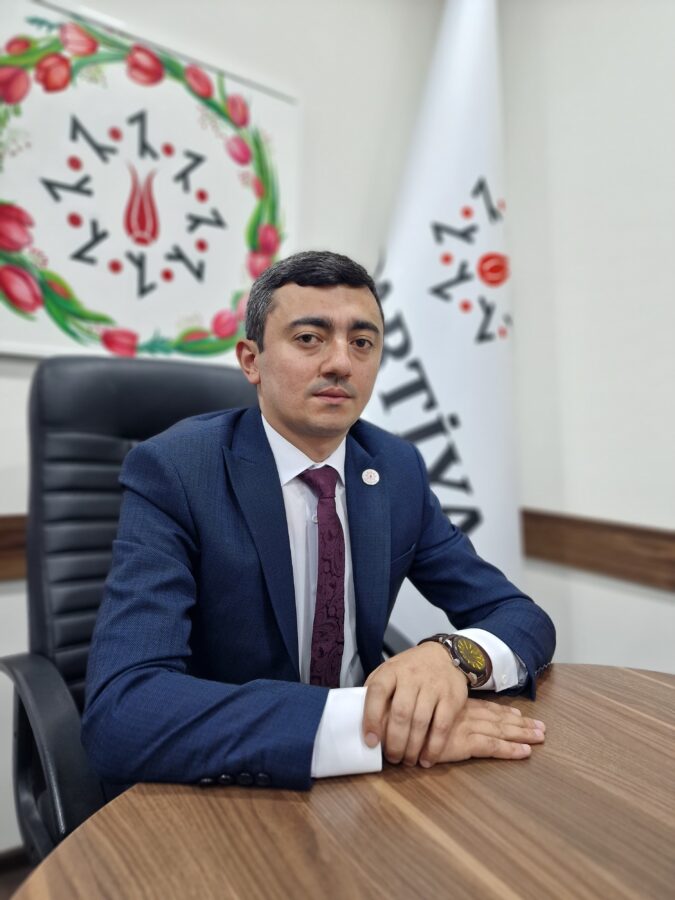
Javanshir Abbasli
According to the political commentator, Ukraine’s experience also shows that political division within society can seriously affect the fate of a state in the future:
“In 2004, Ukraine experienced a fierce election battle between Viktor Yanukovych and Viktor Yushchenko. Although Yushchenko came to power after the crisis caused by the election results and the “Orange Revolution,” the position of pro-Russian political forces in Ukraine did not disappear. Yanukovych’s subsequent return to power and the events of 2014 revealed just how deep the geopolitical confrontation in the country was. Moldova must also take this experience into account and not forget the consequences that political choices and divisions within society can bring.
Despite all this, deepening cooperation between Moldova and Romania is an important step for the country’s future. Time will tell how Russia will react to this process. I believe that Moscow will not, for now, perceive this rapprochement as Moldova’s complete departure from its sphere of influence. Because one of the most important levers of influence Russia has is precisely the existing political tendencies within Moldovan society. The fact that more than a third of the country’s population supports pro-Russian political forces is a serious factor. Although this figure alone is not sufficient to change the government, it is significant enough in terms of influencing future political processes.
On the other hand, Moldovan President Maia Sandu has repeatedly commented on the issue of her country’s unification with Romania and has expressed a positive attitude toward this idea. However, implementing such a decision is quite difficult under current conditions. Sandu also understands well that steps in this direction could face serious political resistance within the country. Russia, for its part, would use its existing levers of influence in Moldova to create serious obstacles to such a unification. Therefore, while rapprochement with Romania is important for Moldova’s security and future geopolitical direction, it would not be correct to think that this process will result in the country’s complete departure from Russian influence in the short term.”
Turan Rzayev
Globalinfo.az
Read also