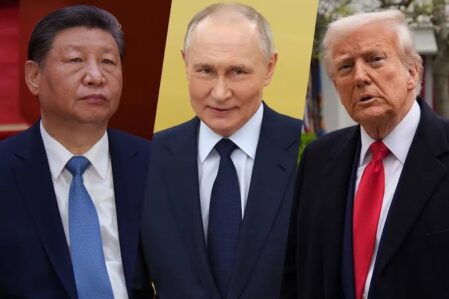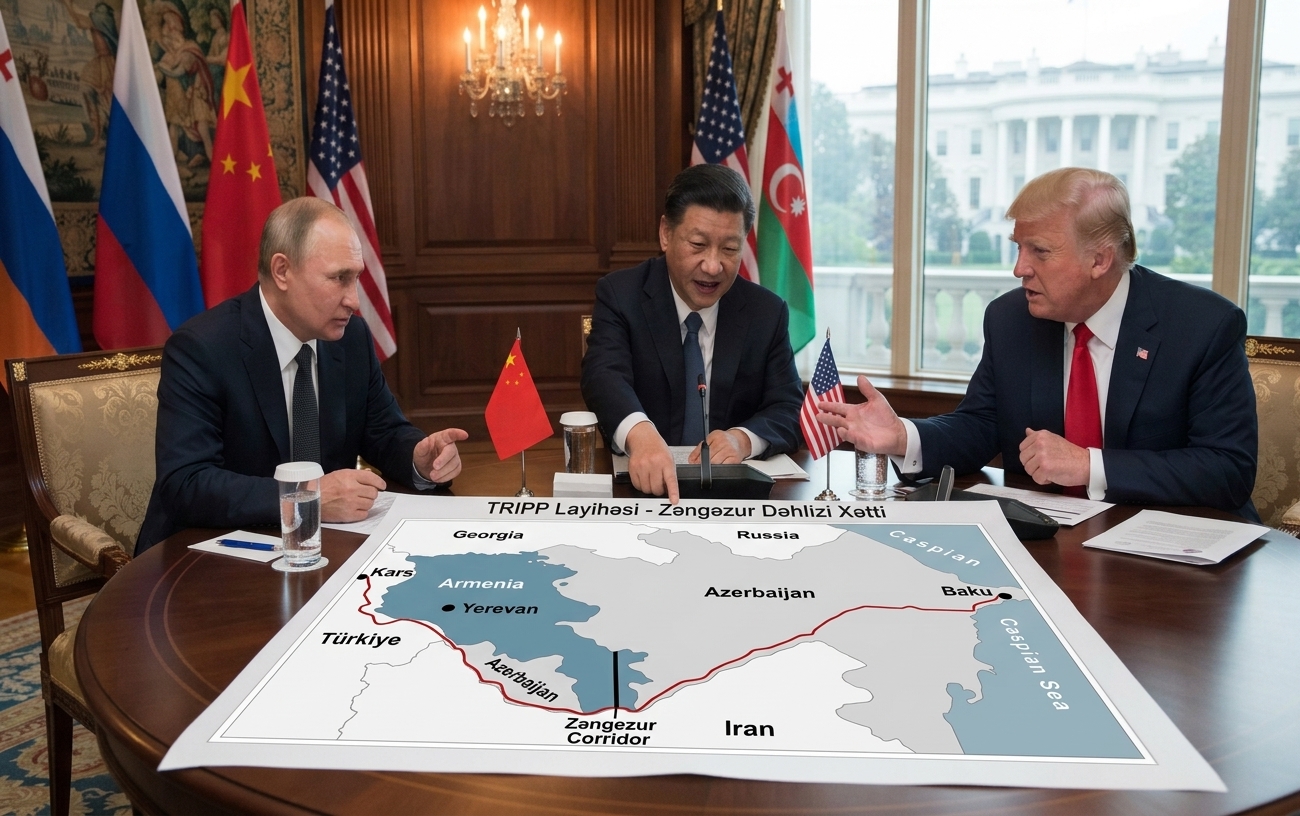
Against the backdrop of the Asia-Pacific Economic Cooperation (APEC) summit in China, contacts between the leaders of the US, Russia and China have become the focus of the international political agenda. At this platform, where the interests of the world’s three major powers intersect, whether the TRIPP project (the Zangezur corridor) will be discussed, and the impact of possible agreements on the future of the South Caucasus, is a matter of interest.
In particular, the US attempt to strengthen its positions in the region through the project, China’s interest in transport routes running through Central Asia to Europe and Russia’s changing geopolitical position in the South Caucasus add further relevance to the issue.
But is it possible that the TRIPP project will be discussed at the APEC summit? Could possible agreements between the leaders of the three major states accelerate the realisation of the Zangezur corridor? How could these contacts affect the geopolitical landscape of Central Asia and the South Caucasus, Azerbaijani-Armenian relations and the process of signing a peace agreement?
MP Elchin Mirzabeyli told Globalinfo.az that the APEC summit in China, and especially the trilateral meeting of Donald Trump, Xi Jinping and Vladimir Putin, is of great importance not only in terms of the global balance of power, but also in terms of the future geopolitical configuration of Central Asia and the South Caucasus:
“There is as yet no concrete information that the TRIPP project will be a separate subject of discussion on APEC’s official agenda. However, it is not excluded that regional transport and communication lines, security and economic interests will be discussed in bilateral and trilateral contacts between the leaders of the major powers.

In my view, this meeting’s impact on the realisation of the TRIPP project may be indirect rather than direct, and more in the context of reconciling geopolitical and economic interests. Let us not forget that in early November, Azerbaijan, the US and Armenia reached agreement on the creation of technical planning groups for the project’s transport and electricity directions. This already shows that the project has moved from the stage of political statements to the stage of practical implementation.

Elchin Mirzabeyli
On the other hand, China has serious economic and strategic interests in Central Asia. The strengthening of the US position in the South Caucasus, the change in Russia’s traditional levers of influence in the region and China’s transport and logistics strategy are forming a new geopolitical reality. The meeting of the three leaders could be significant in terms of reconciling these interests.
As for Azerbaijani-Armenian relations, I think the fate of the peace process no longer depends solely on the position of external powers. The main issue is for the parties to consolidate the agreements reached with concrete steps, open communication lines and build mutual trust.
The TRIPP project is not only the restoration of transport links between Azerbaijan and Armenia, but also a strategic project linking Central Asia with Europe through the South Caucasus. In this sense, its realisation could increase the economic and political weight of the entire region. However, the geopolitical rivalry of the major powers must not be allowed to slow this process. Peace and cooperation in the region must serve not the interests of individual states, but above all the future of the region’s peoples.”
Turan Rzayev
Globalinfo.az