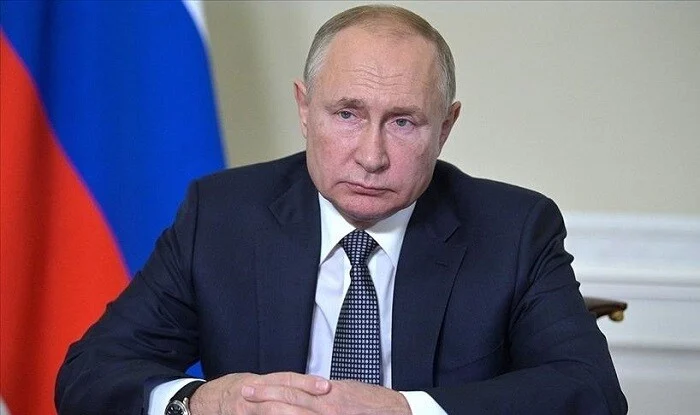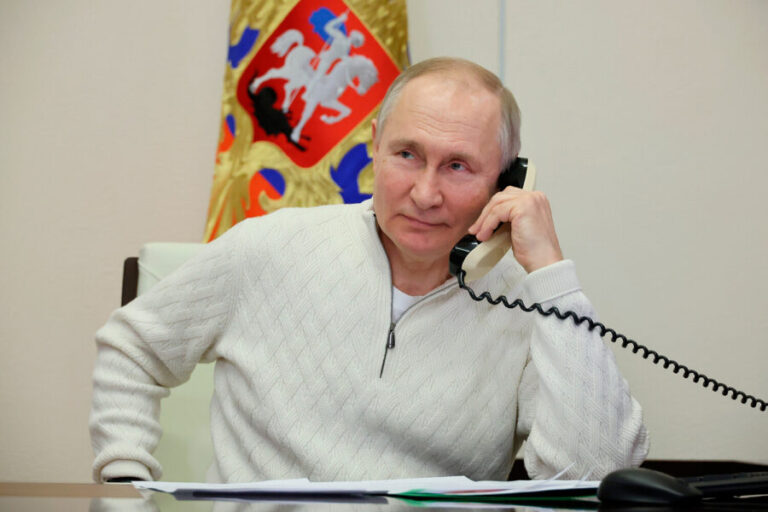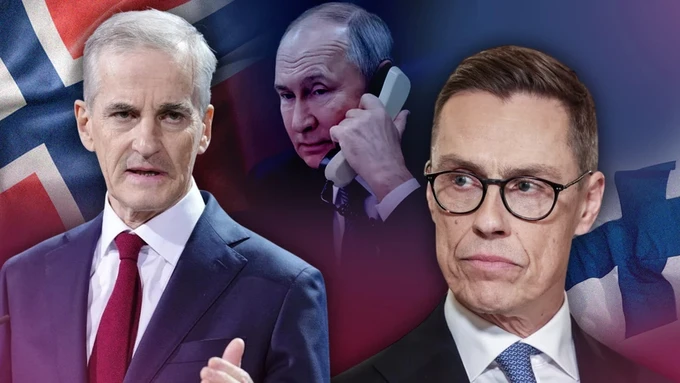
Finnish President Alexander Stubb and Norwegian Prime Minister Jonas Gahr Støre have held a telephone conversation with Russian President Vladimir Putin. The call, held as part of diplomatic efforts to halt the war in Ukraine and resume peace talks, also addressed preserving stability in the Baltic Sea and High North regions.
According to the Office of the President of Finland, Stubb described the conversation as frank and substantive.
Speaking to Globalinfo.az, Naim Suleymanov, an Azerbaijani political analyst living in Norway, said the direct telephone conversation between Finnish President Alexander Stubb, Norwegian Prime Minister Jonas Gahr Støre and Vladimir Putin should be viewed not merely as a diplomatic contact but as an important indicator of changing geopolitical realities in Europe:
“There are three main political and strategic aspects to this event.
First, it reconciles diplomacy with a principled position. Finland and Norway support Ukraine while also sharing direct borders with Russia. Their talks with Putin do not mean they accept Russia’s policy or are withdrawing their support for Ukraine. On the contrary, this step demonstrates the need for direct political contacts to stop the war.
Keeping diplomatic channels open in international relations is particularly important during wartime. However, dialogue itself does not yet mean peace has been achieved. The main issue is what concrete results the talks will produce, how ceasefire opportunities will be assessed and to what extent Ukraine’s security interests will be taken into account.
Second is the growing strategic importance of Norway and Finland in terms of regional security. The Baltic Sea and the High North—the Arctic region—are no longer merely areas of regional cooperation. These areas are of particular importance for Europe’s defence, the security of NATO’s northern flank, maritime and energy infrastructure, and strategic relations between Russia and the West.
The initiative by Finland and Norway stems from these countries’ geographical location and security interests. They recognise that the consequences of the war affect not only Ukraine but also have long-term implications for Europe’s overall security system.
From this perspective, the issue is not solely stopping the war in Ukraine. It also concerns how stability will be maintained in northern Europe in the future, the principles on which relations with Russia will be built, and how potential security risks will be managed.
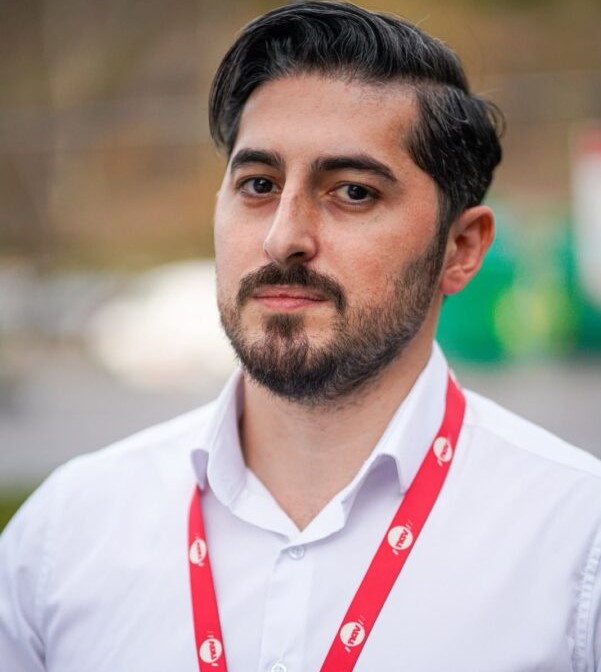
Naim Suleymanov
Third is Europe’s effort to strengthen its role in international politics.
One point that drew my attention is that Stubb and Støre spoke with Putin not as unified representatives of Europe but as leaders of their own countries. This detail is not accidental. Although Europe has common security interests, it shows that diplomatic initiatives can also be carried out within the capacities and political responsibilities of individual states.
At the same time, the success of such initiatives depends on European countries maintaining coordination among themselves. If different diplomatic channels serve common goals, they can contribute to the negotiation process. Otherwise, fragmented positions could allow Russia and other parties to manoeuvre between the interests of different states.
There is also an important principle here: decisions concerning Ukraine’s future should not be made without Ukraine’s participation. Peace should be assessed not only by the cessation of fighting, but also by ensuring the state’s sovereignty and security and reducing the risk of renewed military aggression in the future.
In conclusion, I view this telephone conversation not as evidence that the war will now end, but as an important political step towards continuing the diplomatic process.
The real significance of this initiative should be measured not by its symbolic aspect, but by its concrete results: the resumption of negotiations, de-escalation, protection of Ukraine’s interests and the creation of long-term security mechanisms in Europe.
This is because, in modern geopolitics, power is not measured solely by military capabilities. Power is also the ability to negotiate while upholding one’s principles, manage regional risks and create political mechanisms that ensure any possible peace is sustainable.”
Turan Rzayev
Globalinfo.az
Read also