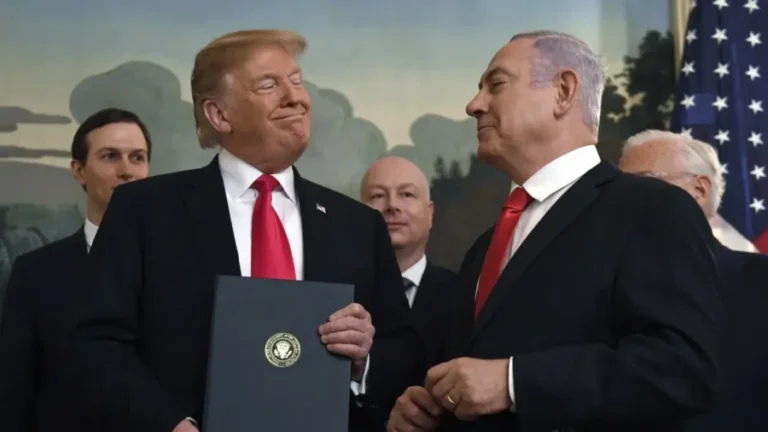
US President Donald Trump has said the war with Iran is over and that his country has won. But Israeli Prime Minister Benjamin Netanyahu said the Iranian threat persists and called for it to be eliminated.
Could Israel launch a snap strike on Iran without the US knowing? Can Trump rein in Netanyahu’s stance on Iran?
Political analyst Yusif Baghirzade told Globalinfo.az that US President Donald Trump’s declaration that the war with Iran is militarily over and that Washington has won, together with Israeli Prime Minister Benjamin Netanyahu’s emphasis that the Iranian threat still persists, shows that certain strategic differences have emerged in US-Israeli relations:
“In reality, this contradiction stems from differences in priorities between the two allies’ approaches to the Iran issue. Washington is interested in turning the military results it has achieved into a political and diplomatic agreement, whereas Tel Aviv considers the complete neutralisation of Tehran’s military and nuclear potential essential from a security standpoint.
It is known that in his November 9 statement Trump once again said that Iran’s military capabilities had effectively been knocked out, but he also added that ensuring a long-term solution is also extremely important. Then, in another statement on Saturday, he said he was considering refraining from additional strikes on Iran provided there were no new provocations. This is unquestionably not an approach that serves Israel’s interests, and therefore Tel Aviv is trying with every possible means to persuade Washington to agree to new military operations. The visit of MOSSAD chief Roman Qofman to Washington and his meetings with US officials also demonstrate the intensity of these diplomatic contacts.
As for whether Israel could attack Iran without the US knowing, theoretically and politically such a scenario cannot be ruled out. Israel has the ability to take independent decisions and act in accordance with its own national security interests. However, carrying out a large-scale military operation is not merely a political decision. The regional consequences of such a step, Iran’s possible responses and the security of US military forces in the Middle East must be taken into account. Therefore an attack not coordinated with Washington could create serious diplomatic tension in US-Israeli relations. On the other hand, it does not look convincing that Israel could stand alone against Iran and its allied proxy forces.”


Yusif Baghirzade
The political analyst said another important issue is Donald Trump’s leverage over Netanyahu:
“The US is one of Israel’s main military and political partners. Arms supplies, intelligence sharing, diplomatic support and financial cooperation give Washington important means of influencing Tel Aviv’s decisions. In other words, the US has in its hands the leverage to keep Israel from launching operations without its permission.
But let me also note that Trump faces a complex choice as well. On one hand, protecting Israel’s security interests; on the other, not dragging the US into a new and long-term war. Reaching a possible diplomatic agreement with Iran could give Washington the opportunity to turn military results into a political success. However, Israel’s view that such an agreement does not provide sufficient guarantees could complicate the process.
I think the deepening disagreement between the US and Israel on the Iran issue is not a breakdown of the alliance but rather a different assessment of regional security priorities. And preventing a new military confrontation will depend not only on reconciling the positions of Washington and Tel Aviv, but also on Tehran assuming real obligations in the diplomatic process. Otherwise, despite political statements that the war is over, the risk of instability and new military escalation in the Middle East will remain on the agenda.”
Turan Rzayev
Globalinfo.az
Read also