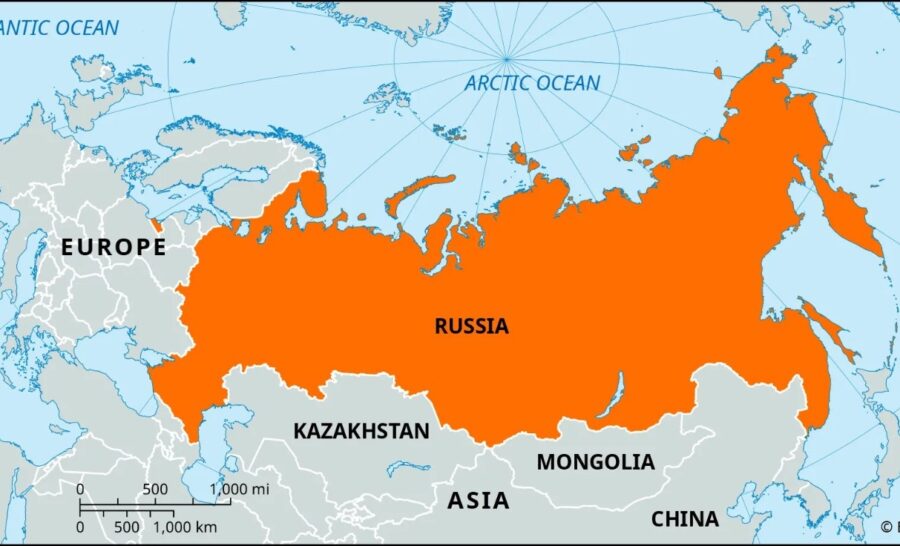
In recent times, the idea that Russia may break up has again been brought to the fore. The economic situation that has emerged against the backdrop of the war in Ukraine is said to mark the beginning of the country’s disintegration process.
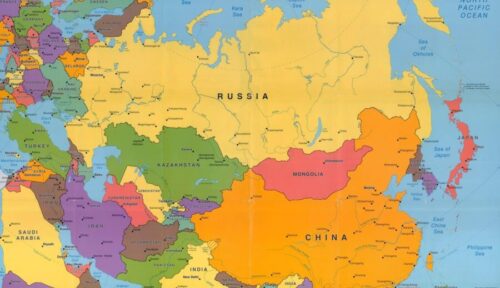
Commentators and political activists from various Western countries have been circulating maps, particularly on the X social network. They cite the breakup of the USSR as an example.
Is the process really moving towards Russia’s breakup? What states could emerge under such a scenario? What good and bad consequences would our region face?
Political commentator Tamilla Qulami told Globalinfo.az that it was no coincidence that the issue of Russia’s breakup had once again become central to international political discussions:
“Russia’s future stability is increasingly being called into question by the war in Ukraine, Western sanctions, rising military spending, economic stagnation and deepening socioeconomic inequalities between regions. Maps circulated especially in Western political circles and on social media have made these discussions even more relevant. However, I do not yet believe that Russia’s breakup is an inevitable process in the near future. There are serious political and institutional differences between the USSR and modern Russia. The USSR included union republics that, even if only formally, possessed attributes of independence. In Russia, however, the system of power is more centralised, while regional governance is directly tied to the Kremlin.
Nevertheless, Russia has a considerable number of weak points. Attitudes towards the central government could change in future, particularly in national republics such as Tatarstan, Bashkortostan, Chechnya, Dagestan, Sakha (Yakutia) and Buryatia. The history of separatism in Chechnya and the North Caucasus, issues of national identity and grievances over the distribution of resources are potential risks. Under such a scenario, claims to independence by territories such as Tatarstan, Bashkortostan, Chechnya and Sakha could come to the fore. However, to say now that any of these will become an independent state would be more speculation than a political forecast.”

Tamilla Qulami
The political scientist said the main threat was not so much Russia’s economic weakening as the possibility that the central government could lose political control:
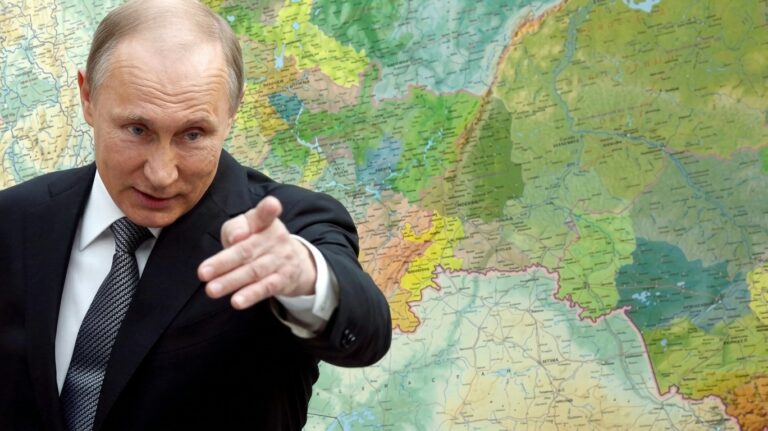
“A change in President Vladimir Putin‘s rule, divisions within the elite and a military defeat could also accelerate such a process. The total budget deficit of Russia’s regions reaching a record level in 2025 is also an indicator of economic tensions in relations between the centre and the regions.
This process has both positive and dangerous aspects for Azerbaijan and the region as a whole. The positive side would be a weakening of Russia’s political and military influence over the South Caucasus, broader geopolitical room for manoeuvre for Azerbaijan and increased importance of the Middle Corridor. The negative side would be possible chaos in Russia, problems controlling nuclear weapons, a security crisis in the North Caucasus, a refugee influx and new regional conflicts.
Yes, Russia’s breakup is a real subject of political discussion today, but it is not an inevitable outcome in the near future. Azerbaijan should view this possibility neither as a desirable event nor as a distant and insignificant scenario. At the same time, it is important to prepare for possible geopolitical changes, build strong state institutions and protect national security interests under every scenario.
A study by the Swedish Institute of International Affairs on the prospects of Russia’s breakup, the 2026 report by Poland’s Centre for Eastern Studies and an analysis by the Carnegie Foundation are interesting sources to substantiate all this.”
Turan Rzayev
Globalinfo.az
Read also