More than 428 kilograms of narcotic drugs, 17,590 psychotropic pills, an armed incident, neutralised aircraft and detained border violators… All this illustrates the scale of what has occurred on the Azerbaijan-Iran state border in just one month. The emerging picture raises serious questions: Who is behind drug trafficking from Iranian territory into Azerbaijan, and what are the relevant authorities in the neighbouring country doing to prevent this criminal activity?
Recent incidents on the Azerbaijan-Iran state border should no longer be assessed as isolated smuggling attempts, but as a process requiring serious analysis from a national security perspective.
The results of operational and military measures carried out by the State Border Service over the past month clearly demonstrate the scale of the problem. In total, the smuggling of more than 428 kilograms of narcotic drugs and 17,590 psychotropic pills into the country was prevented.
These figures are not merely statistics. Behind them are people who could be drawn into drug addiction, families that could be destroyed and lives placed at risk. Every kilogram of narcotic drugs removed from illicit circulation by Azerbaijani border guards effectively means preventing serious crimes targeting our society.
But how do such large quantities of narcotic drugs reach the Azerbaijani border from Iranian territory?
This is the most troubling aspect of the matter.
The smuggling attempts regularly thwarted by Azerbaijani border guards show that criminal networks are increasingly resorting to more diverse and dangerous methods to cross the border. Drug traffickers who previously relied mainly on land routes are now involving unmanned aerial vehicles and even paratrike-type aircraft in their criminal activity.
This does not appear to be random or unprepared activity. Obtaining, packaging and transporting large quantities of narcotic drugs, preparing aircraft and directing them towards the border require a certain level of organisation and coordination.
This raises legitimate questions: Why are Iranian agencies responsible for border security unable to detect all this in time? Why is the movement of drug-laden aircraft towards the border not prevented? Does the persistent nature of smuggling attempts directed at Azerbaijani territory indicate inadequate control on the Iranian side, or that criminal activity is being tolerated?
Clarifying these questions has now become a necessity.
Of course, the registration of drug smuggling attempts from Iranian territory does not in itself prove the involvement of that country’s state agencies in these crimes. However, in the face of such serious and repeated incidents, it is not enough for Azerbaijan’s border protection bodies alone to fight them. The Iranian side must also identify and prevent the organisers of illegal activities originating from its territory and state its position clearly on the results.
Alongside drugs, weapons are also being used at the border
Another dangerous aspect of the incidents is that drug smuggling is now being accompanied by armed resistance.
During operations conducted by the State Border Service, a border violator who failed to comply with the lawful demands of border guards put their lives at risk by offering armed resistance. As a result of decisive and lawful measures taken by Azerbaijani border guards, the individual was neutralised.
The incident once again demonstrates that drug smuggling is not merely illicit trade in goods, but also poses a direct threat to the lives of border guards and to state security.
The fact that a person attempting to violate the border resorted to a weapon shows that criminal networks do not hesitate even to endanger human lives in pursuit of their goals.
During other operations, the detention of two border violators attempting to smuggle narcotic drugs into Azerbaijani territory, as well as the apprehension of a pilot who is an Iranian citizen operating a paratrike-type aircraft, were among the important results achieved in border protection.
The detention of the pilot is particularly noteworthy. This is no longer simply a matter of a technical device detected and neutralised in the air, but of identifying and detaining the person directly operating it.
This result shows that Azerbaijani border guards do not limit themselves to detecting smuggled goods, but also conduct targeted work to apprehend those involved in criminal activity.
A threat targeting the future of Azerbaijan’s youth
Drug smuggling should not be viewed solely through the prism of border security. It is also a grave threat directed against the health, human capital and future of a nation.
Investigations must establish who the narcotic drugs smuggled into Azerbaijani territory were ultimately intended for and to which addresses they were to be delivered. But one fact remains unchanged: society, and especially the younger generation, suffers the gravest consequences of illicit drug trafficking.
Drug addiction does not only destroy an individual’s health. It destroys family relationships, weakens the ability to work, creates fertile ground for crime and harms society as a whole.

From this perspective, the relevant agencies of the neighbouring state bear serious responsibility regarding continuing drug smuggling attempts from Iranian territory towards Azerbaijan.
Iran is known to be taking measures to combat drugs on its own territory. However, this fact does not diminish the scale of the threat directed at the Azerbaijani border. On the contrary, it highlights the need to use existing capabilities more effectively to prevent the activities of criminal networks along the border between the two countries.
Under no circumstances can there be indifference to drug traffickers endangering the health of Azerbaijani youth.
The professionalism of border guards is the state’s security guarantee
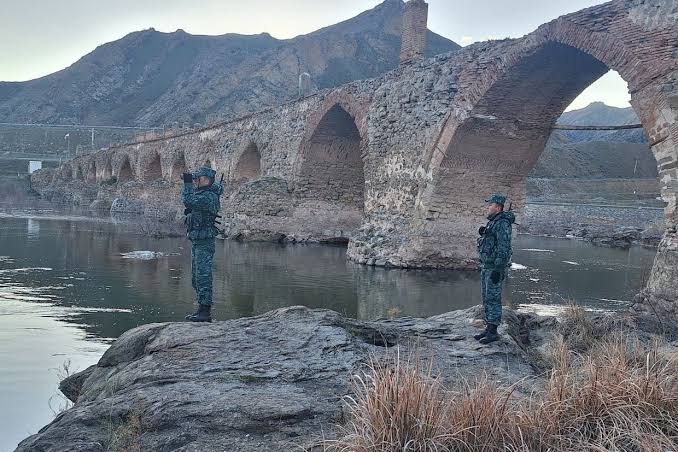
Against the backdrop of all these incidents, the key point that must be particularly emphasised is the high professionalism, vigilance and determination demonstrated by Azerbaijani border guards.
In the modern era, protecting the state border does not simply mean guarding physical barriers. The widespread use of unmanned aerial vehicles, the growing technical capabilities of smugglers and criminal networks’ use of new methods require an entirely different approach to border security.
The State Border Service’s latest operations show that Azerbaijani border guards are capable of taking flexible and effective measures against changing threats.
The timely detection of border violators, the proper assessment of operational conditions, the neutralisation of illegal aircraft, the seizure of drug consignments and the detention of criminals are not random successes. They are the result of the professional training of personnel, operational activities and coordinated measures.
In particular, protecting the lives of border guards and taking measures in accordance with the law in conditions of armed resistance once again underscores how responsible and dangerous this service is.
Behind every successful operation stands an Azerbaijani border guard who serves day and night, ensures the inviolability of the state border in difficult terrain and weather conditions, and sometimes risks their own life.
Preventing hundreds of kilograms of narcotic drugs from being smuggled into the country in just one month is the tangible result of this dedicated service.
The Iranian side must answer the questions
Keeping the situation under control solely through the professionalism of Azerbaijani border guards does not mean resolving the problem at its root.
Drug trafficking is a transnational crime, and combating it requires serious measures on both sides of the border.
The expectation of Iran’s relevant state agencies is clear: identify drug trafficking networks operating in the direction of Azerbaijan, prevent illegal flights, bring criminals to justice and strengthen the exchange of operational information with Azerbaijan.
If Azerbaijani border guards can promptly detect and neutralise drug-laden aircraft over their territory, it is also entirely justified to demand an investigation into the conditions under which the same threat arises on Iranian territory.
Silence and inaction on this issue could allow the threat to persist. Any gap in control primarily serves the interests of criminal networks.
Azerbaijan’s state border cannot become a transit point for drug traffickers. Our country’s territory cannot become a testing ground for criminal networks. The future of Azerbaijani youth cannot become the victim of any illegal profit.
The operational results of the past month reveal two important facts: the threat of drug smuggling from Iranian territory towards Azerbaijan is serious, and Azerbaijani border guards are resolutely fighting this threat.
The key question now awaiting an answer is this: As Azerbaijani border guards perform their duties at this level, what result-oriented steps is the Iranian side taking to prevent what is happening along its border?
Answering this question is important not only for border security between the two countries, but also for the future of efforts to combat the illicit drug trade.
One point is already clear: Azerbaijani border guards are determined to protect the inviolability of the state border, the security of the people and the future of our youth.
Because every drug shipment stopped at the border is not only a successful operation, but also means protected lives and a saved future.
(Bakues.az)