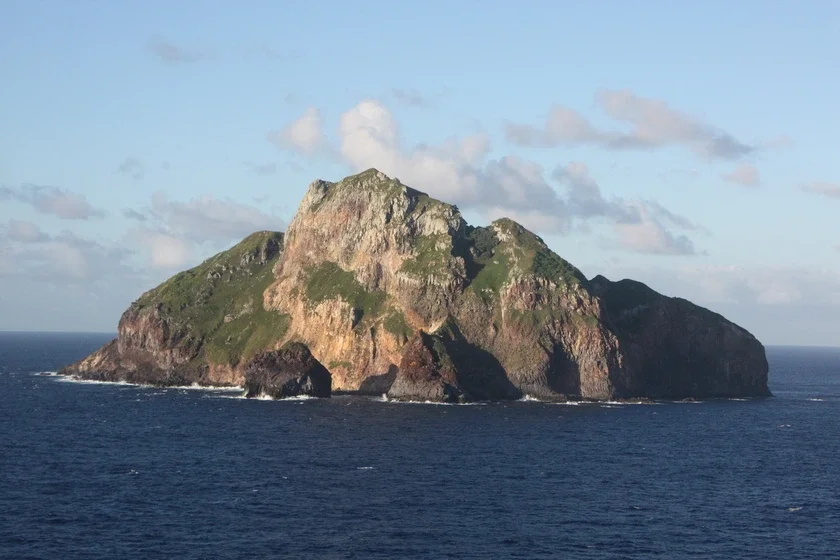
Two small volcanic islands in the middle of the Pacific Ocean, home only to seabirds, have sparked an international dispute between France and Vanuatu.
Globalinfo.az reports, citing The Guardian.
The reasons behind the standoff between the two countries over these uninhabited territories and the strategic importance of the islands have drawn attention.
East of Australia, between the island nation of Vanuatu and the French-administered territory of New Caledonia, lie two volcanic islands called Matthew and Hunter. With a total area of just 1.3 square kilometers, these territories have no permanent human population.
Despite this, both countries claim ownership of these territories. France considers the islands of Matthew and Hunter to be part of New Caledonia, while Vanuatu recognizes them as its own sovereign territory.
Where does the history of the dispute begin?

The roots of the territorial dispute between the two countries go back to the period before Vanuatu gained independence. Until 1980, the island nation was under the joint administration of France and the United Kingdom. Even then, disagreements existed between Paris and London over who owned Matthew and Hunter islands.
After declaring independence, Vanuatu formalized its claim to sovereignty over the islands. The country’s leadership bases its position on the centuries-old cultural and economic ties of the local population to these territories.
France, for its part, continues to maintain control over the islands. Paris periodically sends military expeditions there and has even installed meteorological equipment on the territory.
Thus, two islands of extremely small size remain at the center of an unresolved territorial dispute between France and Vanuatu.
Safura Bannayeva
Globalinfo.az
Read also