Globalinfo.az presents an interview with Prof. Dr. İrfan Kaya Ülger, a prominent Turkish political scientist and head of the International Relations Department at the Faculty of Political Science of Kocaeli University:
– Mr. İrfan, a trilateral meeting was held in the Chinese city of Shenzhen between Chinese President Xi Jinping, US President Donald Trump and Russian President Vladimir Putin. In previous months, the leaders of the United States, China and Russia had held bilateral meetings. Therefore, there were expectations from this trilateral meeting, the first of its kind in history…
– The meeting of the US, Russian and Chinese leaders was interpreted as the major powers dividing the world among themselves through compromise. Some described the meeting as “Yalta 2.0”. I believe such interpretations are exaggerated. It was the first such meeting in this format. At the same time, the sides had not actually prepared for a summit. The APEC member states had gathered for the 33rd summit to discuss international issues.
– What does Trump’s statement after the meeting that “Putin mistakenly sent drones and several small missiles into Polish territory”, as well as his postponement of a decision on launching large-scale strikes on Iran, indicate? On which issues were the leaders able to reach agreement and make concessions? What processes await us in the new world?
– First of all, the states have very different priorities. What matters to Trump is the renewal of the Treaty on the Non-Proliferation of Nuclear Weapons. The US administration wants to renew the treaty, which expires in 2026, in a way that also includes the People’s Republic of China. In addition, cutting off or limiting support for Iran and disrupting cooperation between Russia and China are also important for Washington.
The priorities of the Chinese administration included removing barriers to international trade, ensuring that tariffs, quotas and non-tariff barriers do not hinder commercial and economic activity, resolving problems in the supply of fossil fuels and, finally, the Taiwan issue.
Before the summit, Putin’s foremost priority was restoring great-power status. The Russian Federation, which was one of the world’s superpowers in the period between the two wars, has pursued an aggressive and expansionist policy for a quarter of a century to restore this status and adopted a security strategy defining former Soviet countries as its backyard. The Moscow administration, which intervened in Georgia in 2008 and Ukraine in 2014 and 2022, also openly or covertly threatened Poland and the Baltic states. Putin has spoken in various statements about returning to the 1997 status quo. For Russia, the Shenzhen summit was also seen as a way out of international isolation.
Looking at the communiqué issued after the summit, four issues stand out. First, reform of the UN system; then the limitation of nuclear weapons and global energy security; and finally, limiting the powers of the International Criminal Court. It cannot be said that the sides held comprehensive discussions on all these issues and reached full agreement. In this respect, the summit can also be described as a “disappointment” or a “major fiasco”. Despite the emphasis on peace and security in the summit communiqué, they appear to have avoided specifically mentioning the Iran-US and Russia-Ukraine conflicts.
As for UN reform, the three permanent members of the Security Council are not expected to take any steps that would change the current situation. In fact, reform of the UN system has been discussed continuously since the tenure of former Secretary-General Kurt Waldheim, but no changes have been made.
It is clear that no consensus was reached on the Strategic Arms Reduction Treaty (START). China did not accept the proposal to become a party to the renewed treaty. However, the emphasis on this nuclear issue in the text should be assessed as a commitment to the 1968 NPT – Treaty on the Non-Proliferation of Nuclear Weapons. The People’s Republic of China’s concern about global energy security is limited to keeping the Strait of Hormuz open. Ending the Ukraine-Russia war is not a priority for the Beijing administration. On the contrary, this war allows the Chinese government to buy fossil fuels (oil, natural gas and coal, -ed.) from Iran at more favourable prices. Putin indirectly proposes that occupied Ukrainian territories remain under Russian control in order to ensure the continuation of natural gas flows to Europe. There are serious differences of opinion on this issue between the United States and NATO’s European partners, and these are not expected to be resolved in the short term.

As for limiting the powers of the International Criminal Court (ICC), the sides appear to have reached full agreement. In March 2023, the Court issued an arrest warrant for Putin. The Court also issued similar decisions against Israeli Prime Minister Netanyahu and former Defence Minister Yoav Gallant during the Gaza war. This final point can be interpreted as a gain for Putin. However, it should not be forgotten that 125 states are parties to the Rome Statute (Rome Treaty), which established the ICC, operating in The Hague, Netherlands, since 2002. Even if the three leaders agree to abolish the ICC or revise its founding document, it will not be possible to implement this.
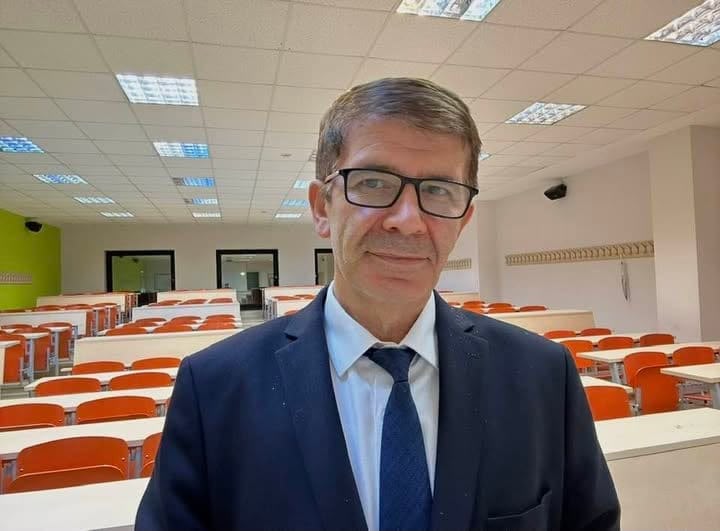
İrfan Kaya Ülger
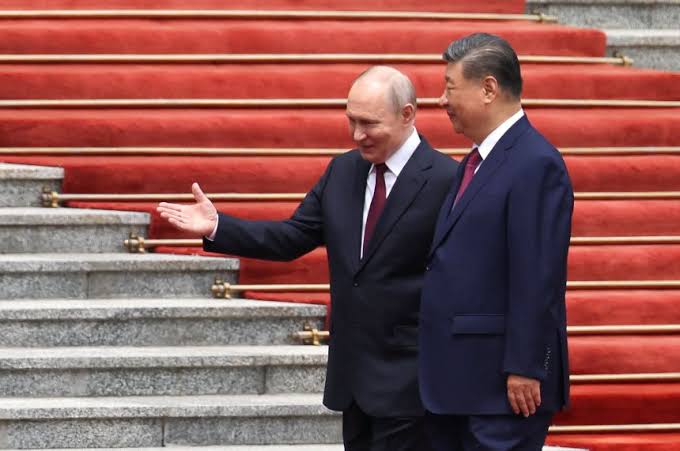
– The media portrayed aspects such as Putin’s reception ceremony and his not being placed in the centre of the group photograph as a message indicating Russia’s declining power. On the other hand, the European Union (EU) has allocated 1 billion euros in military aid to Ukraine, and it appears that the war will continue. Is Russia’s weakening an opportunity for the peace process in the South Caucasus and for Azerbaijan, or does the new world order also bring alternative risks? Beyond maintaining a balance among these three world powers, what else should Azerbaijan pay attention to?
– It is entirely clear that Azerbaijan, which gained independence following the collapse of the USSR in 1991, has made significant positive progress since then in terms of the elements that make up its national power. One of the most important indicators of this is the liberation, as a result of the 44-day war, of Azerbaijani territories occupied with Russian support in the first half of the 1990s. As a second step, separatists in the Karabakh region were removed from the territory in 2023. Thus, the project of creating a separate state from autonomous regions that periodically emerge in the successor states of the USSR was consigned to the dustbin of history, and Azerbaijan’s territorial integrity was strengthened. Today, Azerbaijan pursues a multidimensional foreign policy. On the one hand, it maintains relations with the Russian Federation, while on the other it develops cultural, trade and political ties across a broad geographical area through the Organisation of Islamic Cooperation, the Organisation of Turkic States, D-8 and the Economic Cooperation Organisation.
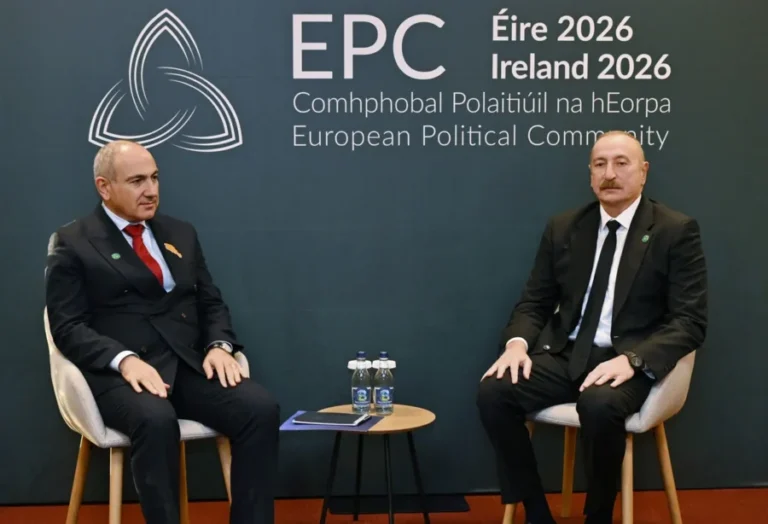
Under the ceasefire agreement signed in Moscow on November 10, 2020, a peace agreement between Armenia and Azerbaijan is expected to be signed in the near future if progress is made on disputed issues. Türkiye is closely monitoring this process and is sending the message that improving relations with Armenia will only be possible after this agreement.
– In fact, the new geopolitical reality shaped by Azerbaijan in the region reflects the message of “partnership, not conflict”. What position will Azerbaijan take in the new world?
– I believe Azerbaijan is rapidly adapting to the new world system. Azerbaijan, which has participated in the Council of Europe as an observer since 1996, became a full member in 2001. From a broad perspective, the Azerbaijani government maintains close ties with the Russian Federation, Europe, and the Turkic and Islamic worlds. We can say that, in parallel with developments in the international political system in the coming years, Azerbaijan’s position in the modern world will strengthen further.
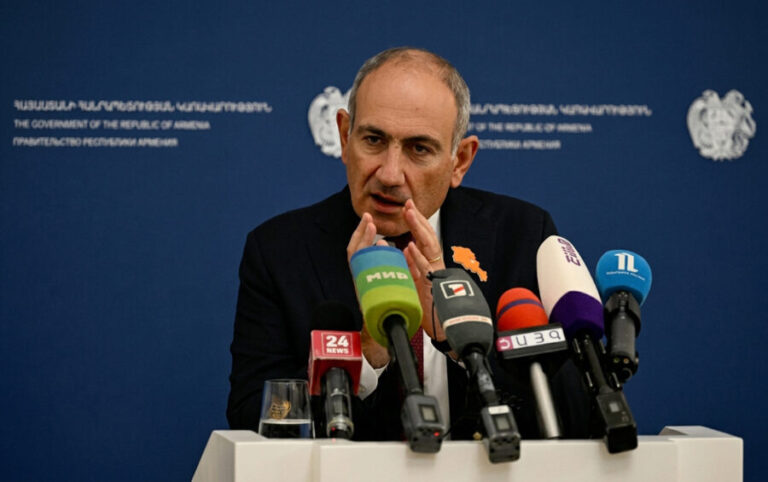
– Armenian Prime Minister Nikol Pashinyan said during a speech in parliament that the text of the new constitution will be published on November 23. He called on opposition factions in parliament to provide the missing six votes to put the document to a referendum. Will Pashinyan be able to secure amendments to Armenia’s constitution? I would recall that the Declaration of Independence, to which the current Armenian Constitution refers, contains territorial claims against Azerbaijan and Türkiye, as well as the issue of the “Armenian genocide”.
– Armenian Prime Minister Nikol Pashinyan is working hard to reach a peace agreement. However, he failed to secure the necessary majority in the latest elections to amend the constitution. Nevertheless, a new constitution, from which outdated provisions obstructing a peace agreement have been removed, will be submitted to the Armenian parliament. If he receives the expected support from the opposition, a peace agreement between Armenia and Azerbaijan will be signed, while diplomatic relations between Turkey and Armenia will be restored in parallel and border crossings will be opened. Opposition forces, also known as the “Karabakh clan”, accuse Pashinyan of disregarding the country’s national interests. In particular, the Sargsyan-Kocharyan group and other opposition figures acting in parallel with them oppose the removal from Armenia’s constitution and other fundamental texts of provisions concerning Karabakh and the reference to Ararat (Ağrı). I am not entirely convinced that Nikol Pashinyan will be able to achieve a result on constitutional change. If support can be secured from some lawmakers in the opposition wing of the Armenian parliament, a major obstacle will be removed. However, there remains a possibility that ultra-nationalists of Hunchak-Dashnak origin could obstruct this process. On the other hand, it is unclear what position the Armenian diaspora will take on this issue. One thing is clear: Russia under Putin’s leadership will not be pleased with the peace treaty. Although Russia led the ceasefire agreement process on 10 November 2020, it believes that achieving peace under the current conditions would diminish its influence in the South Caucasus. Nikol Pashinyan has said in various speeches that the Russian base in Gyumri does not contribute to the country’s security and that he supports its withdrawal. However, Moscow’s view of Armenia and the South Caucasus as a whole is entirely different. The Russian Federation has currently separated Georgia’s regions of South Ossetia and Abkhazia from the central government and established satellite administrations there. In Armenia, it wants to preserve the Gyumri base and even see Pashinyan removed from power. In Azerbaijan, however, Russia’s “Artsakh Republic” project was thwarted in 2023 when the centre of Karabakh was cleared of rebels.
Gulnar Salimova
Globalinfo.az
Istanbul
Read also