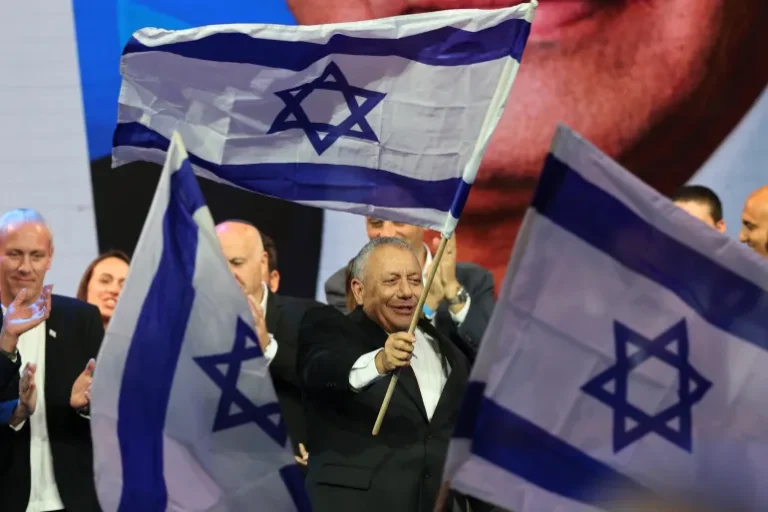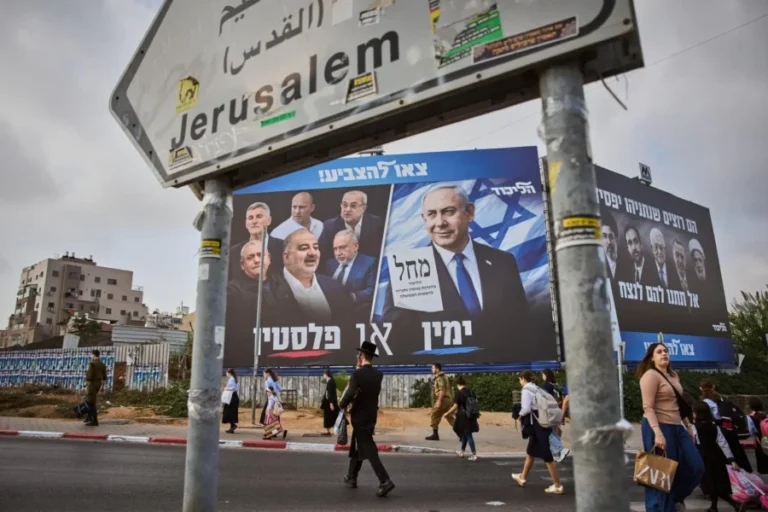
Israel’s election produced an unexpected result. No bloc has been able to form a government, Arab parties have achieved a historic success, and the ruling Likud Party has declared the results “stolen”.
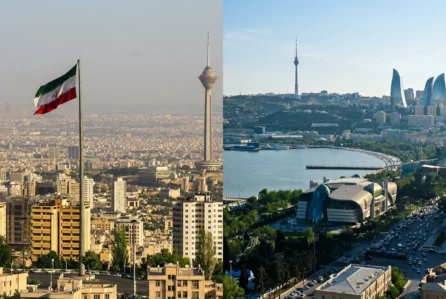
Behind the coalition calculations lies a more important question: Will Israel now head to another election or be forced to form a national unity government? Or will it launch a war against Iran, which it has failed to avert amid the current political crisis?
Globalinfo.az quoted political analyst Alimusa Ibrahimov as saying that the picture had largely become clear after 92 percent of votes were counted:
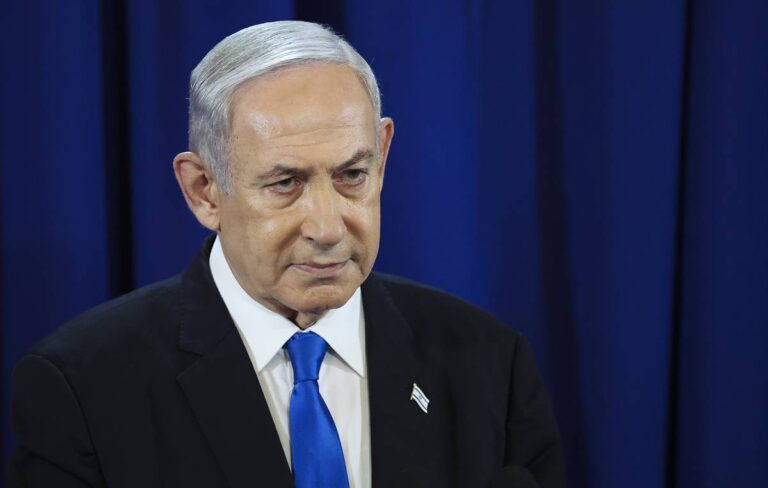
“Likud, led by Benjamin Netanyahu, has won 26 seats, while Yesh Atid, led by Yair Lapid, has won 21. The surprise of the election is the success of Arab political forces represented by Ayman Odeh, Ahmad Tibi and Mansour Abbas. Together with Ra’am’s eight seats, Arab parties have risen from around 10 seats in the previous election to 19.
The joint Bayt Yehudi-Yesh Atid bloc (Bennett and Lapid) won 12 seats, the Democrats (Yair Golan) 8, Yisrael Beytenu (Lieberman) 7, United Torah Judaism 7, Otzma Yehudit (Ben-Gvir) 7, Shas 7, and the Religious Zionist Party (Smotrich and Feiglin) 6. The reservists and economy party, Miluimnikim Ve Kalkalit, as well as Ofer Winter’s party, did not cross the electoral threshold. However, the counting of double envelopes could still change the status of the leading party.
The main issue is the distribution of seats among the blocs. Netanyahu’s bloc has 53 seats, the opposition bloc — Yesh Atid, Yisrael Beytenu, the Democrats and their partners under coalition agreements — has 48, while Arab parties hold 19. Thus, no bloc can secure the 61-seat majority required to form a government.
Likud has issued a statement declaring the election “stolen”. The party accused Arab political forces of bribery, violence, intimidation and unlawful mobilisation, saying it had submitted relevant evidence to Shin Bet, the police and the Central Election Committee. Specific allegations include envelopes containing money and Ra’am ballots, threats against election commission members, several voters being in a voting booth at the same time, and other prohibited mobilisation methods.
At the same time, the chairman of the Central Election Committee, retired judge Noam Solberg, asked Shin Bet chief David Zini to investigate suspicions that foreign entities transferred large sums to Arab political structures to increase voter turnout. The report said the funding could overlap with channels linked to the Muslim Brotherhood and terrorist financing networks. Shin Bet must submit a report within a week. The country in question is unsurprising: Qatar.”
According to the political analyst, if these allegations are confirmed, we could face an unprecedented development:
“This would not be a case of ordinary social media manipulation or bribing individual voters, but of a deliberate foreign influence campaign by a state that Israel has not officially declared an enemy. One of the candidates has promised to demand that Qatar be declared an enemy state if he joins the government. Meanwhile, an investigation is continuing into an adviser in the prime minister’s office who is alleged to have received money from Qatar after October 7.
However, the police response was not what Likud expected. Police said election day had seen a minimal number of violations compared with previous campaigns and that there was ‘no factual or intelligence information’ supporting the allegations. Historically high Arab voter turnout — rising to as much as 80 percent at some polling stations, compared with about 50 percent previously — is explained not by irregularities but by Arab citizens actually going to vote. Many of them believed for the first time that their participation could change something.
There is a telling point in this regard: there are always people in Israel who claim election results were stolen, but such claims rarely change the outcome. Violations are fragmented in nature: a fight at one polling station, an observer’s emotional reaction, and so on. These do not demonstrate the existence of systematic fraud.”
The political analyst also addressed possible coalition scenarios:
“Gadi Eisenkot is entering into an alliance with Arab parties. If we add the 48-seat bloc led by Eisenkot to the Arab parties’ 19 seats, it totals 67. This could create an opportunity for a broad coalition or, alternatively, a minority government with outside support from Arab parties.
Theoretically, this is possible, but politically it is not credible. Arab parties are expected to demand significant funding for their sectors. Mansour Abbas is known for prioritising infrastructure development, economic progress and combating crime in the Arab sector. These are legitimate demands in coalition negotiations.
However, claims circulating online that Arab parties would demand the withdrawal of troops from Syria, Lebanon and Gaza, or that Iran not be struck, are completely unfounded. No Arab party has made such demands. Moreover, any party making such demands would face serious political pressure.

Alimusa Ibrahimov

Eisenkot leading such a coalition could deal a serious blow to his political career. The coalition would not be long-lasting, and he would pay the price in the next election. Just as Benny Gantz stepped back to avoid risking his political standing.
This is one of the real options. Netanyahu could strengthen his position in each subsequent election round. Especially if a military campaign against Iran takes place in the interim and Israel presents that campaign as a victory, this could affect Netanyahu’s political position. Ofer Winter may not run again, and his supporters’ votes could shift to the right-wing political camp.
There is even a sub-scenario in which Eisenkot is given the opportunity to form a coalition, but the government collapses, after which Netanyahu uses the resulting political vacuum to form his own coalition. The difficulty for Netanyahu is that the current opposition — Arab parties and other opposition forces in the Knesset — could take a blocking position, prevent the election of a new Knesset speaker and create various procedural obstacles.
Kobi Bardach, an expert on US-Israel relations and a historian, has claimed that if Israel reaches a political deadlock, US President Donald Trump could personally intervene in the country’s domestic politics without hesitation.”
Ibrahimov said there were three main reasons for this:
“First, the India-Middle East-Europe transport corridor. The implementation of this project depends on the normalisation of Israel-Saudi Arabia relations and is important in economic competition with China.
Under the scenario put forward by Bardach, Trump could invite Bennett, Eisenkot and Netanyahu to Washington and demand the formation of a national unity government based on a three-way rotation. Under this scenario, Netanyahu remains prime minister until July 2028. After President Isaac Herzog’s term expires, Netanyahu moves to the presidency, receives a pardon over his legal cases and ends his political career at its highest point. Eisenkot becomes prime minister until January 2030, after which Bennett takes office, and the country goes to elections on a pre-determined schedule.
This scenario has historical precedents. The Bennett-Lapid rotation and the national unity government formed in 1984 are examples. At the time, the Alignment bloc won 44 seats and Likud 41. Since neither side could independently form a government, Shimon Peres and Yitzhak Shamir agreed to rotate the premiership. That government implemented major economic reforms, including an economic stabilisation programme and the introduction of the new shekel in 1985.
Trump’s main priority is to ensure political stability in Israel during the remaining two years of his presidency. This could give him enough time to implement his planned Middle East policy, including a war with Iran. The Saudis, meanwhile, are putting forward their own conditions. These include excluding radical politicians such as Ben-Gvir and Smotrich from the government. Trump, however, could secure certain concessions by promising Saudi Arabia support against the Houthis and military-political stabilisation.
Another option is for Eisenkot’s party to join the government directly. Netanyahu’s 53 seats and Eisenkot’s 21 seats would total 74. In that case, ultra-Orthodox parties could remain outside the government, while Bennett could be included in the coalition. However, it remains unclear how durable such a government would be.”
The political analyst noted that the United States has already deployed additional air defence systems to Israel and warned its regional allies to prepare for an intensive but short-lived campaign:
“Unlike the three-day operation scenario put forward by some media outlets, the possibility of a longer but relatively limited war in terms of scale is being discussed. A third aircraft carrier and a second Marine expeditionary unit are also approaching the region. According to the Pentagon’s assessment, around 96 hours are required between Trump’s order and the deployment of the final military forces.
This assessment claims that a war with Iran is inevitable and will occur soon. It stresses that Trump has no reason to delay, that his time in the White House is limited, and that resolving the Iran issue has become one of the defining stages of his presidency. It says that negotiations with Iran are taking place behind the scenes and that real progress appears unlikely. Israel is expected to take part in this war and to face Iranian retaliatory strikes. The country is already preparing to live under wartime conditions.
Thus, Israel’s elections produced neither a clear winner nor a majority sufficient to form a government. The Arab parties’ historic 19 seats put both political blocs in a difficult position. Likud claimed that the elections had been “stolen”, while an investigation into Qatari funding, viewed with open suspicion by the police, came to the fore. Coalition scenarios range from a politically implausible Eisenkot-Arab alliance to new elections and a rotation government brokered by Trump.
What is clear is that none of these scenarios resolves the larger strategic issue facing Israel. This concerns a possible war with Iran, which the political crisis has neither prevented nor been able to postpone. While Israel’s political system is preoccupied with coalition calculations, strategic decisions that could determine the country’s next decade may be shaped elsewhere — in Washington and on a timetable different from the Knesset’s political calendar.”
Turan Rzayev
Globalinfo.az
Read also