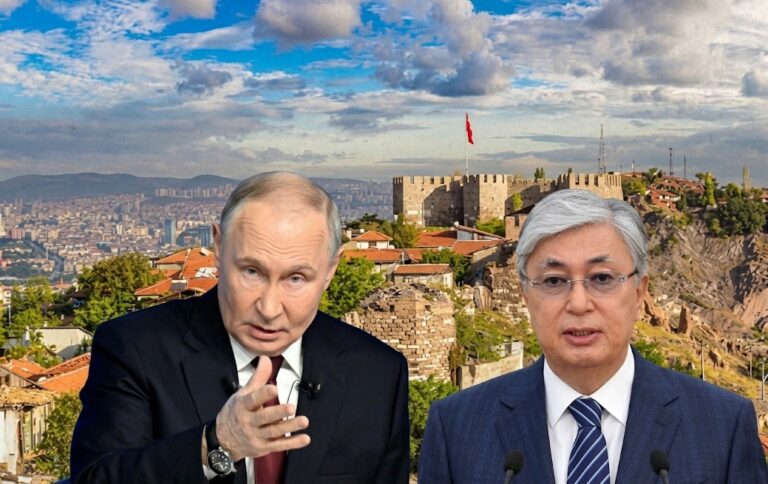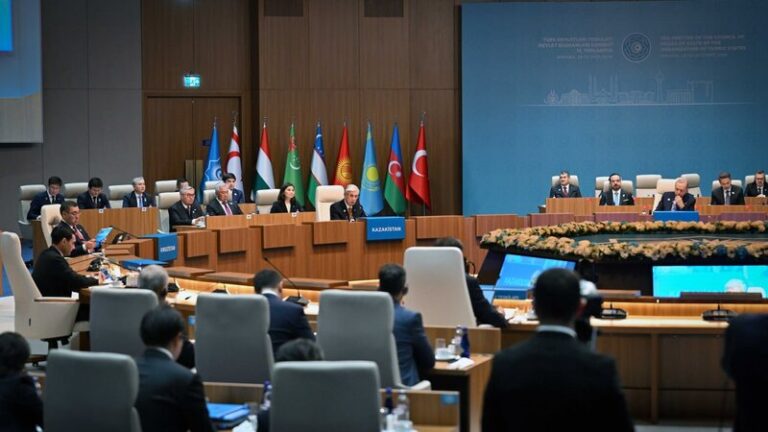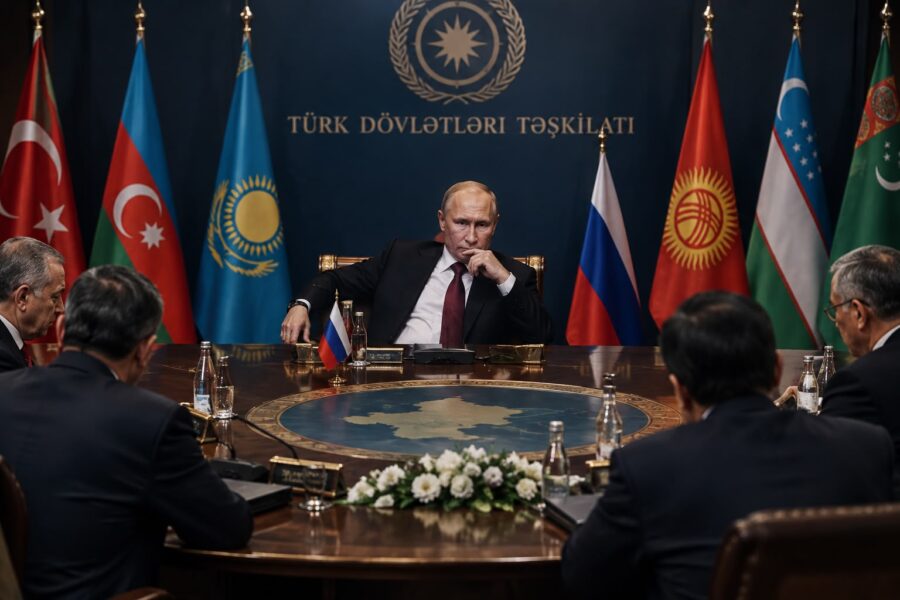
Kazakh President Kassym-Jomart Tokayev made an interesting yet equally strange proposal at the summit in Ankara. Tokayev said steps should be taken for Russia to become an observer member of the Organization of Turkic States (OTS).
Several years ago, reports emerged that the issue of Russia and Iran joining the OTS could be put on the agenda and that they themselves were interested in it. Today, the Kazakh leader made such a proposal. He said Russia has maintained very close contact with the Turkic world since earlier times. Is he right? Yes. But it would be strange to see Russian President Vladimir Putin at that table merely as an observer member. How reasonable and possible is it to bring Russia to the Turkic table, especially given the difficult situation it has found itself in because of the war in Ukraine and the current tangled state of its foreign relations? Putin is neither Turkmen President Serdar Berdimuhamedov, nor Turkish Republic of Northern Cyprus President Tufan Erhurman, nor Hungarian Prime Minister Peter Magyar, the leaders of other observer member countries. It would be surprising if Russia, at the table among the leaders of Turkic countries, tried to adapt to the organisation’s current diplomatic and strategic course. We have become accustomed to a Russia and a Putin who force every table at which they sit to adapt to them at the cost of blood and lives. And they do so according to the principle of “divide and rule”.
A struggle for leadership
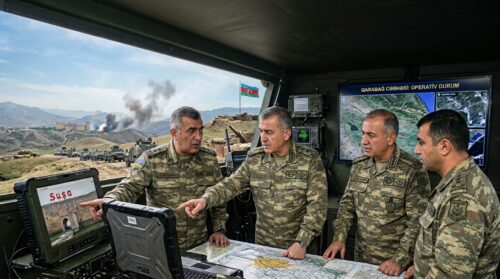
Russia and Turkey are two countries that have consistently maintained high-level claims to regional dominance and sought to impose them on others. How possible is it for the leaders of the two countries to come together at one table, especially a table created by Turkic countries that united after remaining under Moscow’s influence and in Soviet bondage for years, where nationalist appeals prevail and which Ankara is trying to draw towards itself from the Kremlin’s orbit and away from it, on the principle of “equality”? It should be noted that these are leaders of countries with imperial pasts that see themselves as successors to those empires and which are widely said to be trying even to restore them. At a time when claims to “leadership” are already in the air within the organisation and attempts to demonstrate superiority are apparent, such a step would merely create a new “fighting ring” that may begin normally but will gain momentum over time. Even if it starts with cooperation, it will inevitably break down at some point. In other words, Putin taking a seat at the Turkic table benefits neither Ankara nor the other Turkic countries. It could benefit only Russia in different spheres. For now, the Turkic table does not need another country; the most important issue at present is for Turkic countries to grow closer to one another and jointly form a strong mechanism.
It is particularly interesting that this proposal has come from Kazakhstan. At present, the two most interesting countries in the Turkic world in terms of domestic and foreign policy are Kazakhstan and Uzbekistan. What will Baku’s position on the issue be, given the current situation? I hope it will be negative. Putin’s arrival could perhaps bring minor adjustments in one or two positive directions at that table, but this is a person with the mindset: “Either we are at the head, or the table will be broken up.”
Aishan Mustafa
Globalinfo.az
Read also