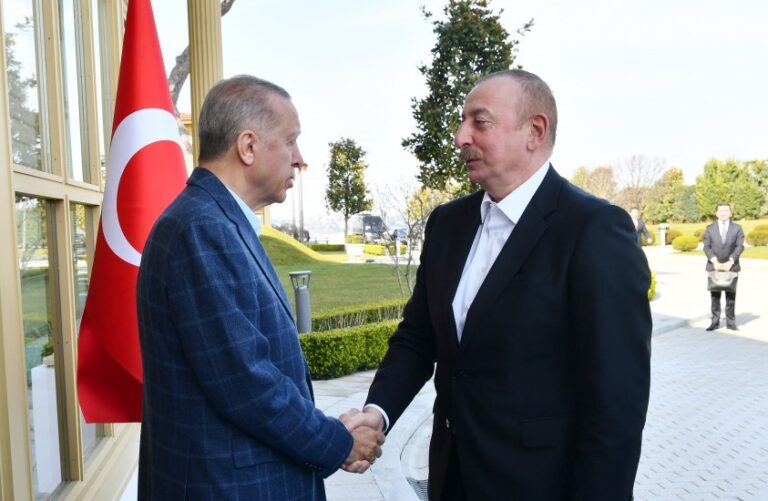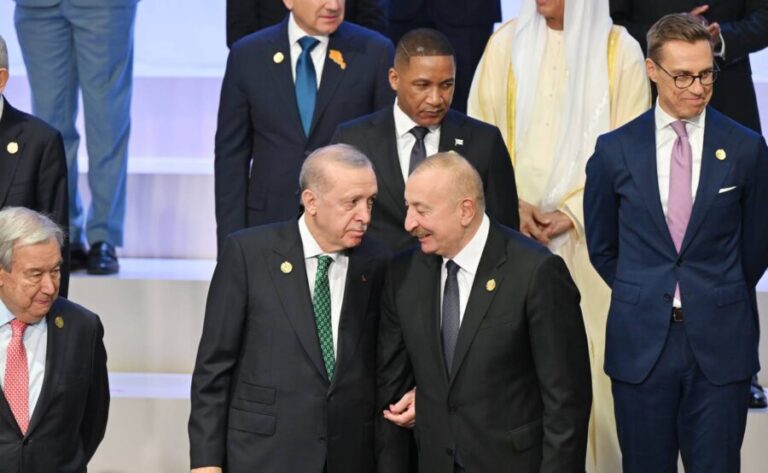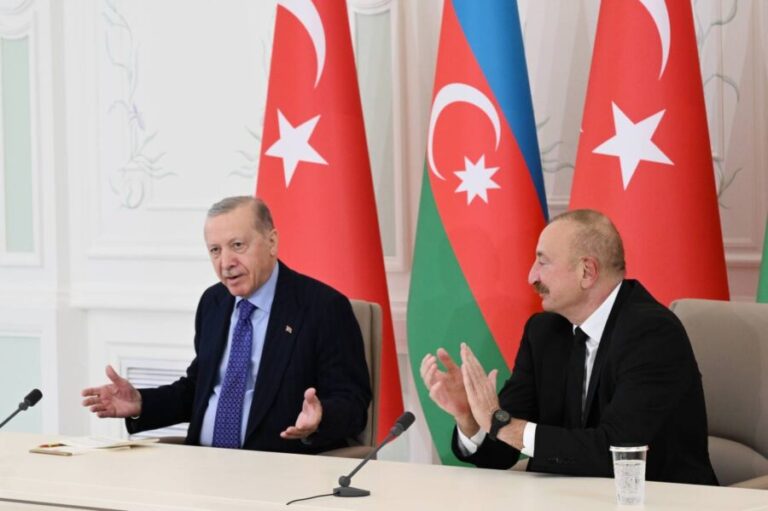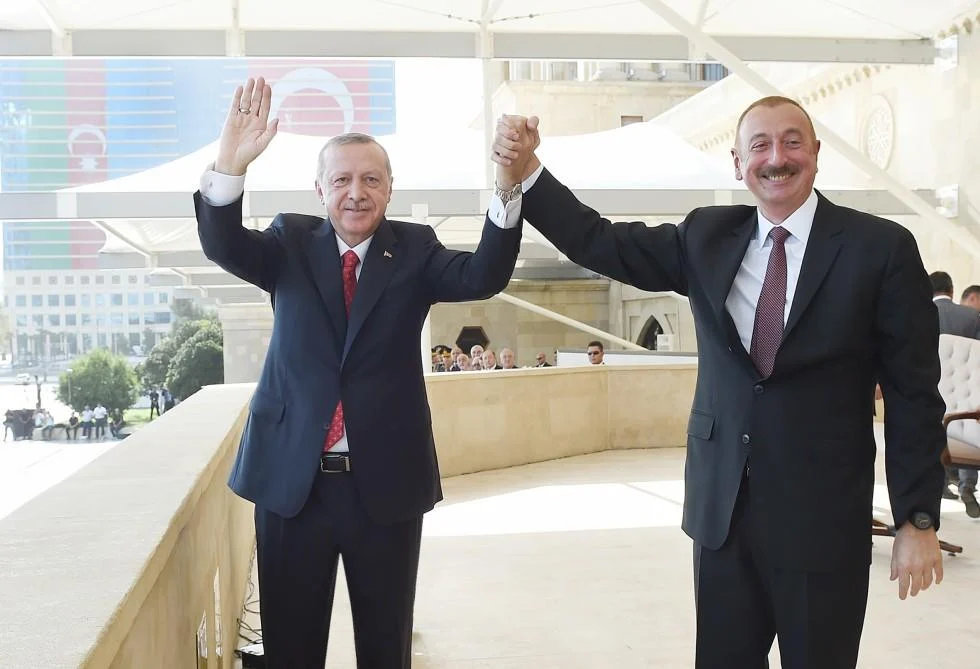
The personal phone call made by Turkish President Recep Tayyip Erdoğan to Azerbaijani President Ilham Aliyev is an extremely important and timely strategic leadership step for relations between the two brotherly states, regional solidarity and the future of the Turkic world.
Globalinfo.az reports that these words were said by Major General Yücel Karauz, Türkiye’s former military attaché in our country, in comments to Axar.az while speaking about the phone call Recep Tayyip Erdoğan made to Ilham Aliyev a short while ago.
The general noted that this phone conversation once again demonstrated that the brotherhood between Türkiye and Azerbaijan stands far above everyday political debates, periodic disagreements, and attempts aimed at pitting the public of the two countries against each other.
The content of the conversation and the strategic messages conveyed
“The two leaders discussed regional and global processes alongside Türkiye–Azerbaijan relations.
During the phone call, President Erdoğan conveyed three important messages:
1. He once again congratulated Azerbaijan on the 35th anniversary of the restoration of its state independence;
2. He stated that, drawing strength from the brotherly relations between Türkiye and Azerbaijan, cooperation would be raised to an even higher level in all fields;
3. He personally invited President Ilham Aliyev to the 13th Summit of the Organization of Turkic States to be held in Ankara.
When these three messages are considered together, it becomes clear that the phone call was not merely a diplomatic courtesy contact, but also a strong declaration of strategic will,” Karauz emphasized.
Disagreements must not take precedence over brotherhood
“First: The primacy of the right of brotherhood in interstate relations was reaffirmed once again.
At a time when certain debates that have recently emerged in the public sphere of both countries carry the potential to negatively affect Türkiye–Azerbaijan relations, it is extremely significant that President Erdoğan gave priority to direct leader-to-leader diplomacy.
This step showed that disagreements must not take precedence over brotherhood between the states, and it limited the opportunities that circles seeking to undermine the historical unity of the two countries could exploit.
Second: The value attached to Azerbaijan’s 35-year struggle for independence was reaffirmed.
Having restored its state independence on 18 October 1991, Azerbaijan has, over the past 35 years, developed its national power factors, restored its territorial integrity, and become one of the decisive actors in the South Caucasus.
Erdoğan’s special congratulations on the anniversary of independence are a powerful diplomatic expression of the importance Türkiye attaches to Azerbaijan’s sovereignty, statehood traditions and national achievements.
Third: The invitation to the Ankara Summit carried bilateral brotherhood forward into the shared future of the Turkic world.
President Erdoğan’s personal invitation to President Ilham Aliyev to attend the 13th Summit of the Organization of Turkic States is one of the most important strategic points of the phone call. With this invitation, the message was conveyed that Türkiye–Azerbaijan relations do not consist solely of the common interests of the two states, but also constitute a foundational pillar of the integration of the Turkic world in the political, economic, military, energy and transport spheres.
Joint action by Türkiye and Azerbaijan carries strategic significance in terms of strengthening the Middle Corridor, developing transport routes across the Caspian, ensuring energy supply security, and expanding defense industry cooperation among Turkic states.
Fourth: A shared leadership will was placed against attempts aimed at dividing the Turkic world.
A possible rift between Türkiye and Azerbaijan could negatively affect not only Ankara and Baku but also the integration goals of the Organization of Turkic States.
For this reason, the two leaders establishing direct contact and bringing mutual trust and a common strategic direction to the forefront is an important step that diminishes the impact of rhetoric aimed at creating division.
The main issue here is not to claim that foreign interference lies behind every debate, but, regardless of the source it stems from, to preserve common state wisdom and diplomatic solidarity against attempts that could undermine relations between the two brotherly countries,” the general emphasized.
Conclusion: One nation, two states – a common future, a common destiny
Y. Karauz added that relations between Türkiye and Azerbaijan are not the product of a circumstantial rapprochement, but of common history, common culture, common sacrifices and a common will for the future:
“At the foundation of this brotherhood lie the importance Mustafa Kemal Atatürk attached to Azerbaijan, the ‘One nation, two states’ philosophy put forward by Heydar Aliyev, and the strategic partnership developed today by Recep Tayyip Erdoğan and Ilham Aliyev.
The unity of Ankara and Baku is one of the most important guarantees not only of the security of the two countries, but also of the stability and prosperity of the Turkic world and its future transformation into a global center of power.
This diplomatic step taken by President Erdoğan showed friends the unshakeable nature of this brotherhood, and showed those who hope to profit from its weakening that Türkiye and Azerbaijan will never abandon their common future.
The historical brotherhood stretching from the foothills of the Tanrı Mountains to the present day is now being carried into the future by the common will of two independent states.
With the spirit of one nation, two states, the unshakeable brotherhood of Türkiye and Azerbaijan – one heart, one arm and one fist when needed – gives confidence to friends and fear to enemies!
Long live Türkiye–Azerbaijan brotherhood!
Long live a strong and united Turkic world!”
Read also