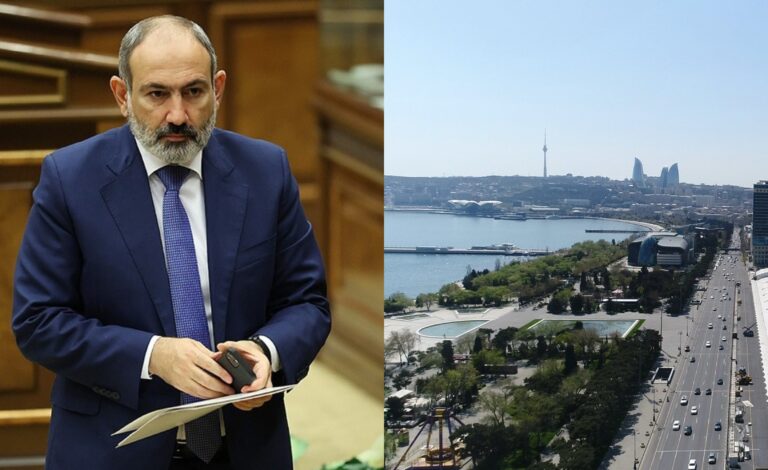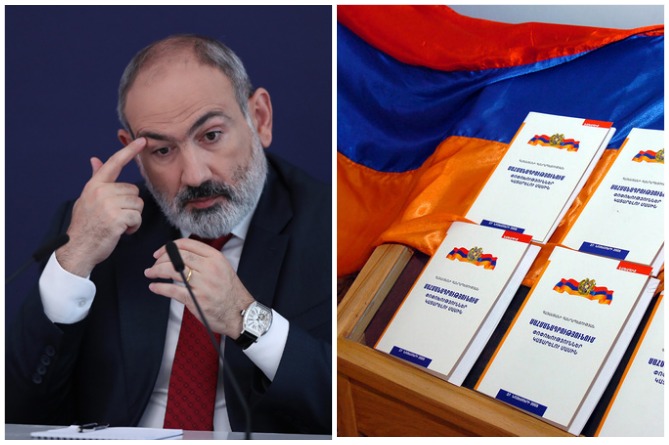
Armenian Prime Minister Nikol Pashinyan has presented the country’s new draft Constitution to the public. The document draws attention in many respects. The first point of interest is that a reference to the 1990 Declaration of Independence is not included in the new text. This is very important, because it is precisely that reference to the Declaration that appears in the preamble of Armenia’s current Constitution. That document set out the idea of annexing Karabakh to Armenia. And this was one of the main legal and political obstacles standing in the way of a final peace agreement with Azerbaijan.
In the new draft, that reference has been removed, and the stated goal now placed at the forefront is building an independent, peaceful, secure and prosperous country within the state’s internationally recognised territory. In other words, Pashinyan links the state’s future not to historical claims but to internationally recognised borders and the welfare of citizens.
The changes do not end there. The new draft defines the people as the main source of state power and the founder of the Republic of Armenia. Pashinyan, noting that there is a widespread belief in society that referendum results were falsified when previous constitutions were adopted, considers it important that the new document be adopted by the free will of the people. With this approach, he stresses his desire to build a new legal relationship between the citizen and the state.
The provisions on foreign policy are also noteworthy. Article 8 of the draft defines the goal of Armenia’s foreign policy as ensuring peace. This is a sharply different approach from the previous one. Pashinyan wants Armenia to be no longer a participant in regional confrontations and an outpost of geopolitical powers, but a state that takes independent decisions and cooperates with its neighbours. The provision that the army is intended for the defence of the country’s internationally recognised territory and borders is also part of this approach.
Changes in Armenia
Changes are also proposed in domestic governance. The draft envisages expanding parliament’s oversight powers over the government, requiring ministers and other senior officials to appear for hearings in parliamentary committees, and increasing opportunities for the opposition to take part in the formation of certain state bodies. New mechanisms on the evaluation of judges, strengthening the independence of the prosecutor’s office and the functioning of political institutions are also included in the draft. Opportunities for citizens to put forward legislative initiatives are being expanded, with a requirement of 40,000 signatures set for this. To stand as a candidate in elections, a condition is proposed that a person must have lived permanently in Armenia for at least one of the last two years. I should note that this is a provision that could also affect the ability of the Armenian diaspora living abroad to take part in the electoral process.
So how will these changes affect relations with Azerbaijan?
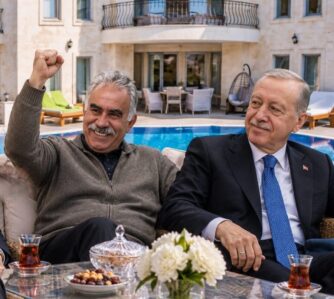
In fact, it is precisely at this point that the regional significance of the new draft Constitution comes to the fore. Azerbaijan has long said that the territorial claims in Armenia’s supreme legal document are incompatible with the signing of a final peace agreement. Baku’s position is quite clear: the Pashinyan government that signs a peace agreement today may change tomorrow. And if revanchist forces return to power in Armenia, the previous provisions in the Constitution could again be used as a political and legal justification for territorial claims. So the issue concerns not only the intentions of the current government but the creation of guarantees for the future behaviour of the Armenian state.
The adoption of the new draft could be an important step towards eliminating this contradiction. This step by Pashinyan is an important political and legal change that serves Azerbaijan’s interests. If the draft is adopted with its current key provisions preserved, a basis will emerge for Armenia to distance itself at the constitutional level from its previous territorial claims. That is significant for the signing of a peace agreement and for reducing the risk of it being called into question as a result of any future change of power.
In fact, Pashinyan’s decision to make these changes is linked to Armenia’s own interests. Yerevan understands that without the normalisation of relations with Azerbaijan and the opening of borders with Türkiye, the country’s economic and geopolitical opportunities will remain limited. Armenia’s exclusion from regional projects, its security dependence on foreign powers and the weakening of its economic development prospects are making the continuation of the current situation increasingly unfavourable. With the new Constitution, Pashinyan is trying both to break out of this situation and to weaken the conflict agenda that his political rivals have used for decades.
So will a peace agreement be signed?
Pashinyan has stated openly that after the adoption of the new Constitution a peace agreement with Azerbaijan will be signed and ratified. He has even said that if the draft is not adopted in a referendum he will resign as prime minister, and that if it is adopted he will not run in the next parliamentary elections. This shows how seriously he has elevated the matter to the level of a political commitment. At the same time, we must not forget that the draft is still a preliminary version and must go through public discussion and parliamentary procedures. Moreover, holding the referendum also requires securing the six votes the ruling faction lacks in parliament. And the opposition’s attitude to this process is quite harsh.
Azerbaijan does not assess the process solely on the basis of the promises Pashinyan has made. Armenia’s readiness for peace must be confirmed in its constitutional provisions, in the documents it signs and in its real political behaviour. For lasting peace to emerge in the region, it is essential that Yerevan renounce revanchist claims legally and in practice.

Turan Rzayev
Political writer for Globalinfo.az
Read also