A new draft Constitution has been presented to the public in Armenia. The absence of a reference to the Declaration of Independence in the document is regarded as an important point for the signing of a peace agreement with Azerbaijan. Attention is focused on whether the draft will pass the parliamentary and referendum stages, and, if it is not adopted, what political processes will unfold in the country.
What is the likelihood that the draft will not be adopted? If the process does not go through, what will happen?
Political analyst Oqtay Qasimov, speaking to Globalinfo.az, recalled that Armenian Prime Minister Nikol Pashinyan and members of his team have repeatedly addressed this issue since last year:
“It has been stated that the reference to the Declaration of Independence in the current Constitution creates problems in relations between Azerbaijan and its neighbours. That declaration presents Turkey’s eastern provinces as Western Armenia and reflects the claim to annex Karabakh, which is both the legal and the historical land of Azerbaijan, to Armenia. The presence of these provisions in the constitution is assessed as a territorial claim against neighbouring states and creates a serious obstacle to the process of peace and cooperation in the region. Pashinyan understands that retaining that provision could cause serious problems in relations with Baku and Ankara. If Armenia wants to function as a normal state in the region and to put its relations with its neighbours in order, the issue of removing the reference to the Declaration of Independence from the Constitution must remain on the agenda. This is a sufficiently constructive step.”
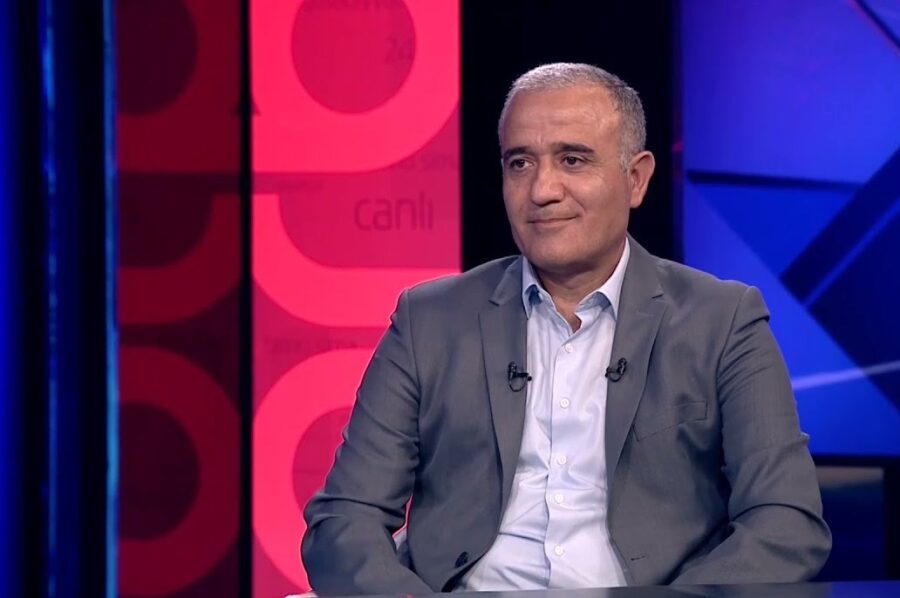
Oqtay Qasimov
The political analyst said that political processes in Armenia are expected to be tense from now on:

“Given that on November 5, 13 opposition parties formed a bloc and that their main goal is to prevent the adoption of the new constitution and at the same time to obstruct the signing of a peace agreement with Azerbaijan, a serious political struggle clearly lies ahead. Pashinyan’s opponents are not limited to the political opposition. The Armenian Apostolic Church also opposes the government’s position, constitutional changes and the achievement of peace with Azerbaijan. Therefore, we will witness serious political processes in Armenia in the period ahead.
As for the referendum, at least 71 votes in Armenia’s parliament are required to hold it. Pashinyan needs 6 more votes to get this decision approved. If those votes are secured from opposition representatives, parliament can adopt a decision on holding the referendum. Several options are possible here. The first option is for 6 opposition deputies to support the government’s initiative and for the necessary majority to be secured in parliament. The second option, if this is not possible, is to achieve the holding of the referendum by collecting 300,000 signatures. The third possibility is the holding of snap parliamentary elections. Pashinyan himself put this option on the agenda some time ago.”
O. Qasimov noted that fairly complex political processes are continuing in Armenia:
“In particular, the latest elections showed that as time passes since the 44-day war of 2020, revanchist sentiment in Armenian society is strengthening again. The position of forces seeking the restoration of claims to Azerbaijani territories is also noteworthy. We saw the results of this in the parliamentary elections as well. While in the 2021 parliamentary elections the opposition won 26 seats in total, their number of seats has now reached 41. This shows that the opposition’s representation in parliament has increased. Therefore, the adoption of the new constitution will not be easy. If Armenian society opposes the constitutional changes, this will raise serious questions about the future of the peace process with Azerbaijan. In such a case, the likelihood of problems arising in relations with Armenia will also increase.
It is true that any country can continue its own path of development without a peace agreement. But in such a situation, Armenia and Armenian society will be the first to suffer. This decision would also mean a negative impact on ensuring peace, stability and security in the South Caucasus. In such circumstances, the positions of forces seeking to influence processes in the region through Armenia would also strengthen. If, during public discussions, Pashinyan and his team can convince Armenian society of the importance of peace, this will be significant in terms of support for the adoption of the new constitution. It should be borne in mind that Armenia’s partners in the West are also interested in achieving peace in the region. The adoption of the new constitution is more likely. But given the existence of revanchist sentiment in Armenia, the possibility that the draft will not be adopted cannot be ruled out.”
Laman Imran
Globalinfo.az
Read also