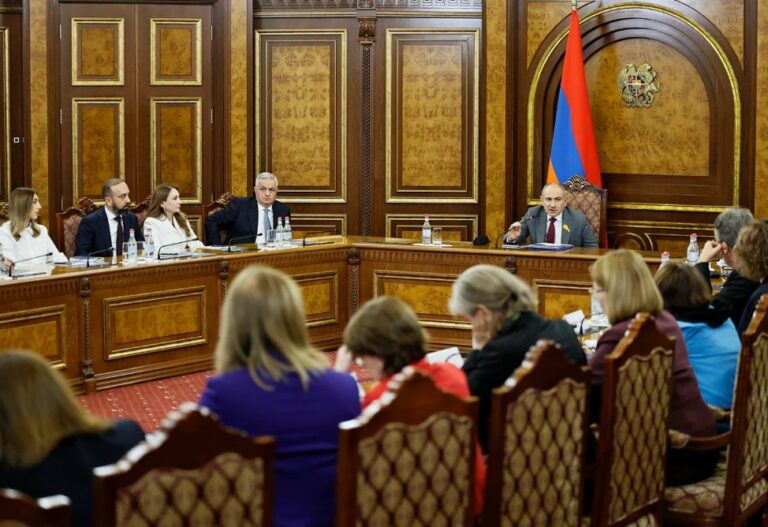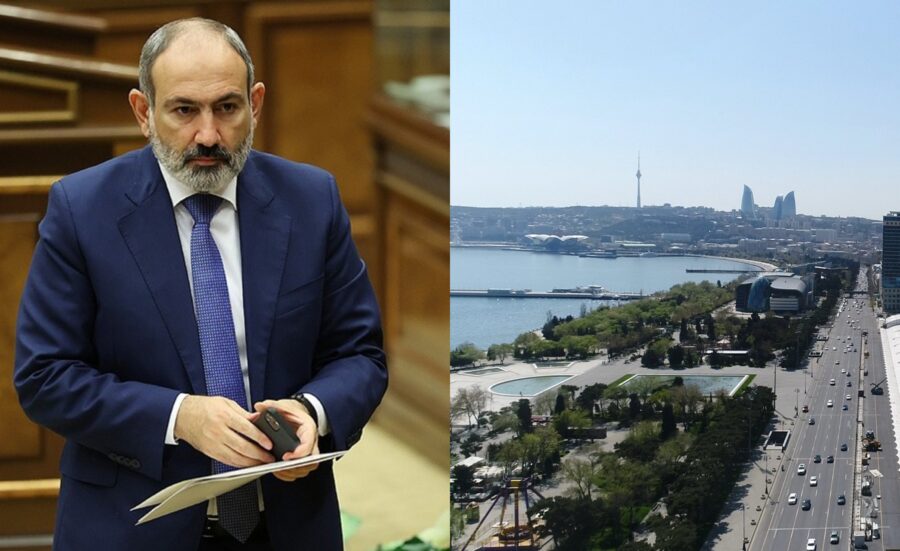
Armenia’s Prime Minister has unveiled a new draft Constitution. The draft removes the reference to the Declaration of Independence, which forms the basis for Armenia’s territorial claims to Karabakh. Pashinyan said the draft will be discussed and put to a vote in parliament.
How long could the constitutional amendment process take, and when might the peace treaty be signed? Could there be attempts to block the draft’s approval in parliament?
Globalinfo.az spoke with political scientist Bakir Hasanbayli, who said that if the referendum on adopting a new Armenian Constitution fails to take place, is not scheduled due to insufficient votes in parliament, or is rejected by the public in a vote, this could lead to serious consequences both for the country’s domestic politics and for the peace process with Azerbaijan:
“Based on official positions and analytical assessments published in November 2026, several scenarios are possible. Baku has put forward, as a key condition for signing the peace treaty, the removal from the preamble of the Armenian Constitution of the reference to the 1990 Declaration of Independence and, through it, to the idea of uniting Karabakh with Armenia. Although the new draft, published on November 23, 2026, removes this reference, if the referendum does not take place, the old Constitution will remain in force. Prime Minister Nikol Pashinyan has called the adoption of the new Constitution a guarantee of institutional and irreversible peace with Azerbaijan.
Failure of the referendum could indefinitely delay the official signing and ratification of the peace treaty initialed in August 2025, and could block the normalization of relations in the region and the opening of communications. In his recent statements, Pashinyan declared that if the public rejects the new Constitution in the referendum, he will resign as prime minister. Either the opposition’s obstruction of scheduling the referendum in parliament, or the public’s rejection of the referendum, could lead to snap parliamentary elections in the country. Pashinyan also said that if voters reject the draft and he resigns, he will not run as a candidate in the next elections. To put the document to a referendum, at least 70 of the 105 deputies in the Armenian parliament — that is, a two-thirds majority — must vote in favor and support it. The ruling Civil Contract Party holds 64 seats in parliament, and at least 6 votes from the opposition are needed to schedule the referendum.
There is a risk that the referendum may not be scheduled at all, since opposition forces, viewing the draft as a concession to Azerbaijan and Turkey, have refused to support it. Some Armenian political scientists say that failure of the referendum would risk the loss of statehood for the country. Prime Minister Pashinyan, in his address to the public, has stressed that the current Constitution keeps the country in a vulnerable position and that failure to adopt the new document would mean losing the chance for peace. With this statement, Pashinyan is trying to change the rules of political struggle, but failure of the referendum could trigger a serious crisis of power and political uncertainty in the country. Another legal mechanism envisaged to overcome the parliamentary obstacle is a citizens’ initiative requiring the collection of 200,000 signatures. However, even in this case, if parliament rejects the draft, holding the referendum would still require the support of three-fifths of deputies.”
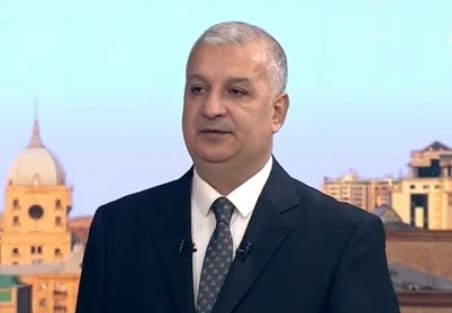
Bakir Hasanbayli
The political scientist said that if the referendum fails, the signing of the final peace treaty will be delayed indefinitely:
“The failure to sign the peace treaty, and the continued validity of territorial claims against Azerbaijan in Armenian legislation, could expose the region to future security threats. Failure to amend the current Constitution would block not only the normalization of relations with Baku but also with Turkey, as well as the opening of borders and Armenia’s integration into regional transport projects.
If the constitutional referendum in Armenia does not take place, or if the new draft is not adopted, Azerbaijan will not sign the final peace treaty. According to Baku’s position, if the peace treaty is signed without a constitutional change, any force that may come to power in Armenia in the future could annul the treaty through the Constitutional Court and raise territorial claims again. Although the text of the peace treaty was initialed in Washington on August 8, 2025, official Baku maintains the constitutional amendment as the key condition for the final signature. If the peace treaty is not signed, Azerbaijan will continue its security measures in line with its national interests. Against the backdrop of the referendum remaining a precondition for the peace treaty, a stalemate in the process could delay the full launch of regional transport and communication projects, including the TRIPP route mentioned in the Washington declaration. However, even without a final peace treaty, the possibility of continuing bilateral work on border delimitation within a limited framework will be considered. Failure of the referendum could lead to a deep domestic political crisis in Armenia and a change of power, which would require Baku to determine a new negotiation strategy.”
Turan Rzayev
Globalinfo.az
Read also